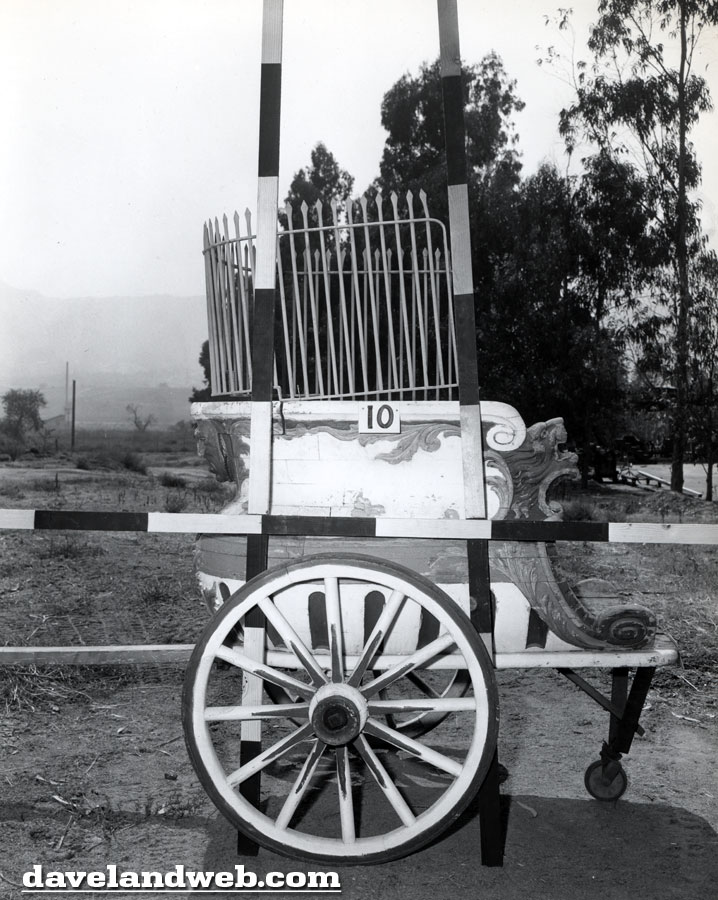
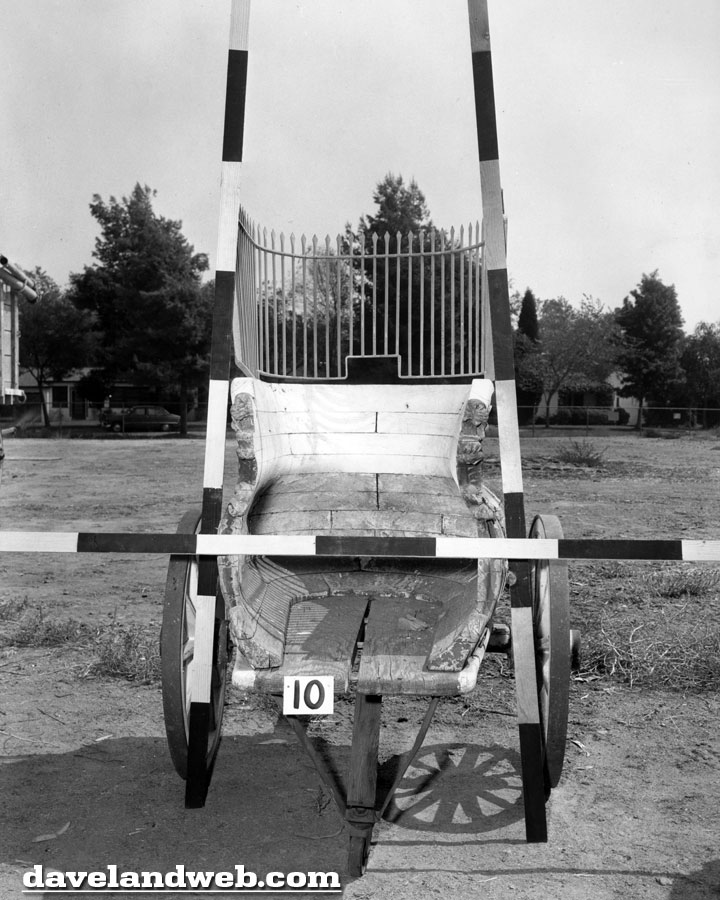
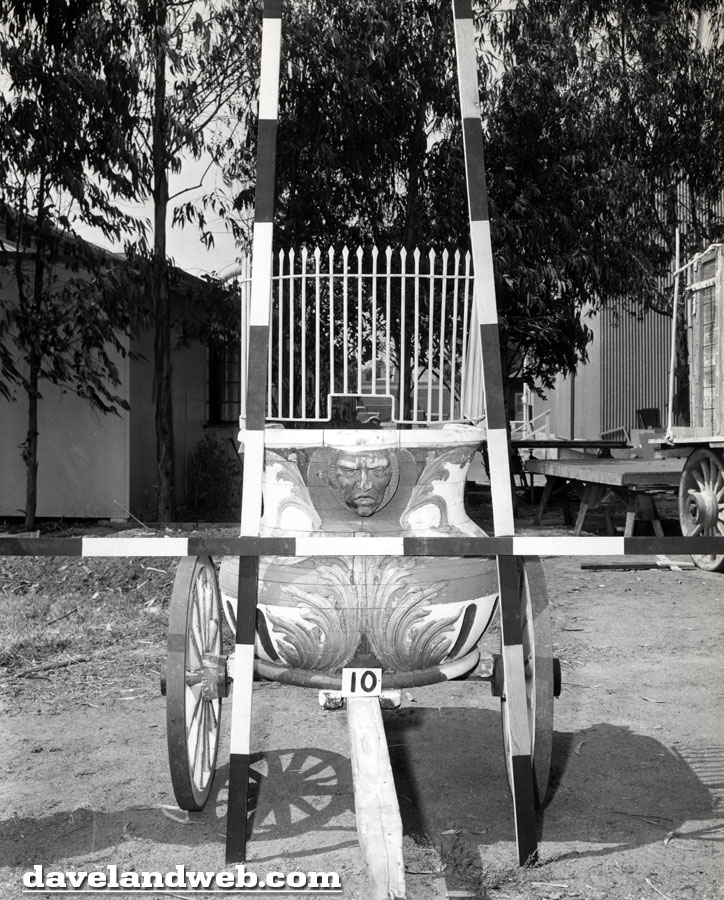
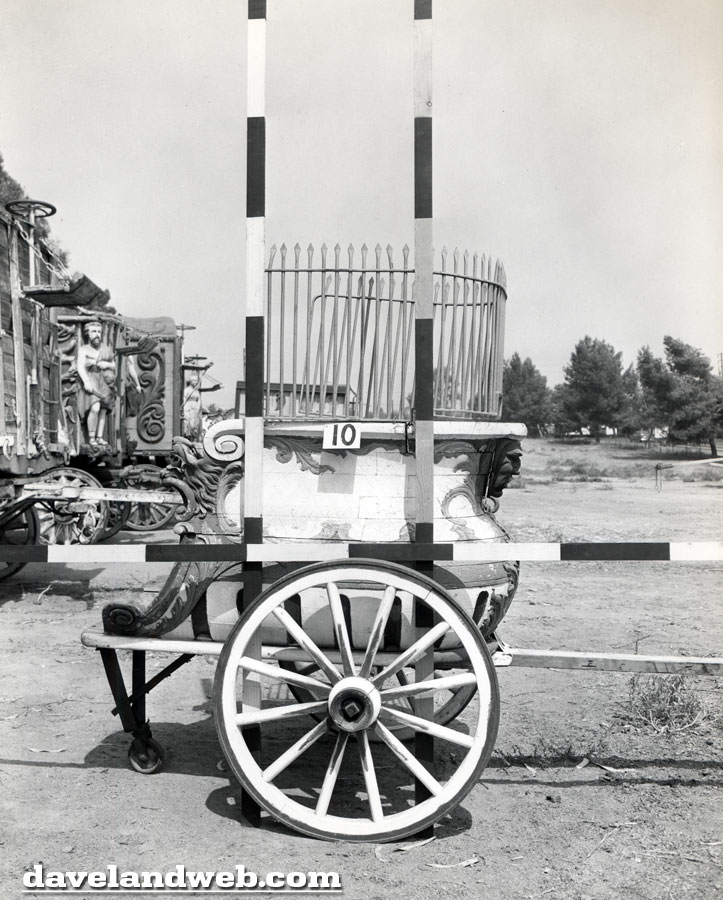
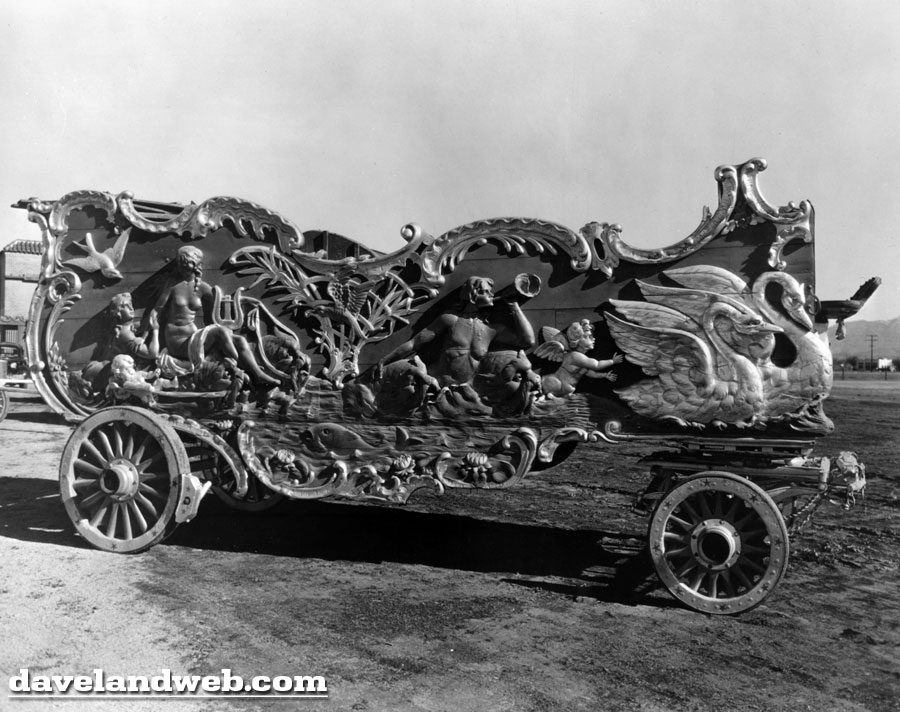
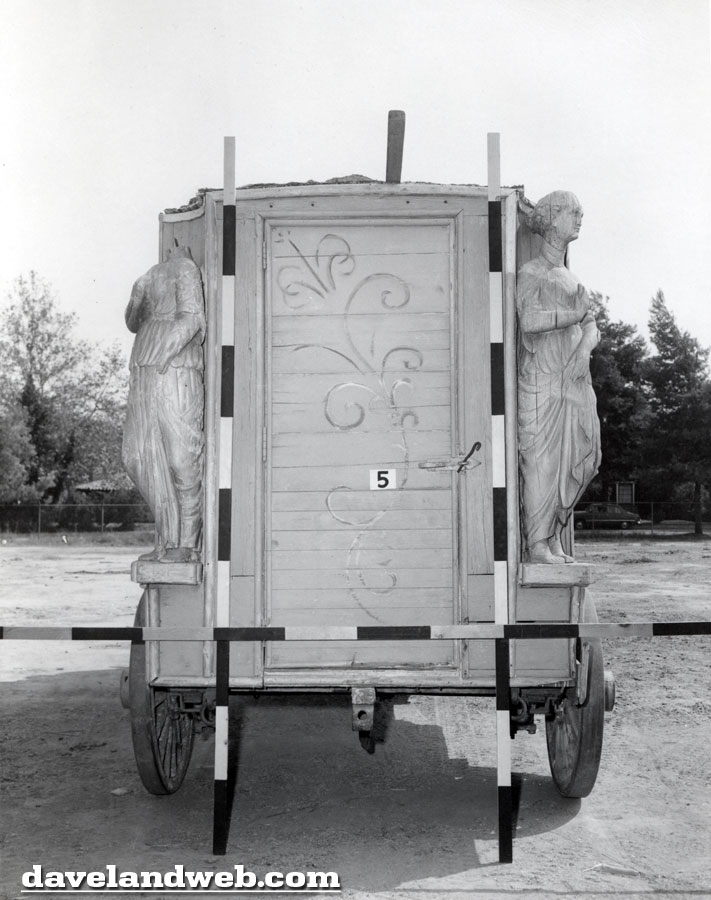
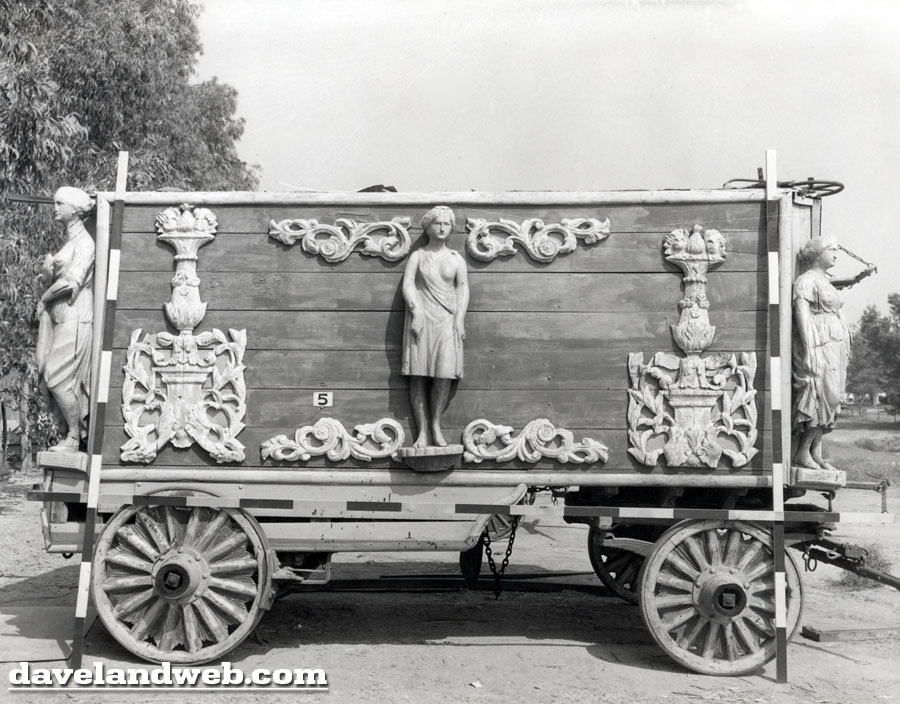
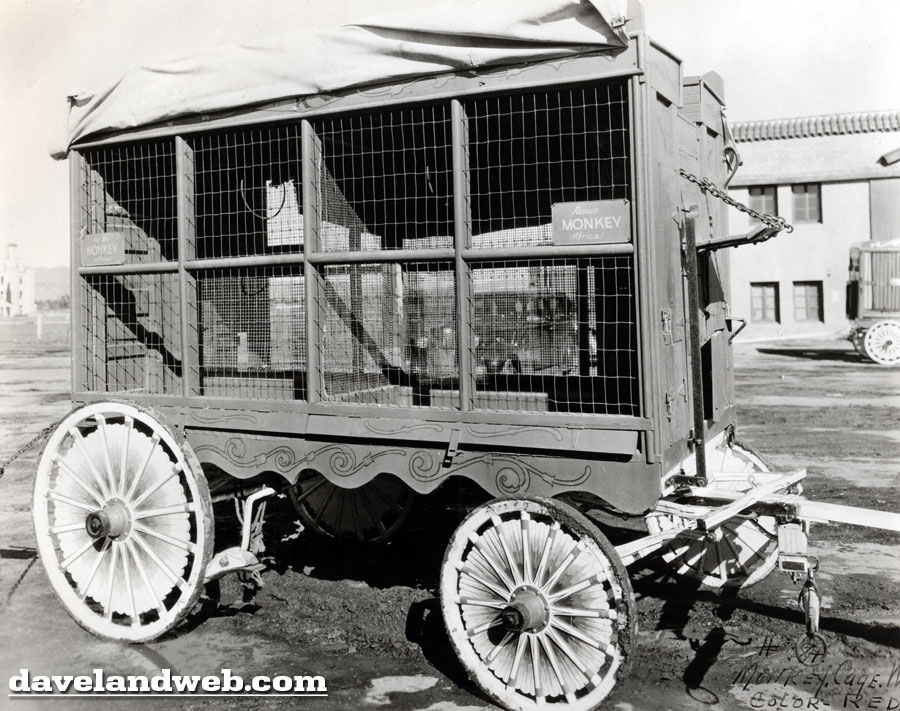
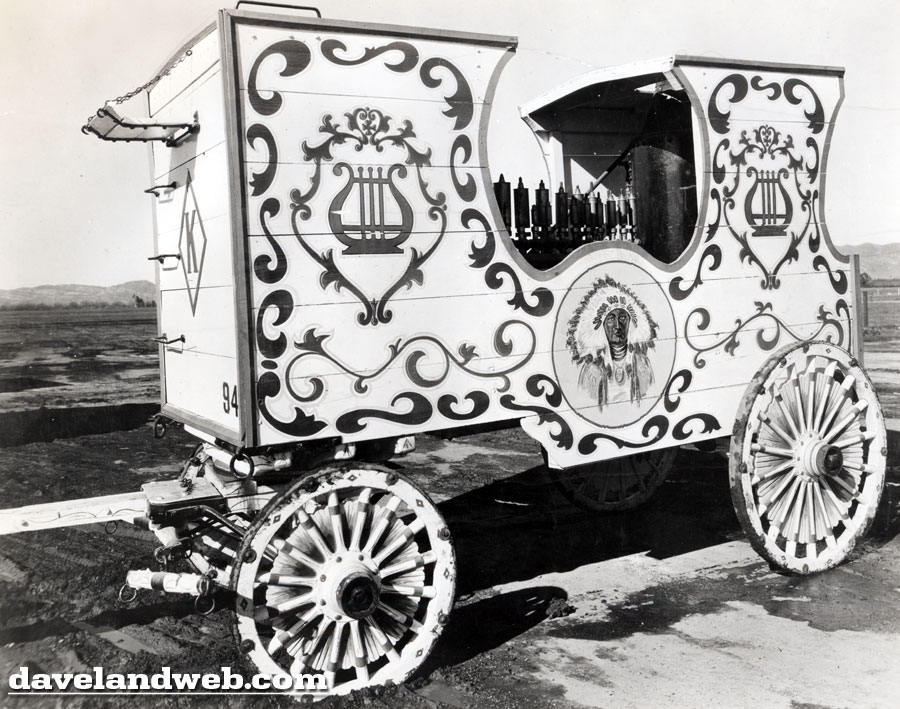
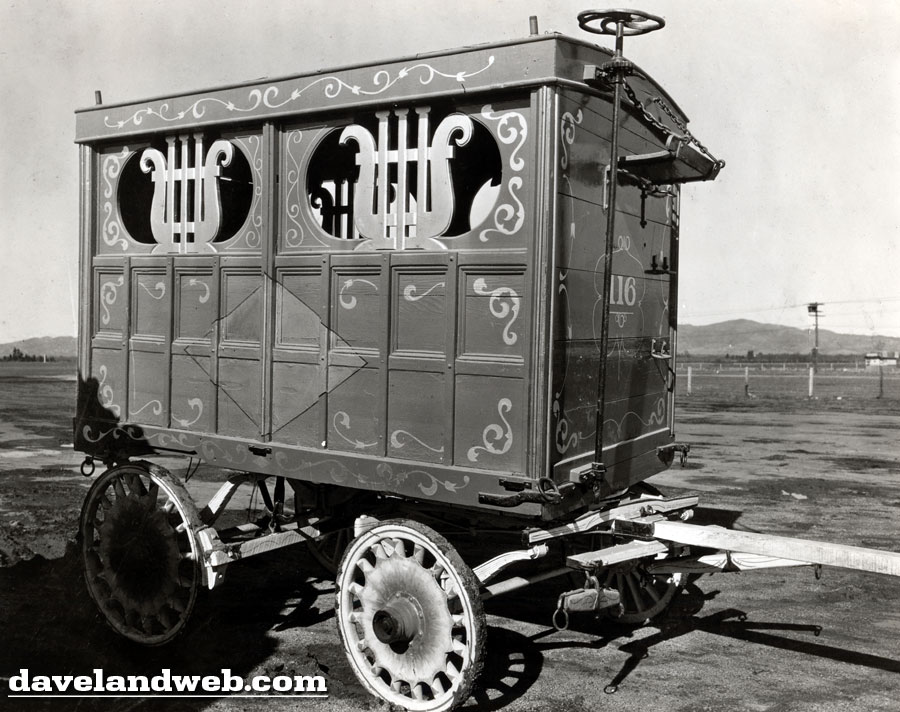
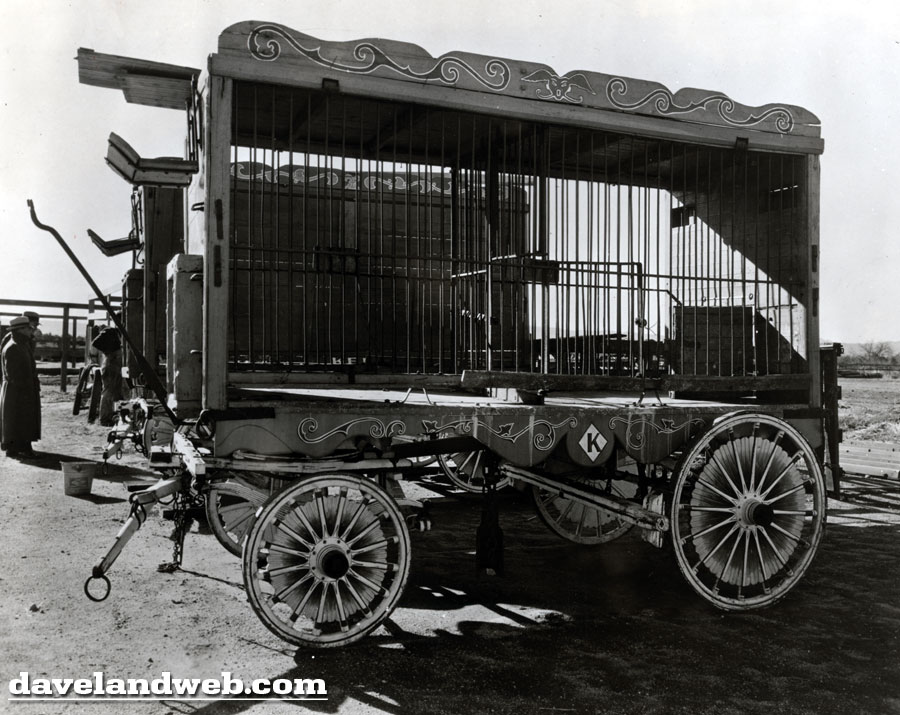
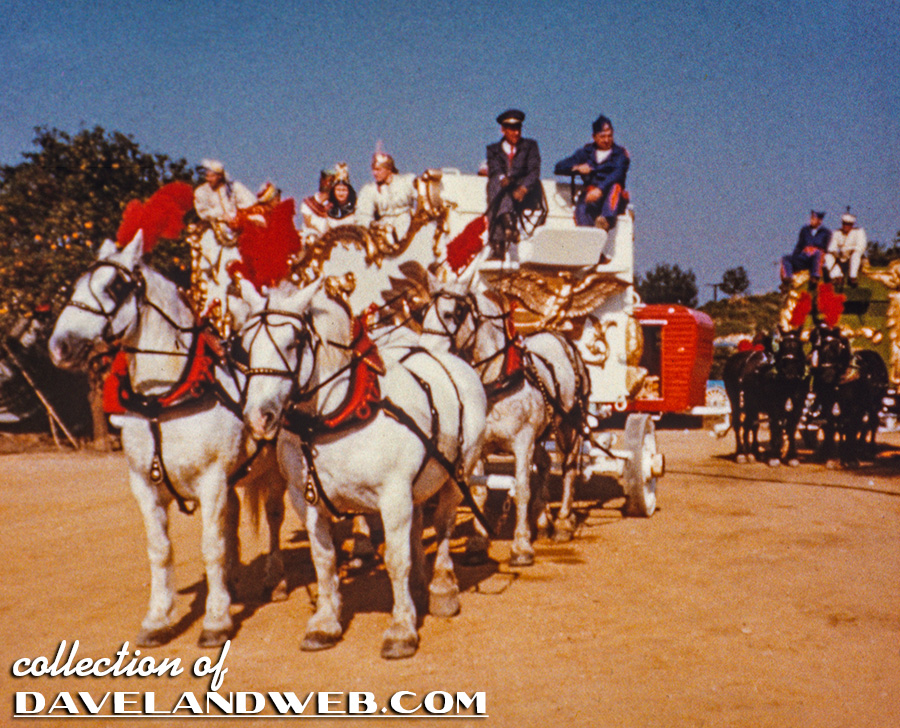
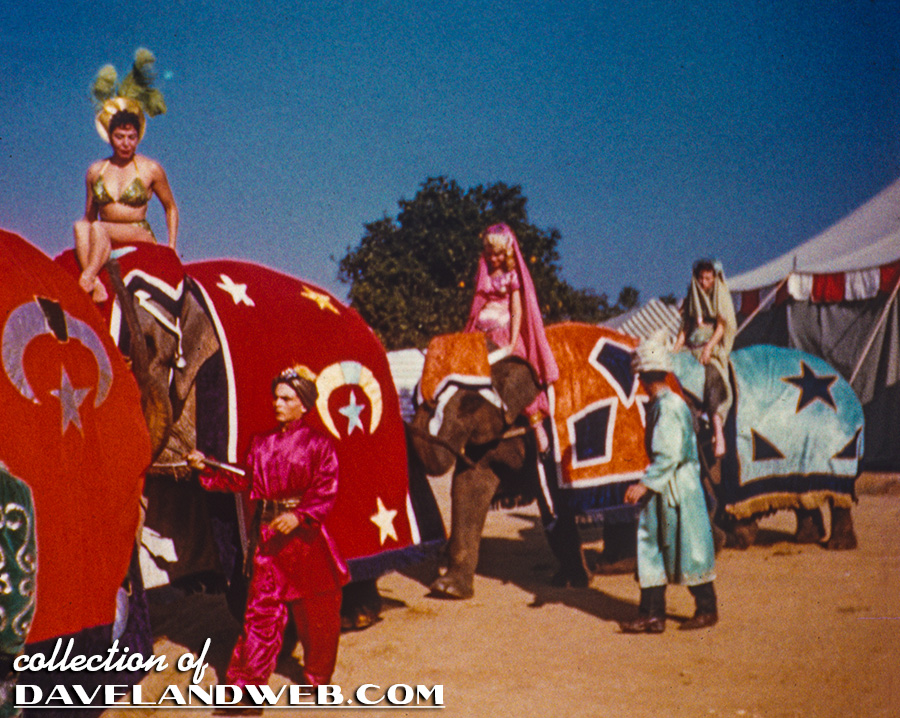
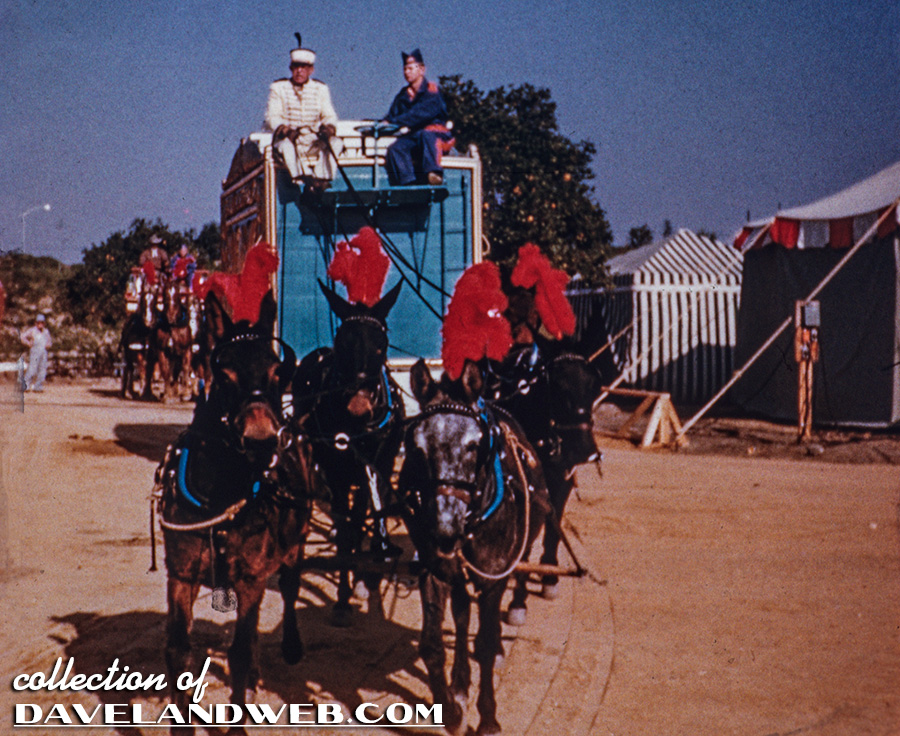
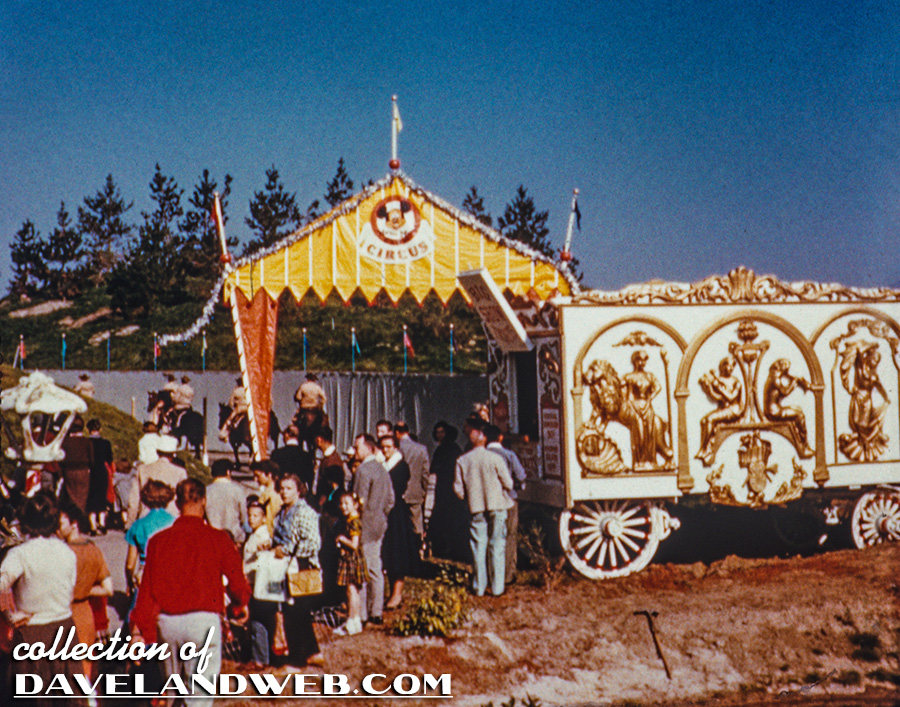
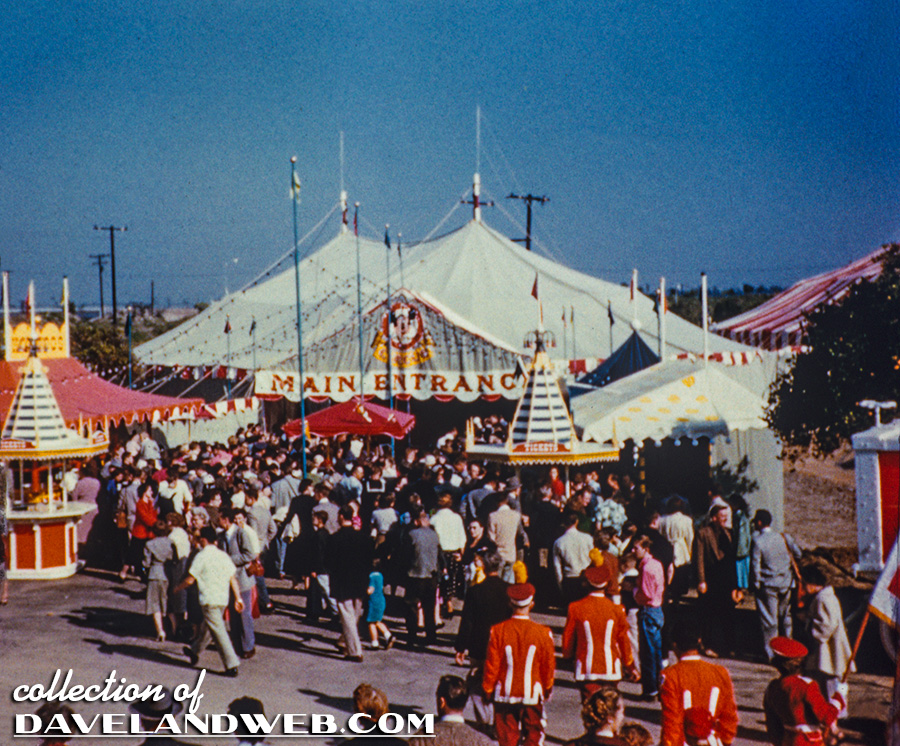
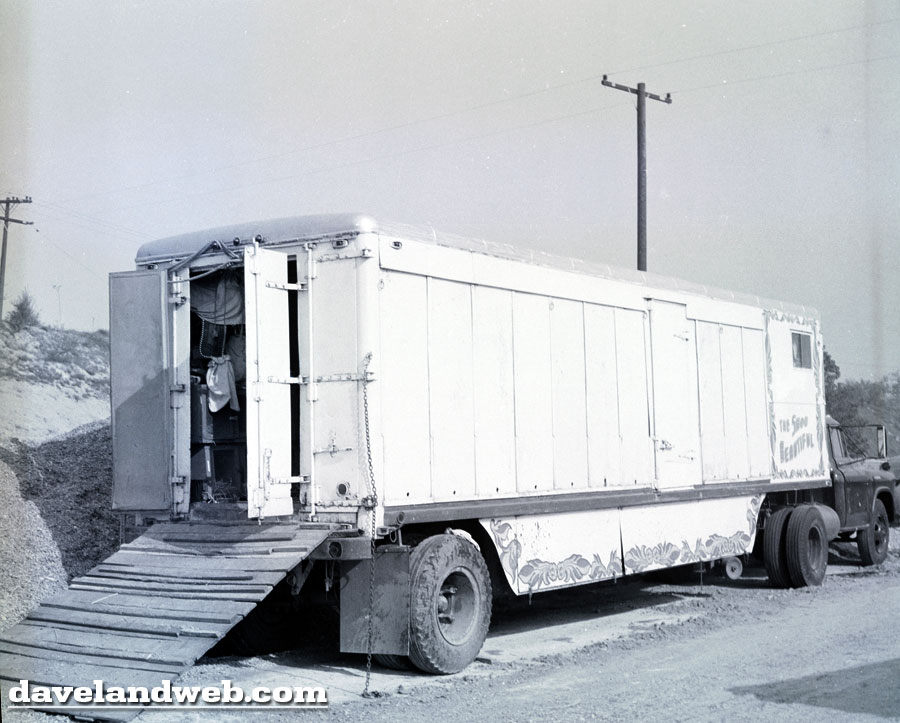
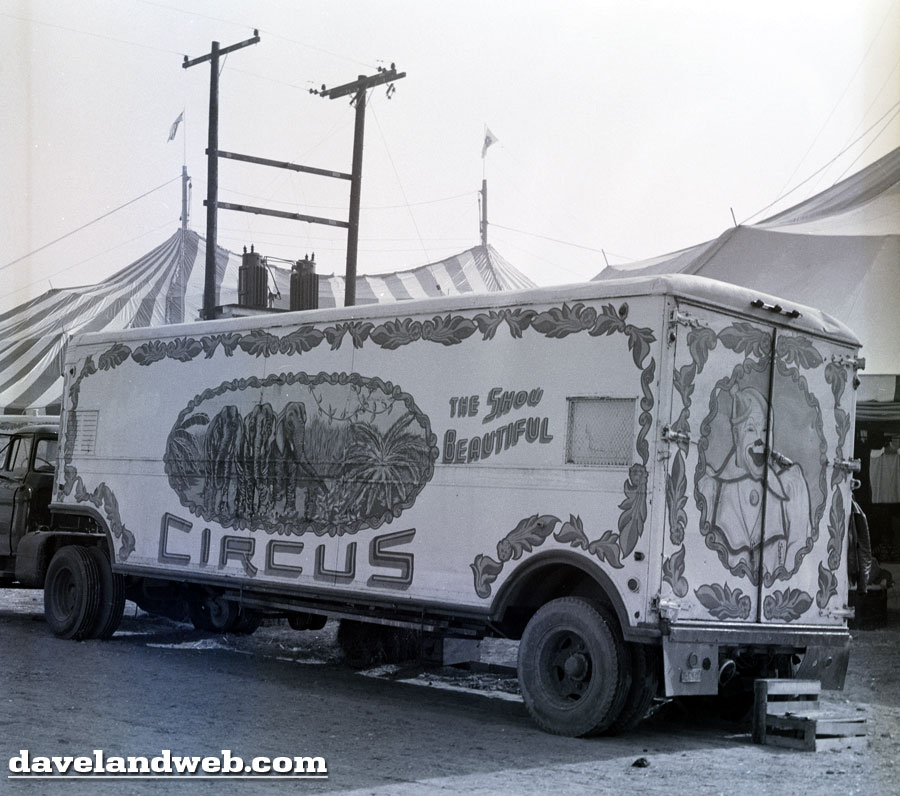
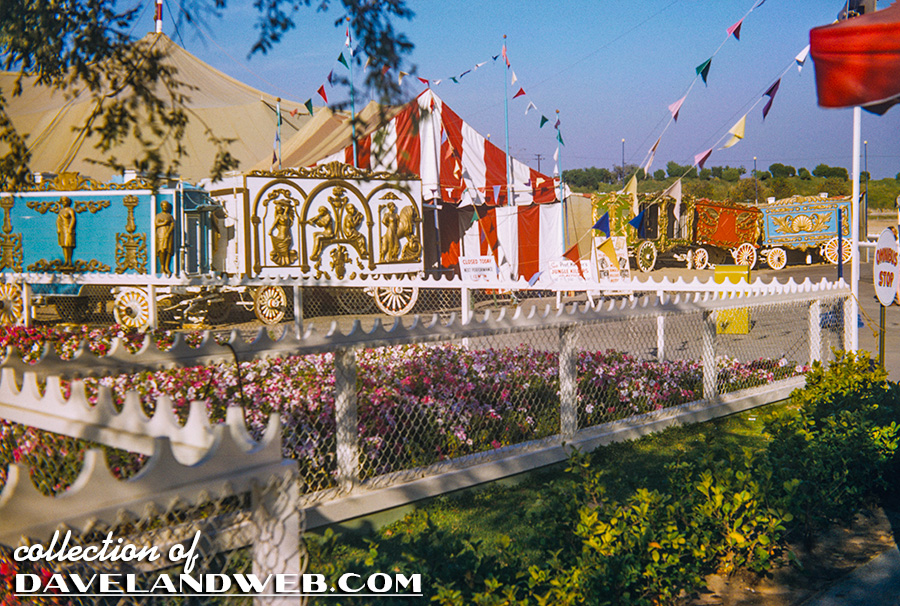
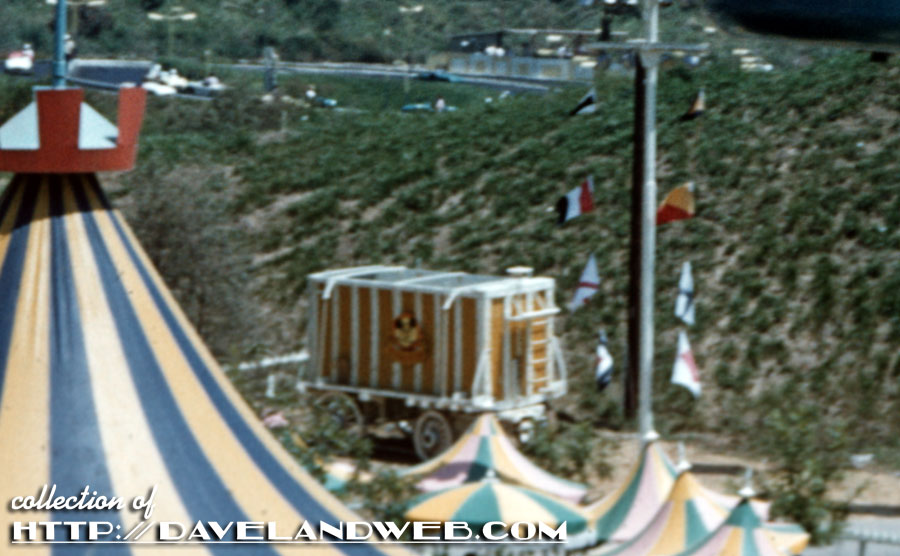
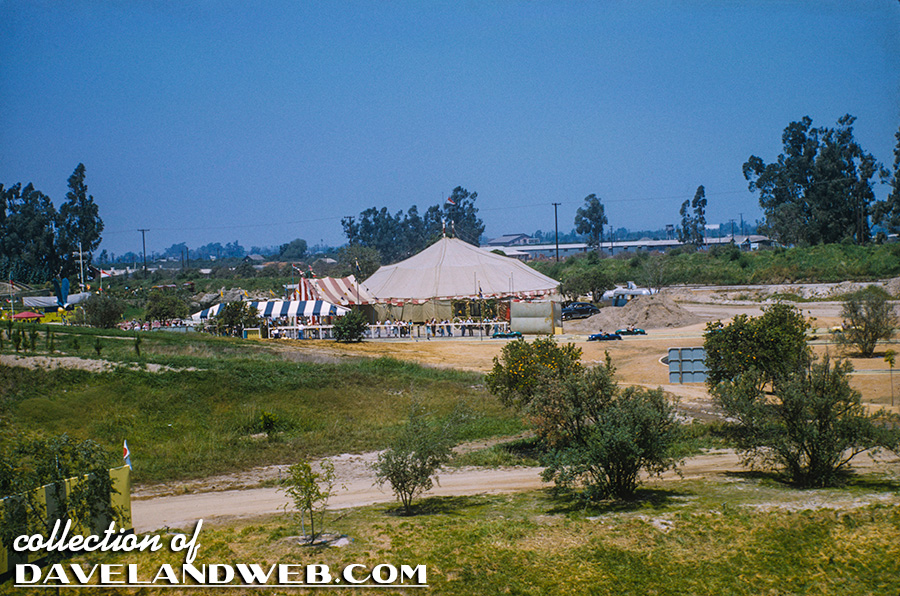
BACKSTORY (Nov. 25, 1955—Sept. 7, 1956 ): Showman R. E. Anderson discussed with Walt the idea of doing a Wild West Show at Disneyland in September, 1955. Walt tweaked the idea and put a Disney spin on it by using the show as a tool to promote the upcoming Mickey Mouse Club, set to debut on October 3. When The Mickey Mouse Club wrapped up filming of the first season, the Mouseketeers remaining with the show were sent to perform in 2 huge circus tents (costing $48,000) on the fringe of Fantasyland (approximately where the Matterhorn currently exists). Bruce Bushman, Dick Irvine, and George Whitney were the lead Imagineers on this project, creating storyboards for the show and overseeing the design of signage and midway booths. Antique circus wagons were located and restored: 9 from the Bradley and Kaye Amusement Park in Los Angeles and another 5 were found in Venice, California. A 1907 20-whistle steam calliope (built for the Mugivan and Bowers show) was also purchased and tested right on the Disney Studio lot in Burbank.
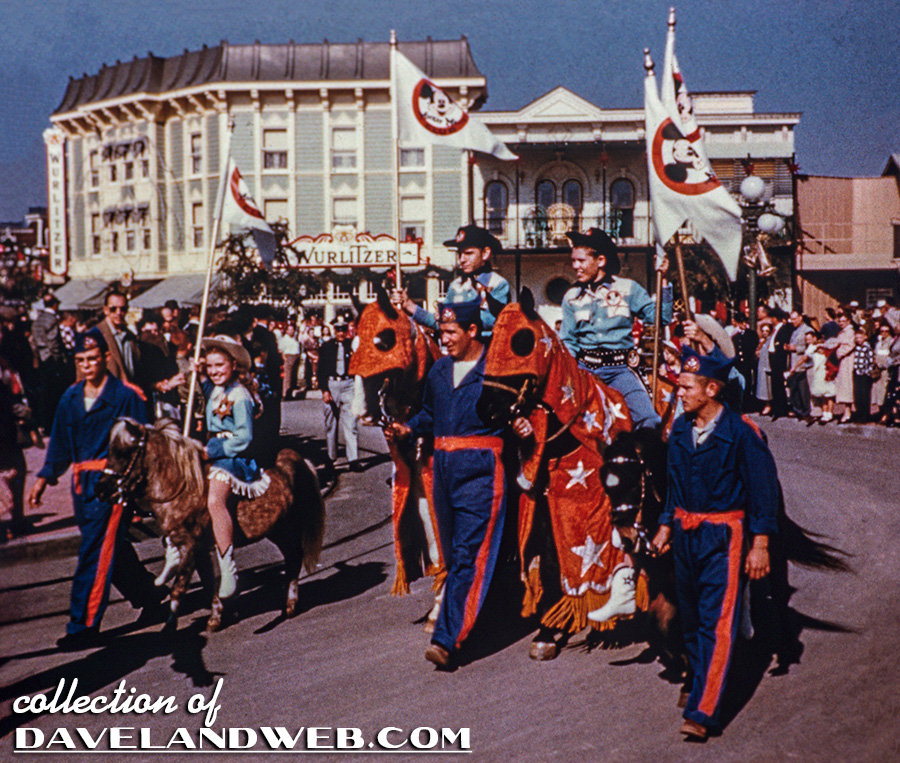
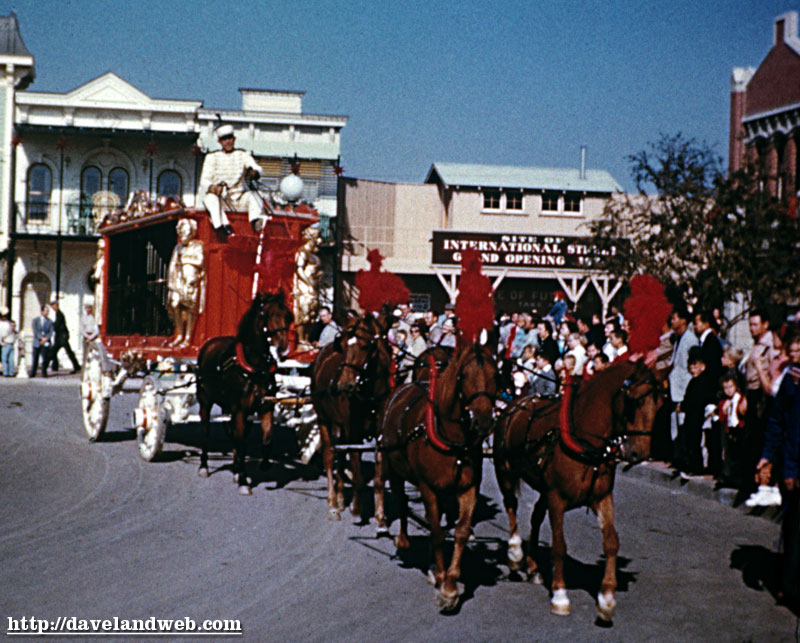
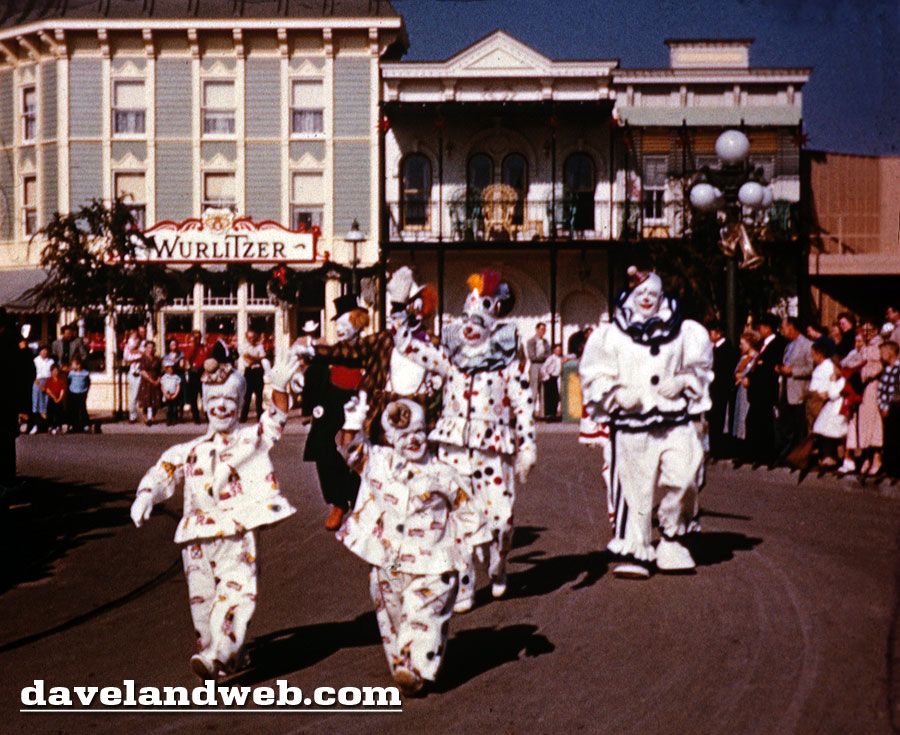
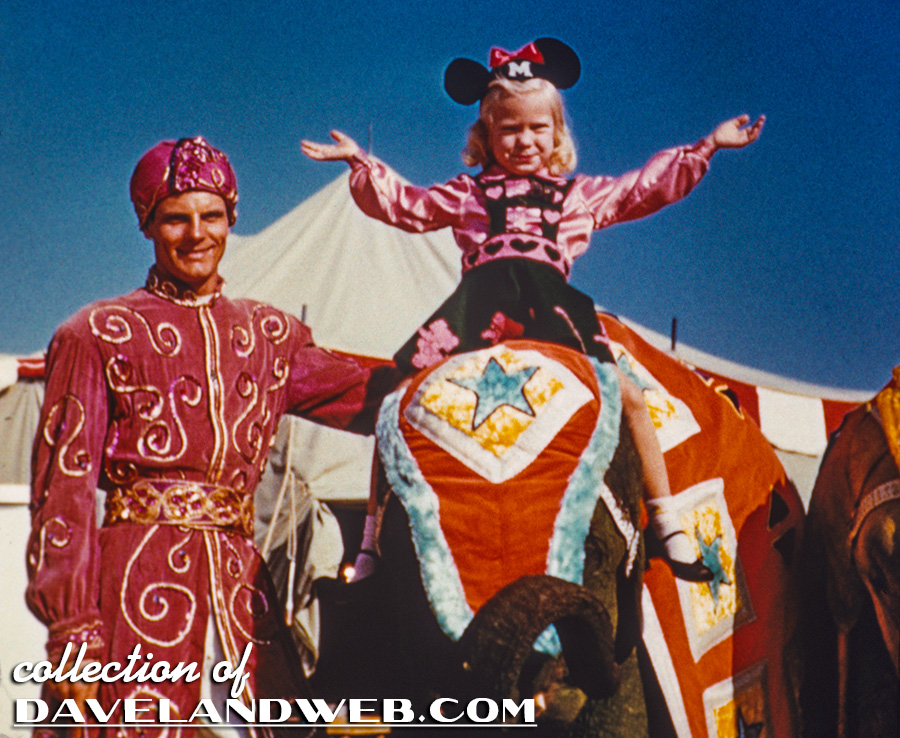
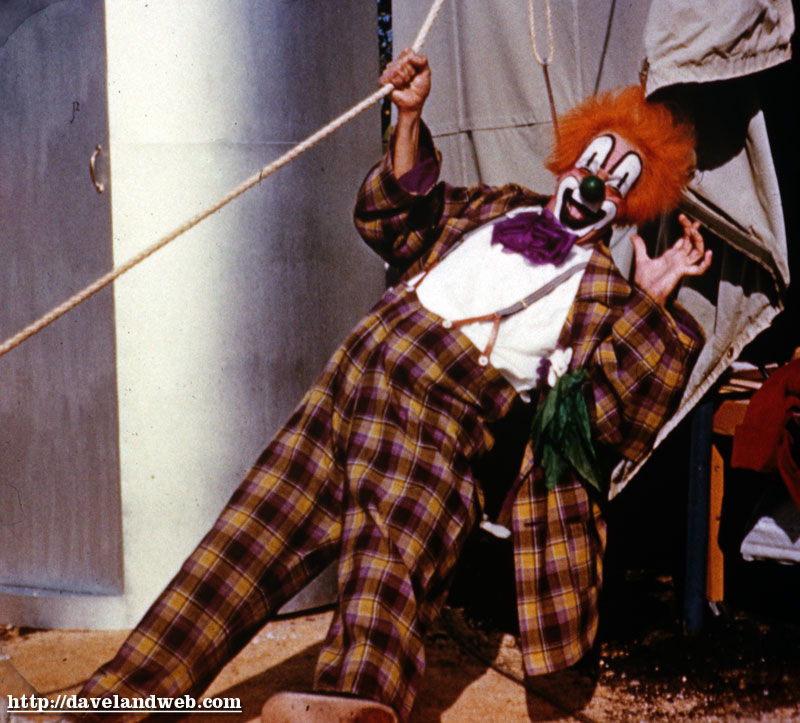
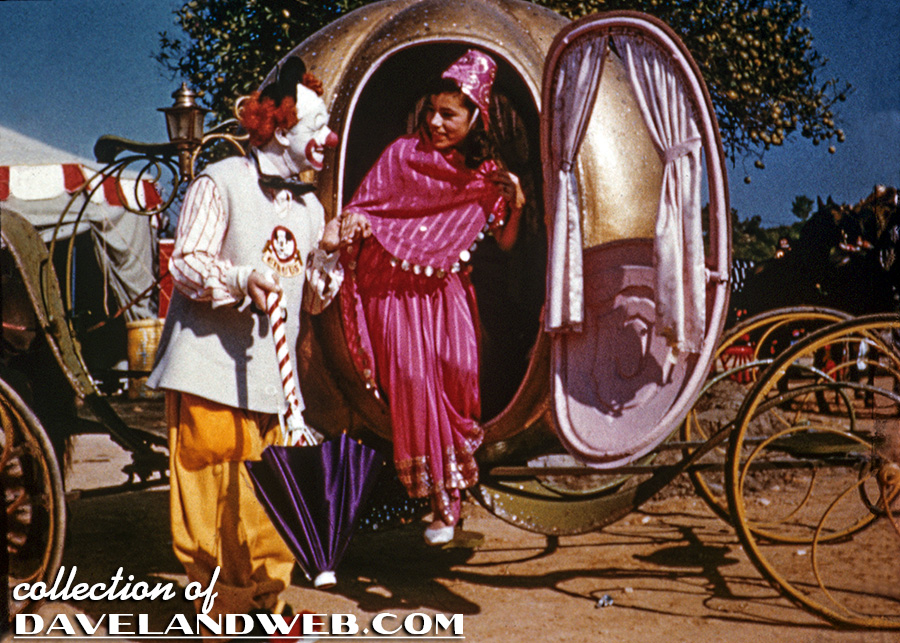
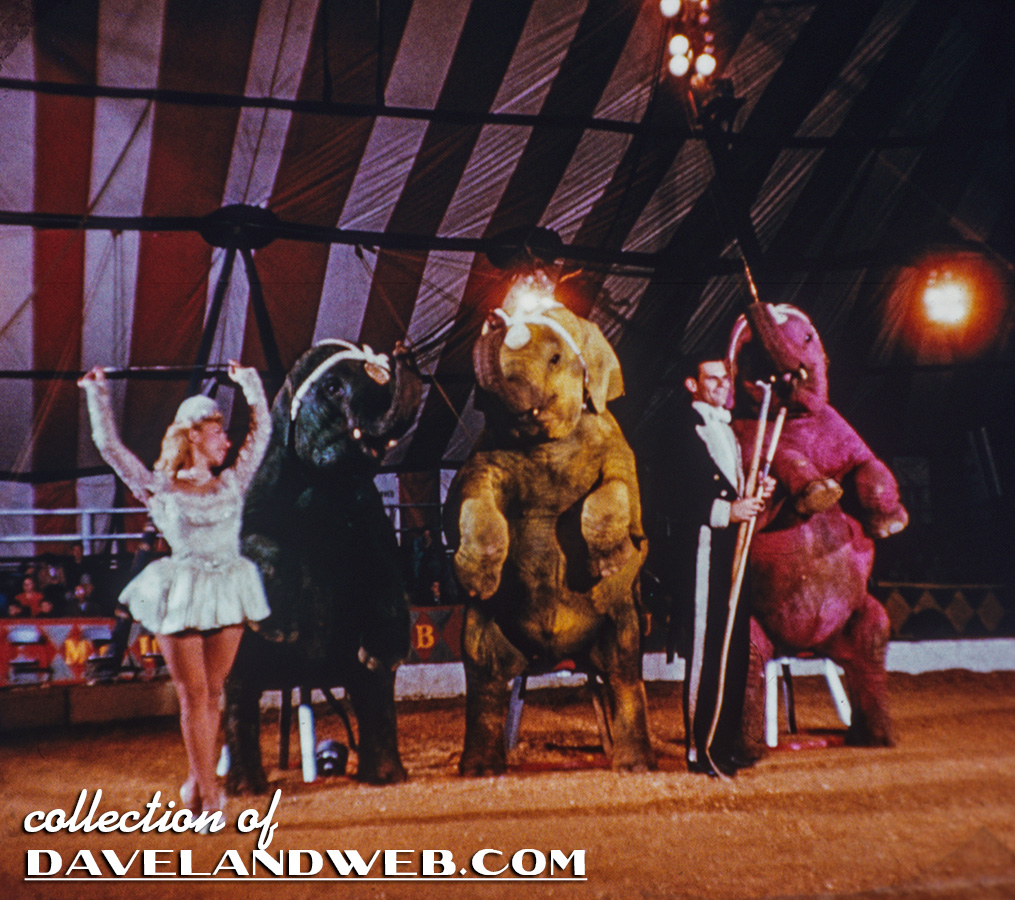
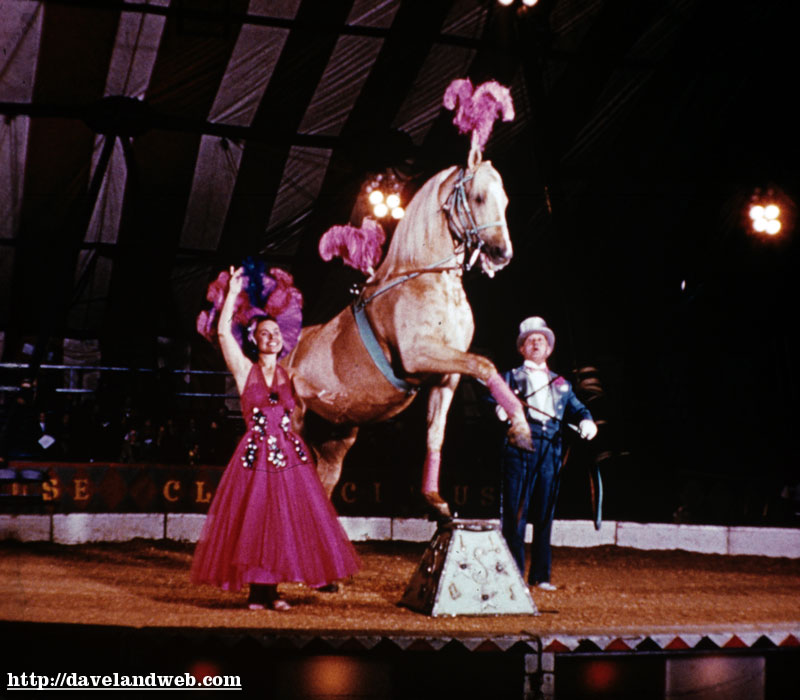
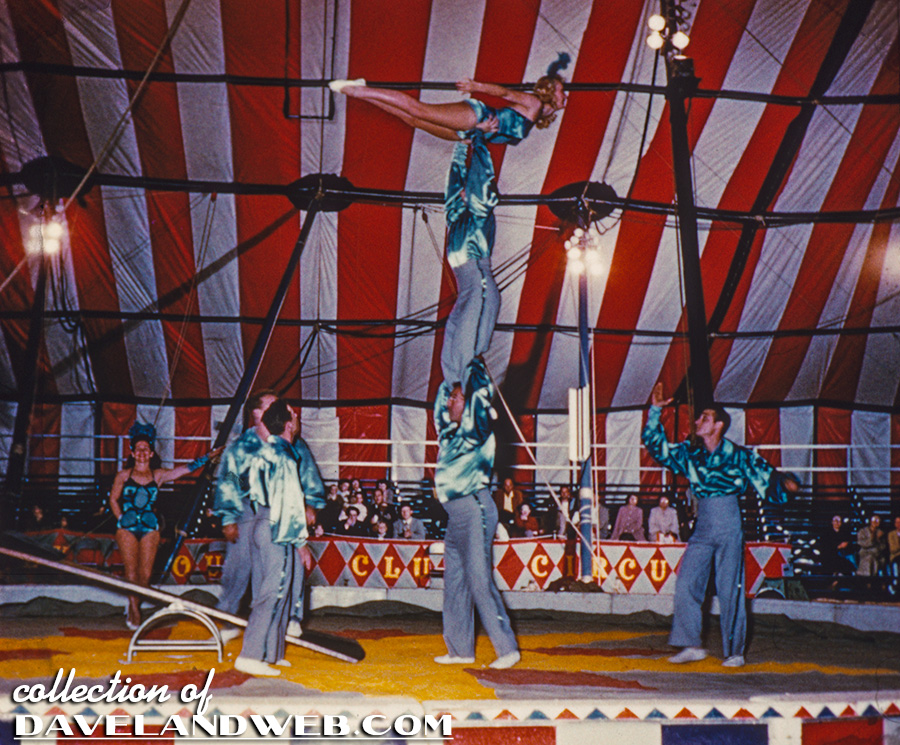
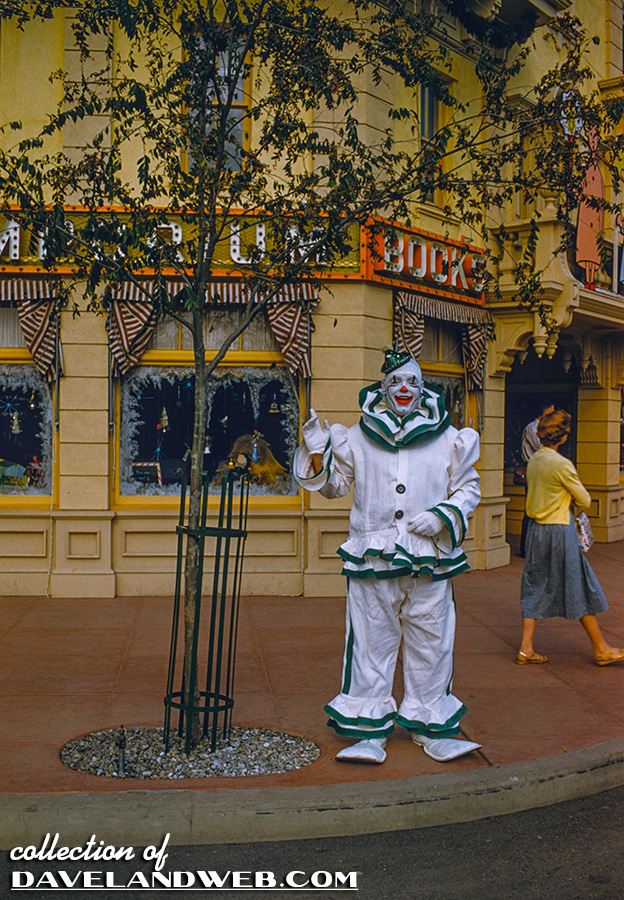
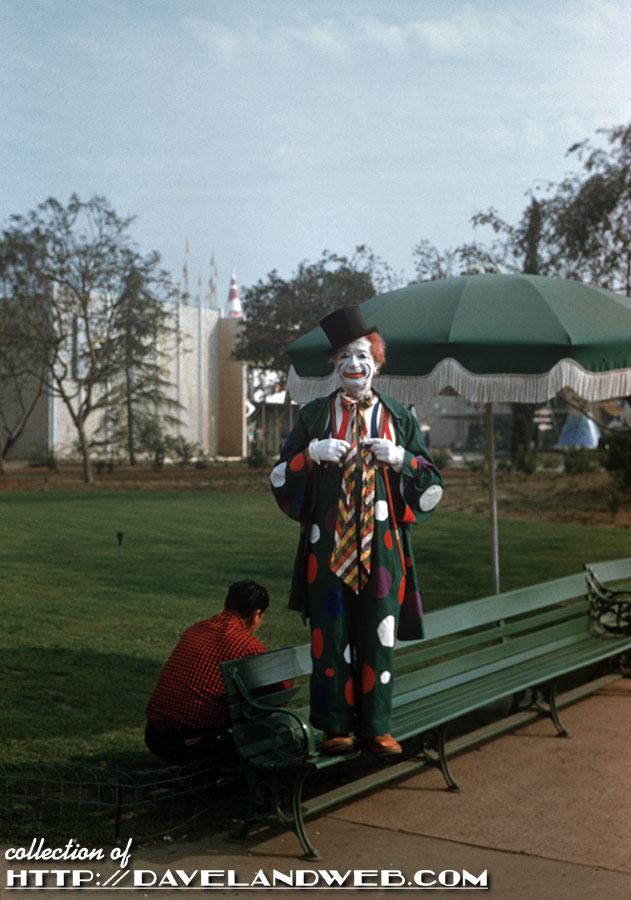
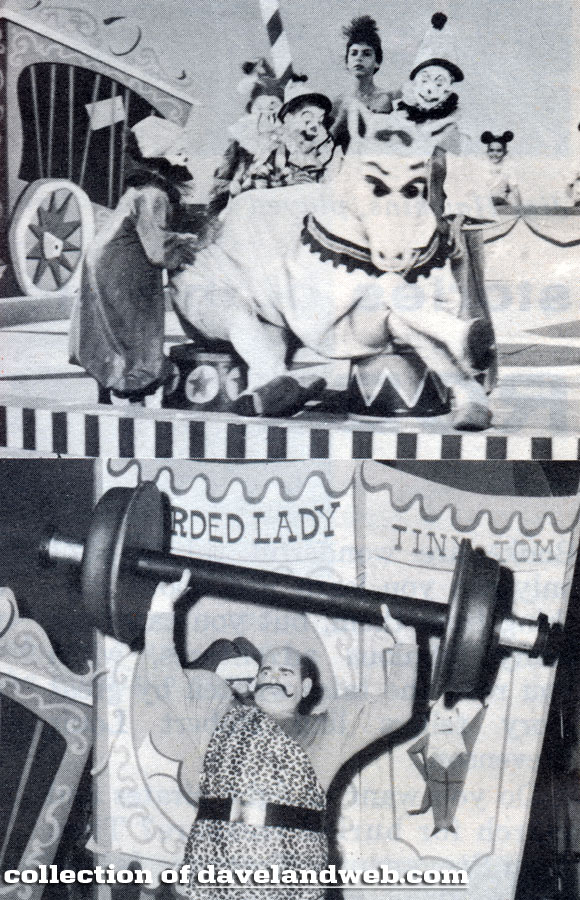
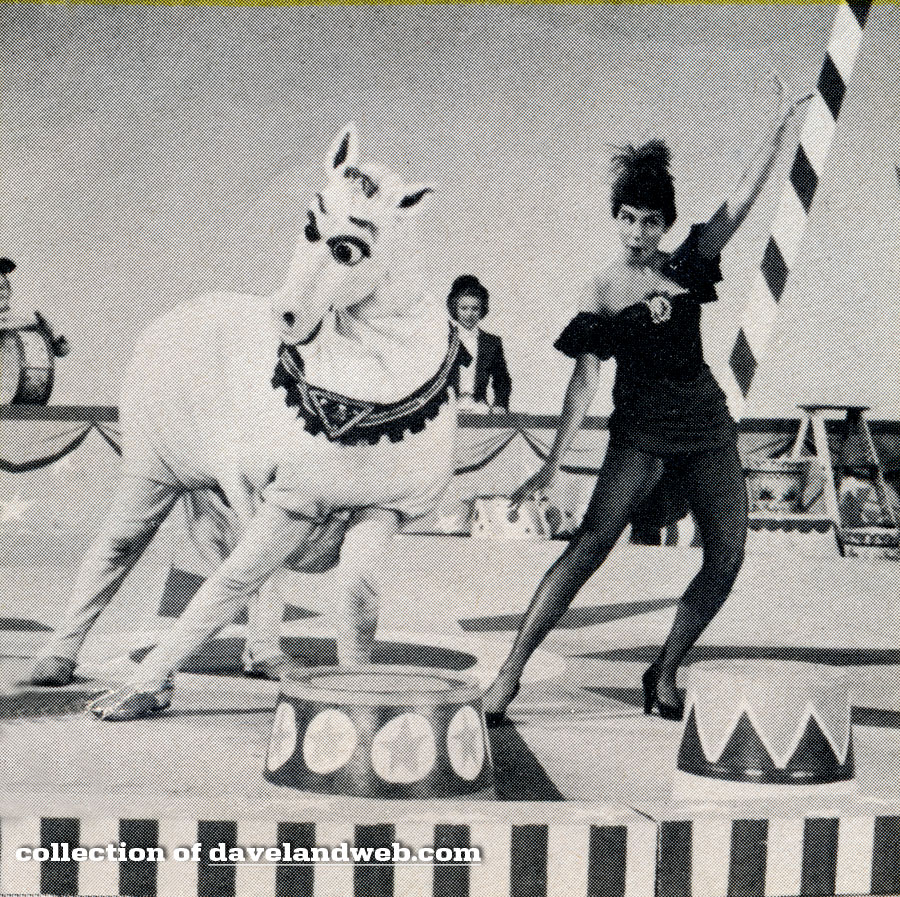
Fess Parker and Walt were the Grand Marshals for the Grand Opening Parade on November 24, 1955 (a tent-raising ceremony had occurred earlier on November 11) which started on Main Street and ended up at the large circus tent that sat on the edge of Fantasyland. Two 75 minute performances were given a day, including Christmas and New Year’s. Ted DeWayne, whose acrobatic troupe performed on the Mickey Mouse Club's first Circus Day episode, coordinated the circus acts, while the shows were staged by Hal Adelquist. Jimmie Dodd was the Ringmaster, Roy Williams the Strongman, and Bob Amsberry played Bob-O the Clown. The Mouseketeers (and some of their moms) performed in a variety of roles, including clowns, “wild” animals, aerialists, and took part in the grand parade. The show also included a 45' Christmas Tree and Santa Claus with sleigh.
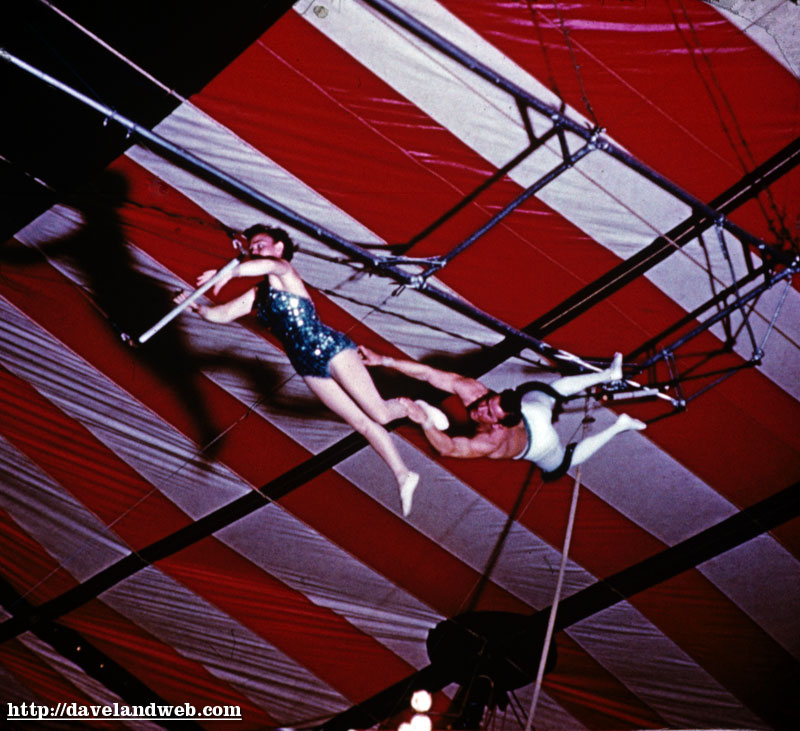
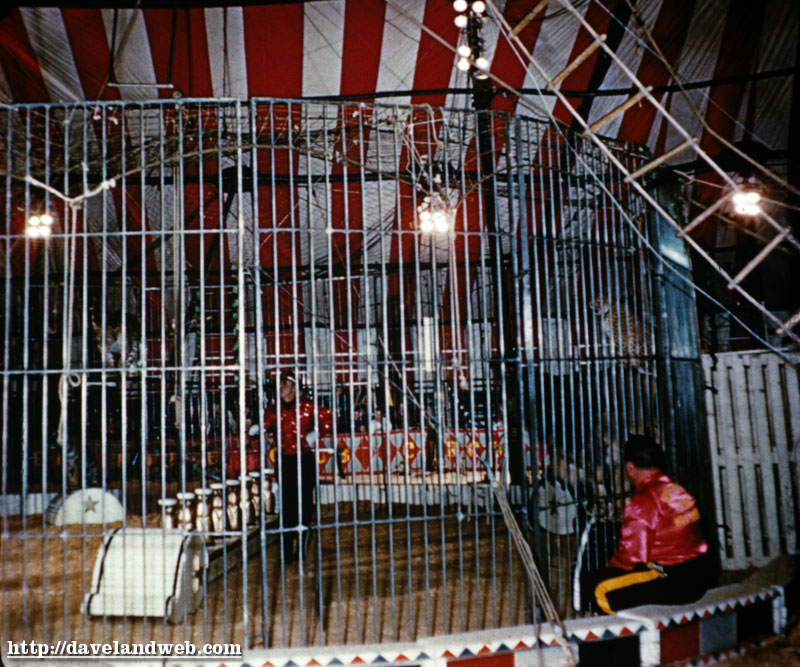
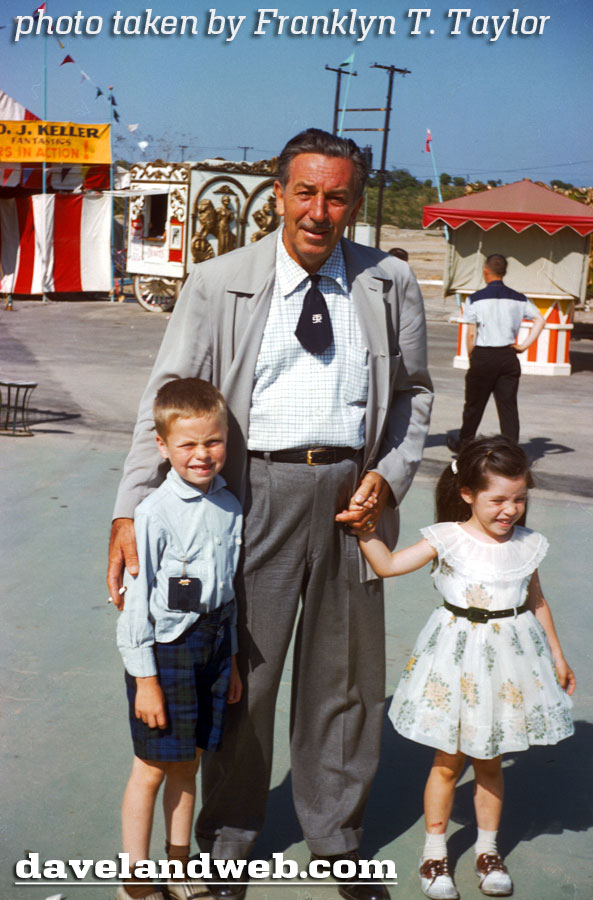
Walt Disney loved circuses but unfortunately, guests preferred to see the other more unique attractions. There were a few amusing (and not so amusing) mishaps associated with the circus: llamas escaped and ran down Main Street, spitting at guests; a black panther bit the paw off of another animal (their cages were too close together) in front of a live—and horrified—audience; one aerialist’s top came undone as she literally flew through the air and couldn't grab it, before the poor bare-breasted beauty had to clasp hands with the man catching her on the other trapeze. On January 8, 1956 the circus closed from lack of attendance. The large tent was taken down, but the smaller one remained for Prof. George J. Keller and his Ferocious Felines. Apparently, for several months earlier in 1956 the tent was moved to behind Main Street, where First Aid is now. Then it moved back to where the Circus had been. Those tents really got around. Back to Prof. Keller! From Feb. 19, 1956—Sept. 7, 1956, Prof. George J. Keller and his Ferocious Felines performed in the smaller tents that eventually found their way out to Holidayland. The Circus Wagons went back to the Disney Studio and were used in the 1960 film Toby Tyler or Ten Weeks with a Circus. Eventually, they were donated to the Circus World Museum in Baraboo, Wisconsin. Many thanks to Lonnie Burr who helped correct some of the id’s below!
Recently, I received an email from Mary, the daughter of Gil Gray filling in some details for me on her father’s involvement with The Mickey Mouse Club Circus at Disneyland:
At the request of Mr. Disney through Herb Adlequist, the Gil Gray Circus was invited to Disneyland to provide the Mickey Mouse Club Circus with infrastructure, performers and expertise. They opened Thanksgiving Day 1955. The photos on your site give a good representation of the people, animals, and equipment from my fathers show and bring back many fond memories. Many of us gathered in Dallas Texas this past April at a reunion in memory of Dad sponsored by George Carden and it was well attended by many who were at Disneyland. We plan to do it again when the George Carden Circus plays Fair Park in 2011.
Many thanks to Mary for helping identify many of the photos below.














The Winter 1956 issue of the Mickey Mouse Club Magazine featured a nice plug for the failing Mickey Mouse Club Circus; by the time the issue hit the stands, the fate of the Circus was already sealed. Here's what the story said:
THE MOUSEKETEERS JOIN THE CIRCUS AT DISNEYLAND
Featured by a magnificent parade, a complete variety show by the Mouseketeers, a thrilling animal headliner, clow antics and a whirl of other exciting acts under the biggest striped tent in the world, the Mickey Mouse Club Circus made a great hit with the thousands of Disneyland visitors who saw it during the Thanksgiving through Christmas holiday season. It also gave happy promise of many other special events at Disneyland in the coming months. The idea for a real children's circus had long been in Walt Disney's mind. It got extra impetus from the popularity of circus day on the Mickey Mouse Club television program. The Mouseketerrs gave a fine performance, and a thrilling highlight in the arena was the control of 30 savage cats in a cage by George Keller. Ted de Wayne was the ringmaster. Circus wagons used in the parade of Disney characters are famous relis collected from all parts of America.


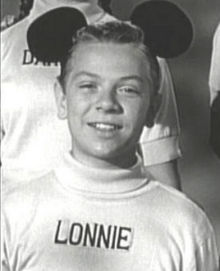 Being a pro since '48, my focus was doing the work and making sure I did not hurt one of the girls. We did the costume parade at the top of the show; changed costumes and did a safer “flying act” - the boys swung a short ladder that was perpendicular and lifted after the Mouse girls got on. While swinging back and forth, the girls did a routine of balletic poses.
We were also in a parade on Main Street opening day at Disneyland, which was our first TV appearance before the series premiere on Oct. 3, 1955. We did a dance/vocal number outside the MMC Theatre in Fantasyland that also showed our first roll call. Some were in the Ears outfit, and some (like me) were in Talent-Roundup cowboy duds. There was no time to ride any of the attractions on opening day; we were working!
Thanks to Lonnie for taking the time to share his memories of the Circus & Opening Day. Check out his website to learn about the rest of his distinguished career: www.mouseketeerlonnieburr.com