BACKSTORY: Walter Knott and his family sold berries and pies from a roadside stand beside State Route 39 in the 1920’s. A decade later, Knott was introduced to a new berry cultivated by Rudolph Boysen. The plant was a cross of the red raspberry, blackberry, and loganberry. Walter started to sell them at his roadside stand and dubbed them “boysenberries. In 1934, Knott’s wife Cordelia began selling fried chicken dinners served to guests on their wedding china.
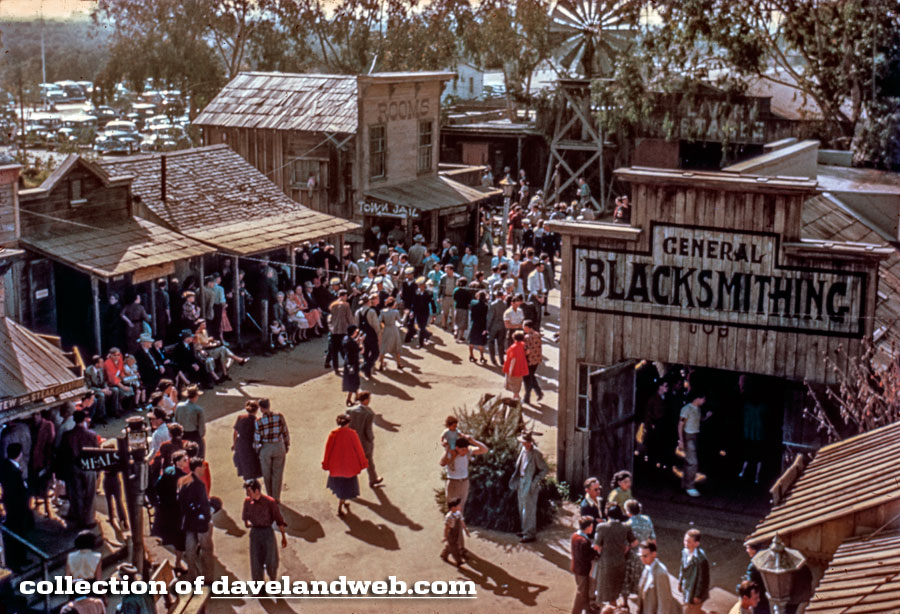
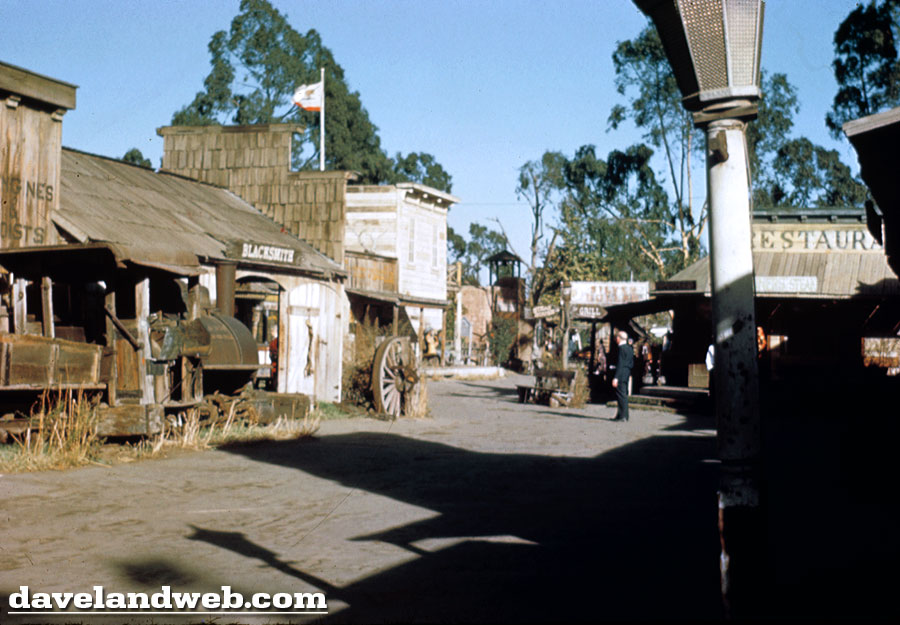
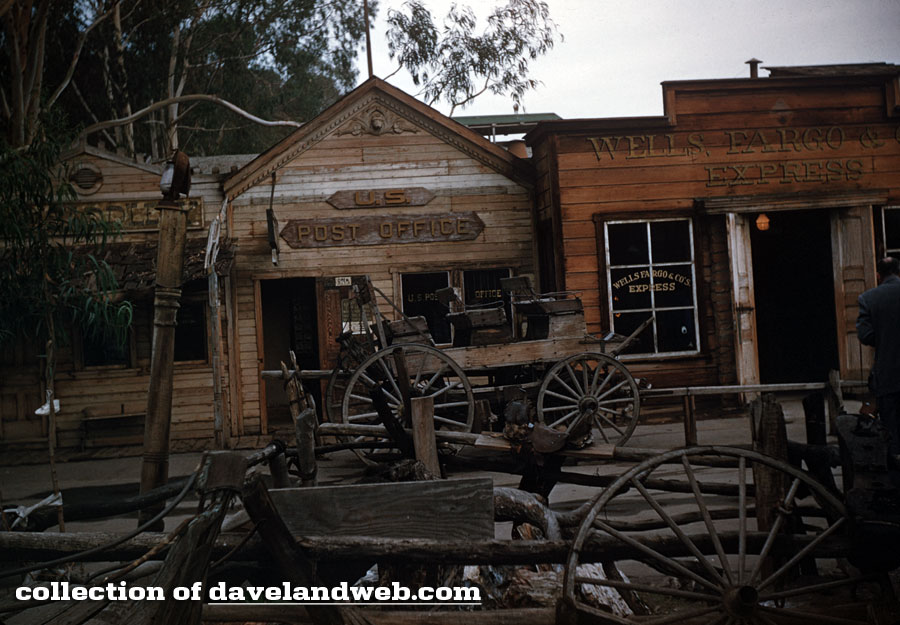
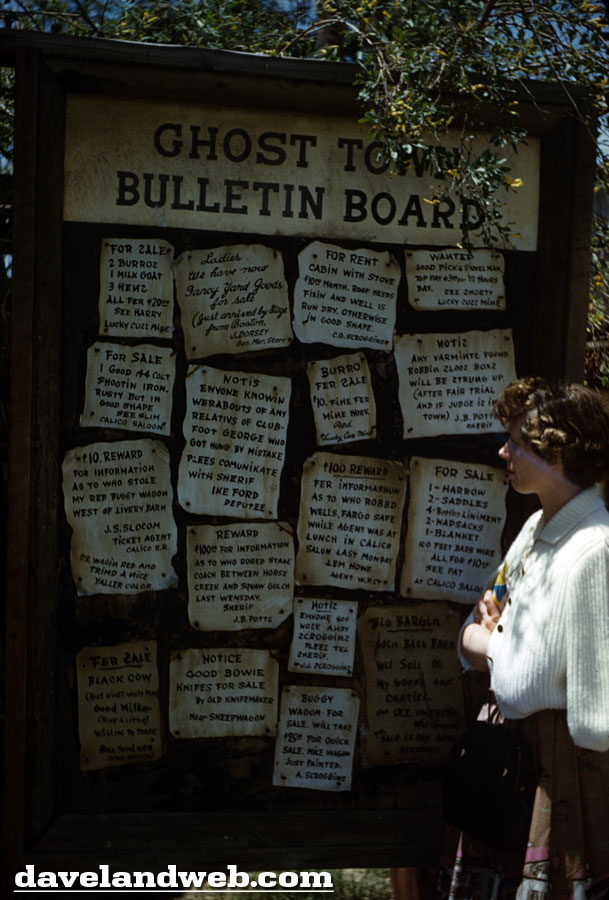
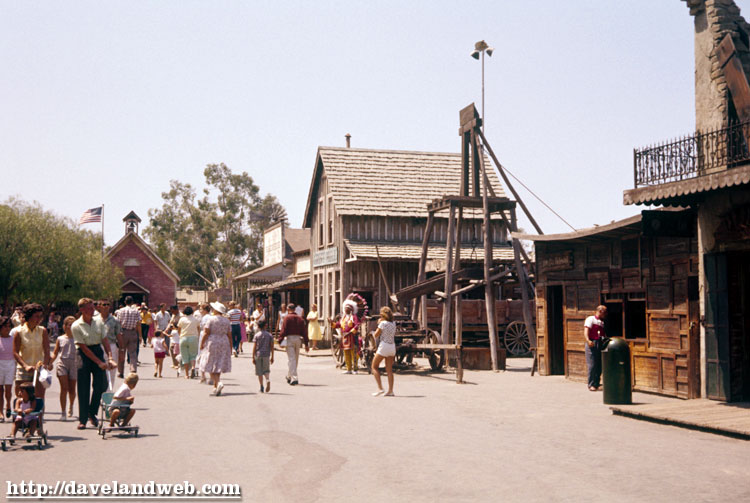
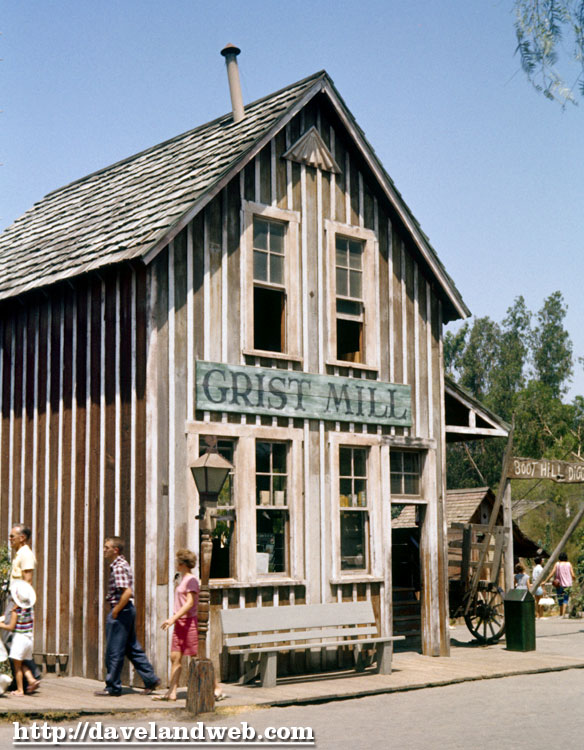
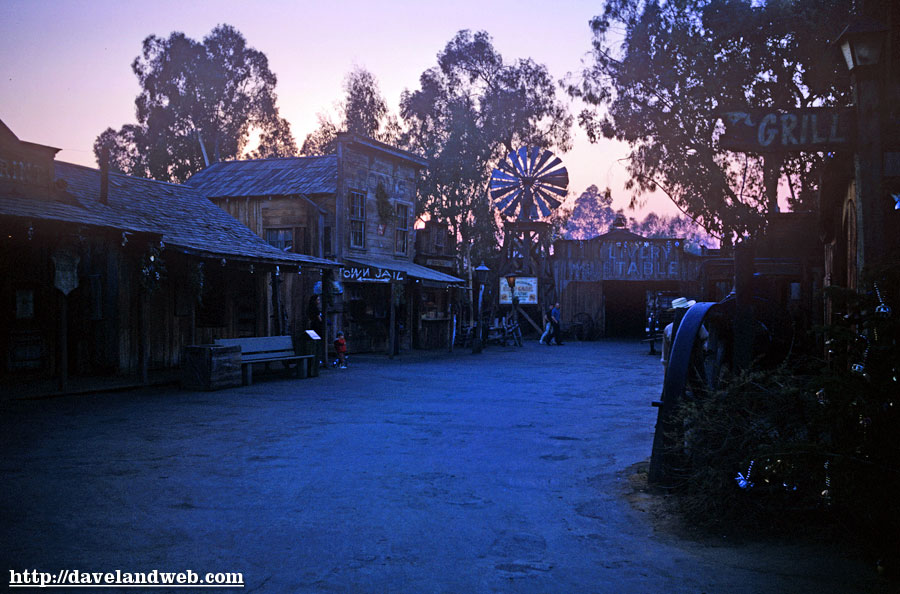
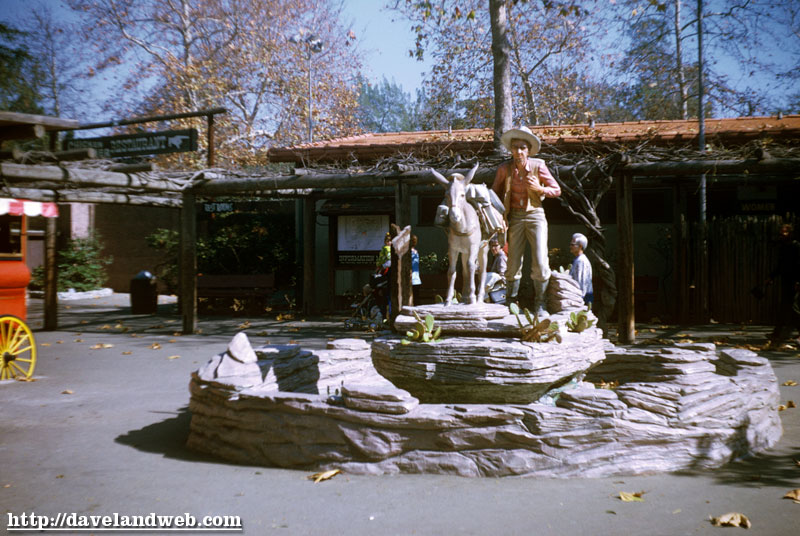
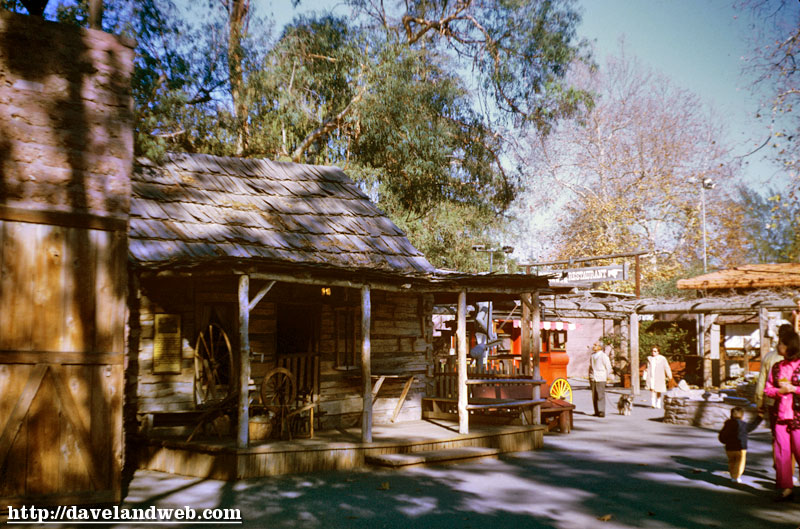
For dessert, Knott’s boysenberry pie became a staple, served in the small tea room. Within a few years, lines outside the restaurant were often several hours long. To entertain the waiting crowds, Walter built a ghost town in 1940, using buildings relocated from real old west towns such as Calico, California and Prescott, Arizona. A narrow-gauge train ride, pan-for-gold area, and the Calico Mine Ride were attractions that were added later on. When Disneyland was built nearby, the two parks were not seen as direct competitors, due to their differences. Walt Disney visited Knott's Berry Farm on a number of occasions, and hosted the Knotts at his own park. They had a cordial relationship and worked together on many community causes.
The Knott family fenced the farm in 1968, charged admission for the first time, and Knott’s Berry Farm officially became an amusement park. Because of its long history, Knott's Berry Farm claims to be "America's First Theme Park.” In the 1970’s, the park had three theme areas: Old West Ghost Town, Fiesta Village, and the Roaring Twenties, a nostalgic traditional amusement area. In 1995, the Knott family sold the food specialty business to ConAgra and two years later, they sold the amusement park operations to Cedar Fair Entertainment Co.
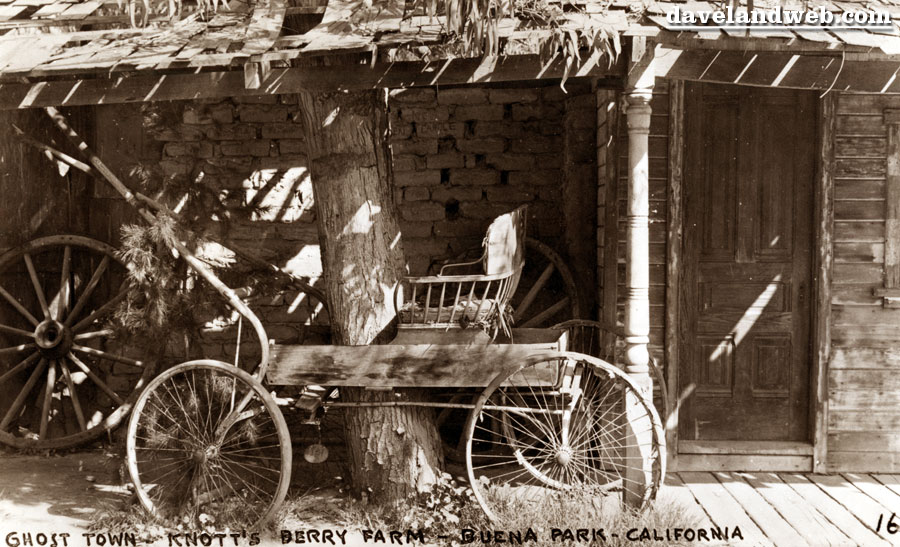
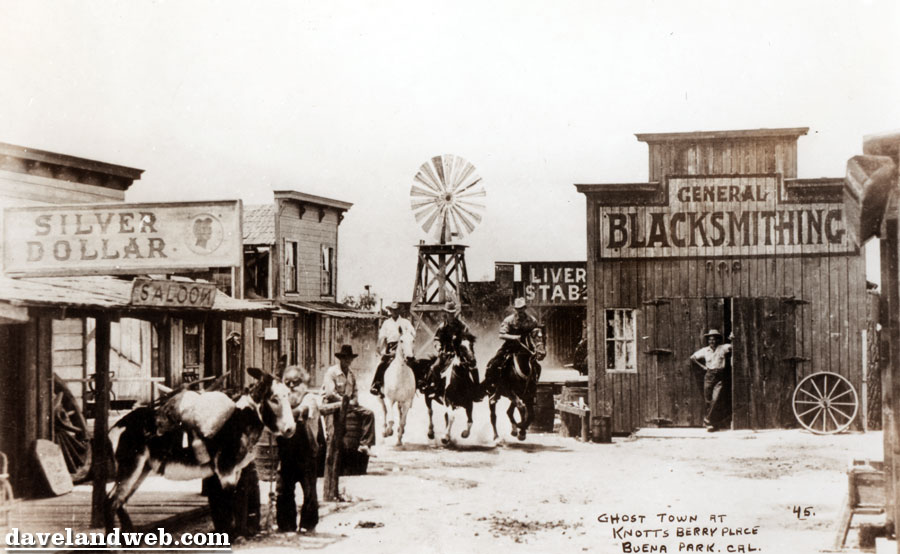


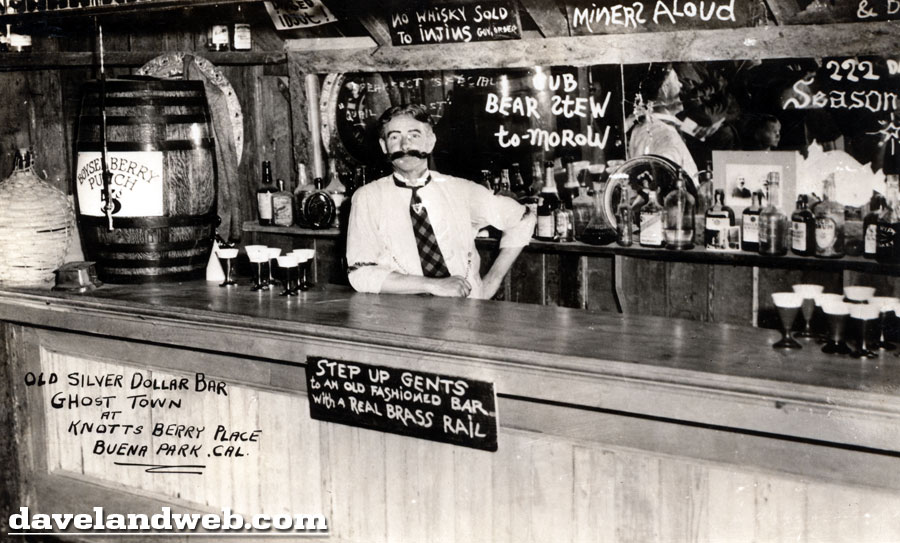
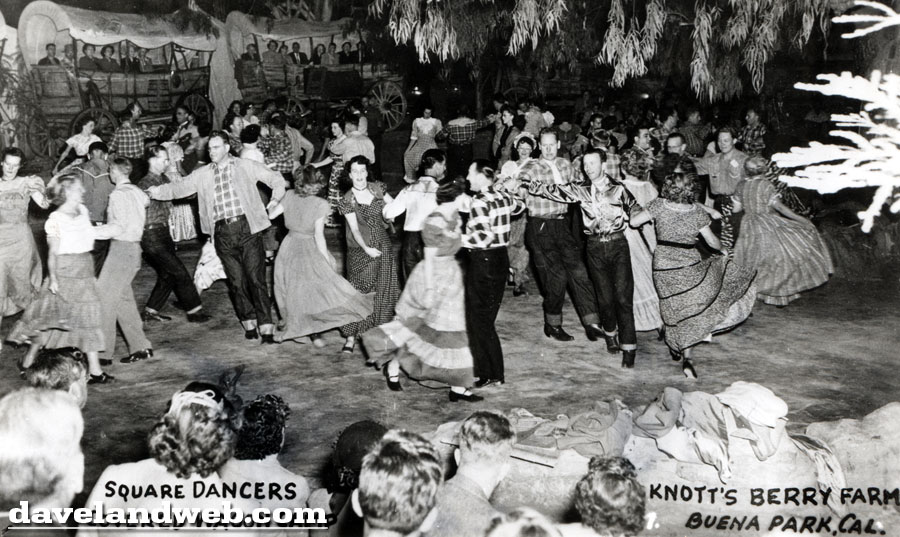

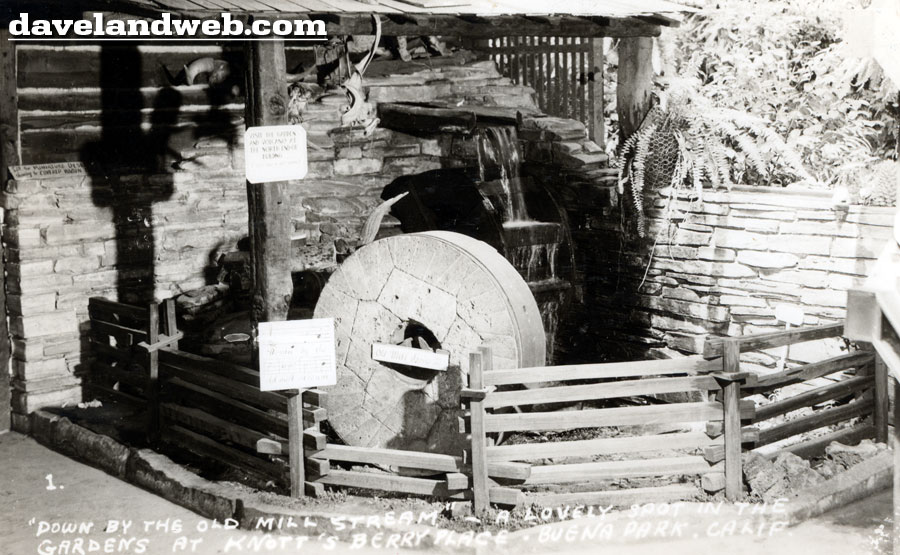
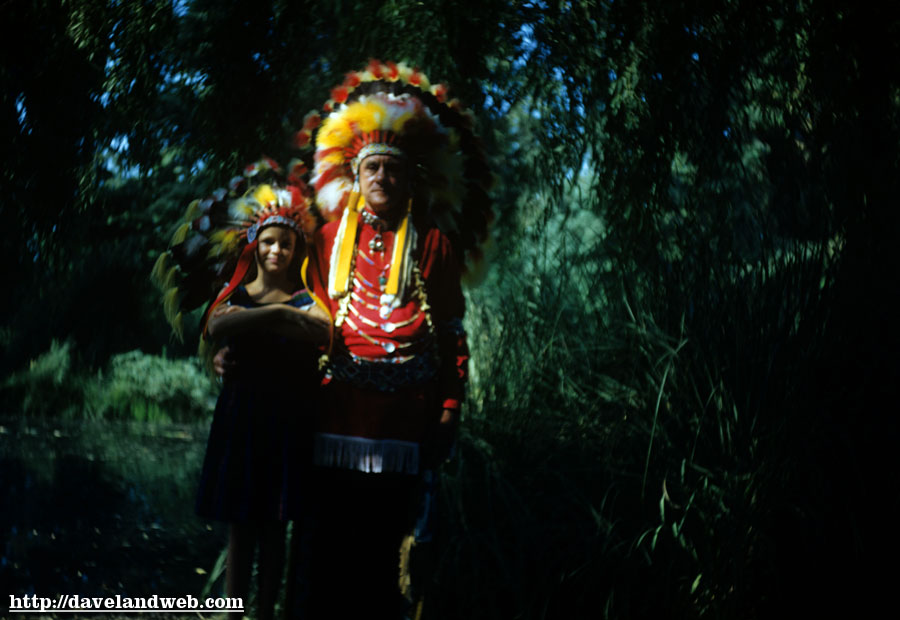
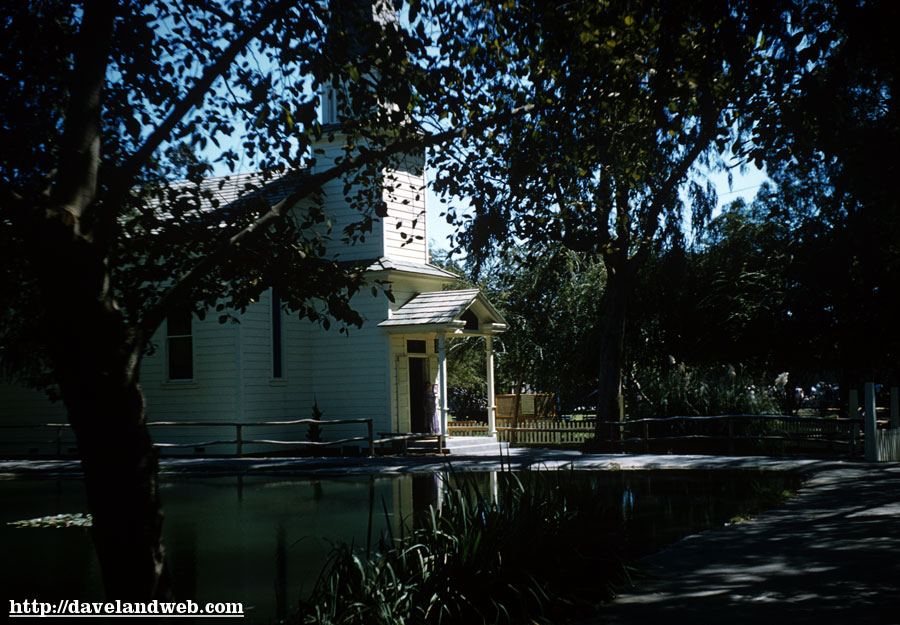
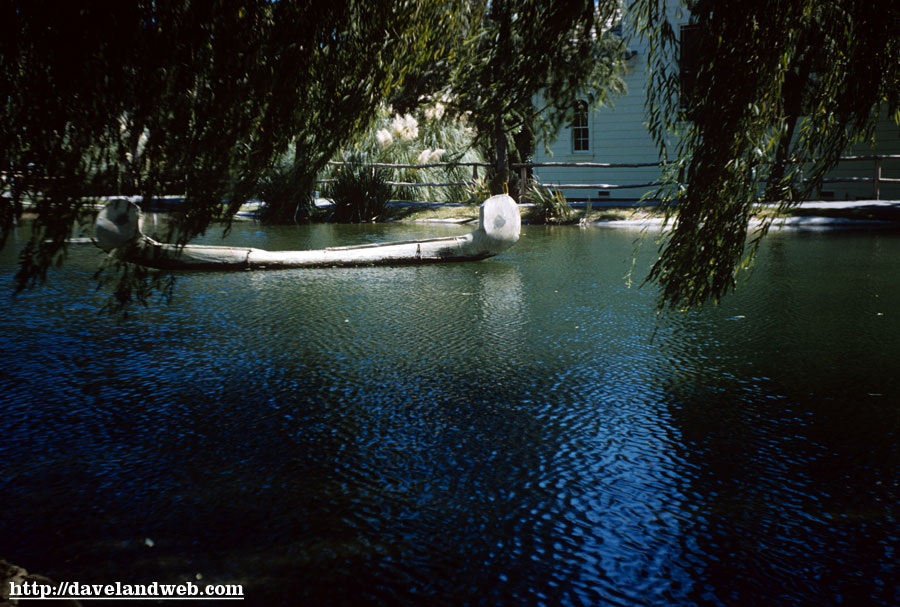
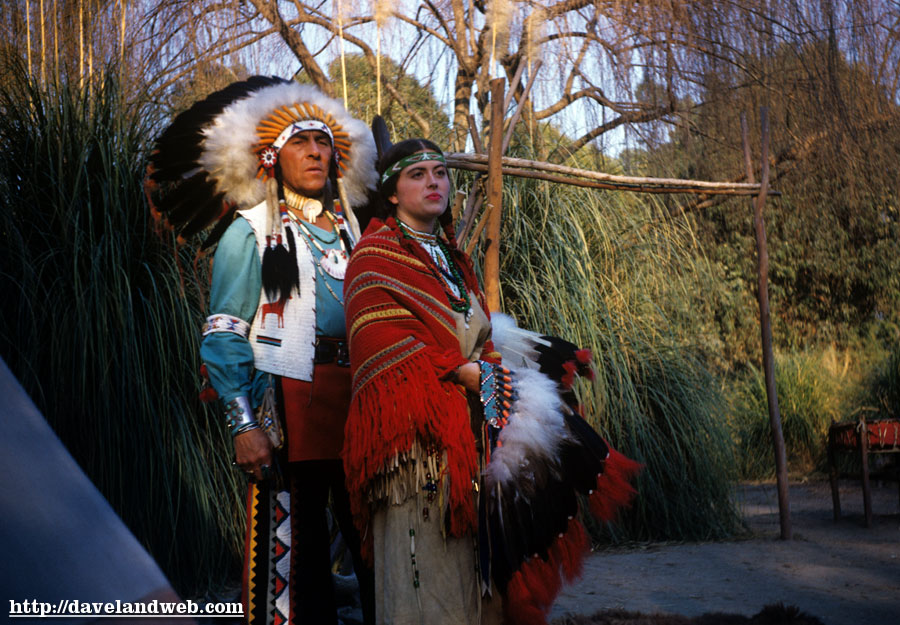
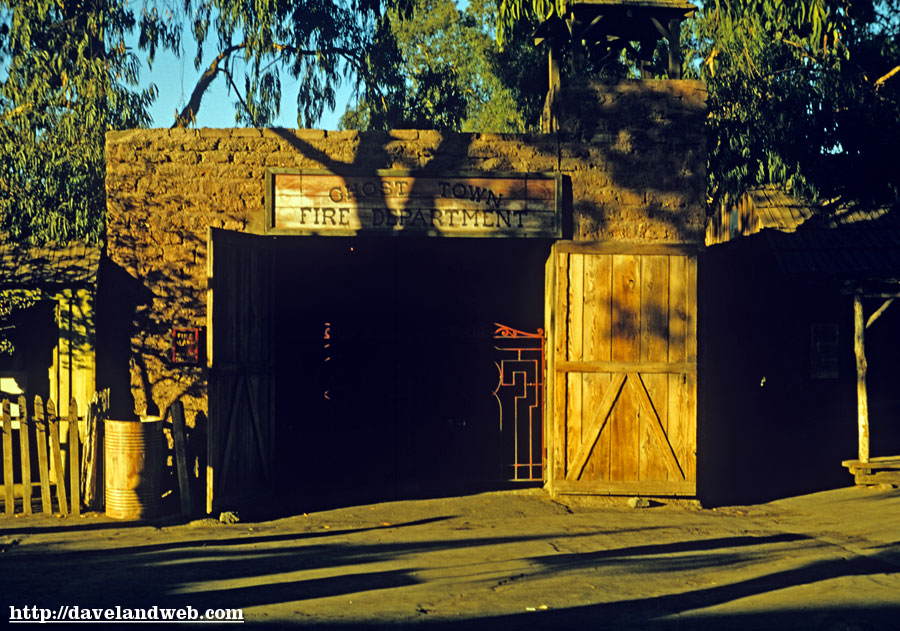
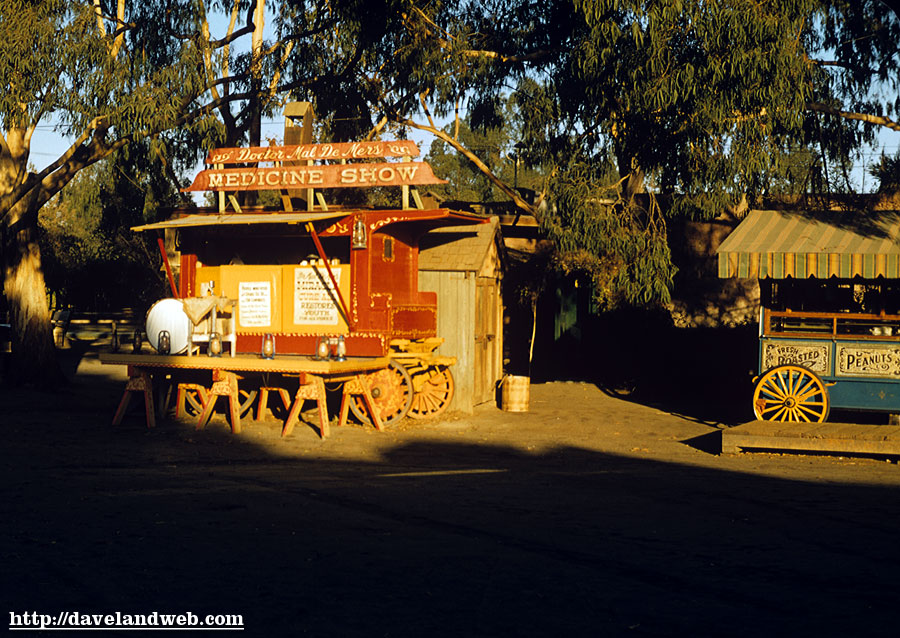
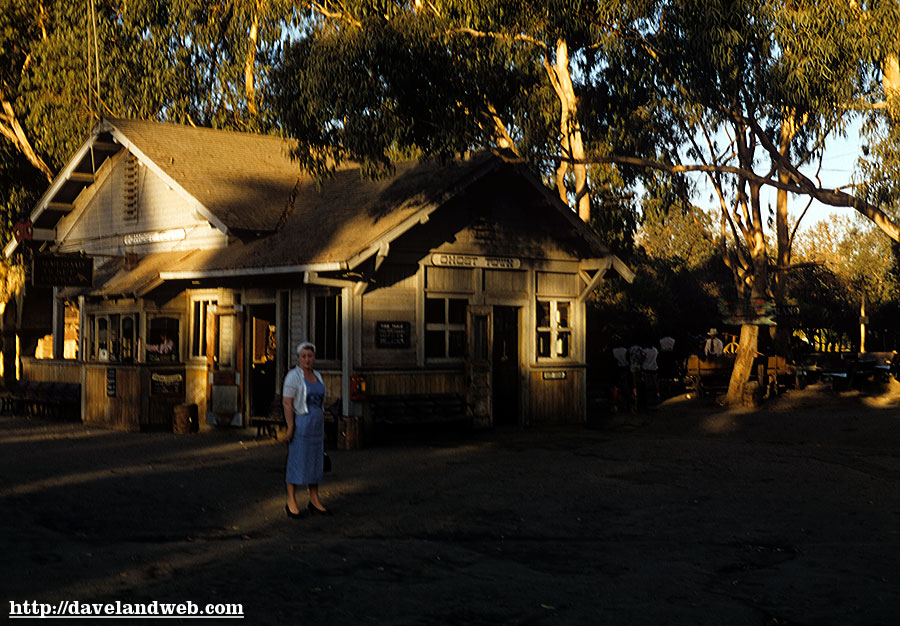
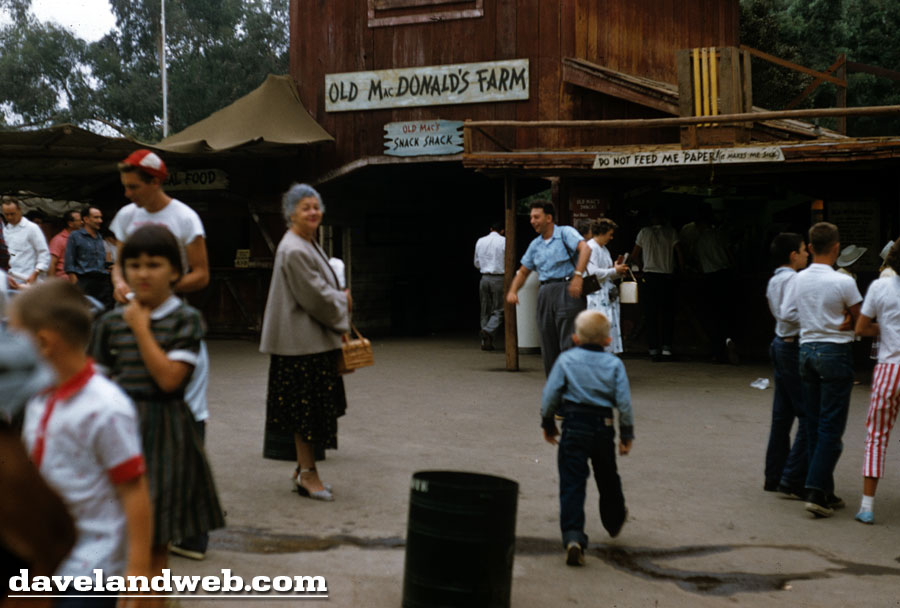
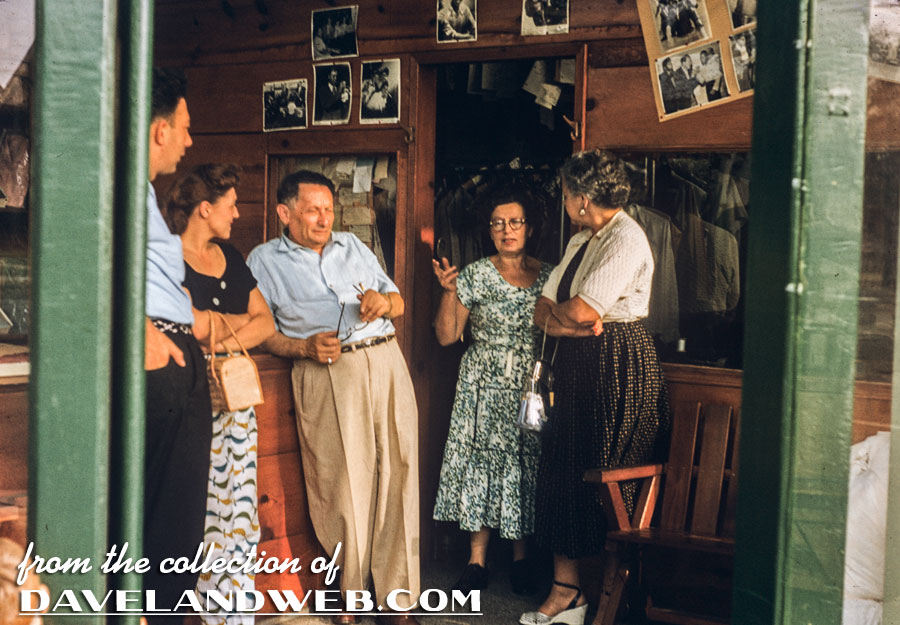
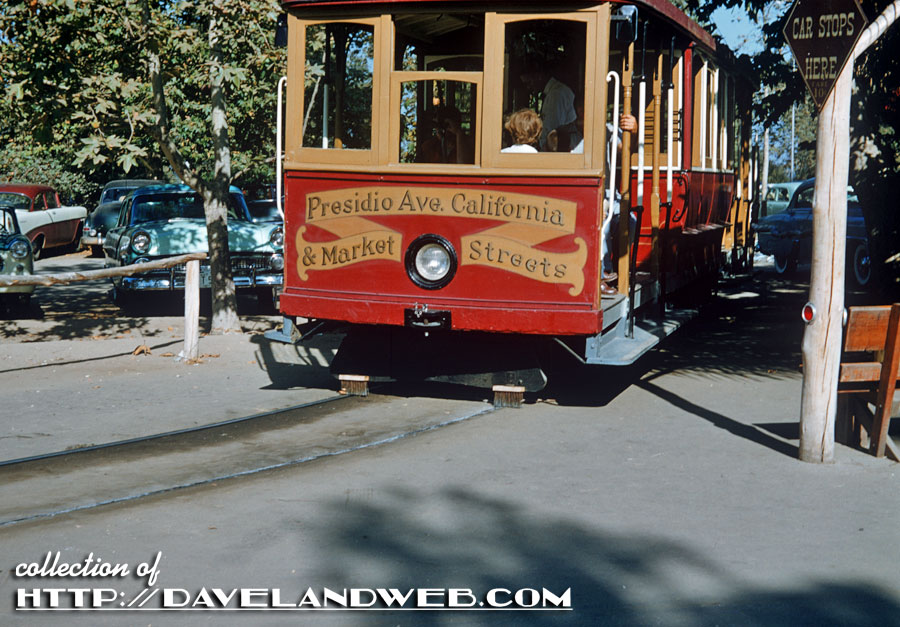
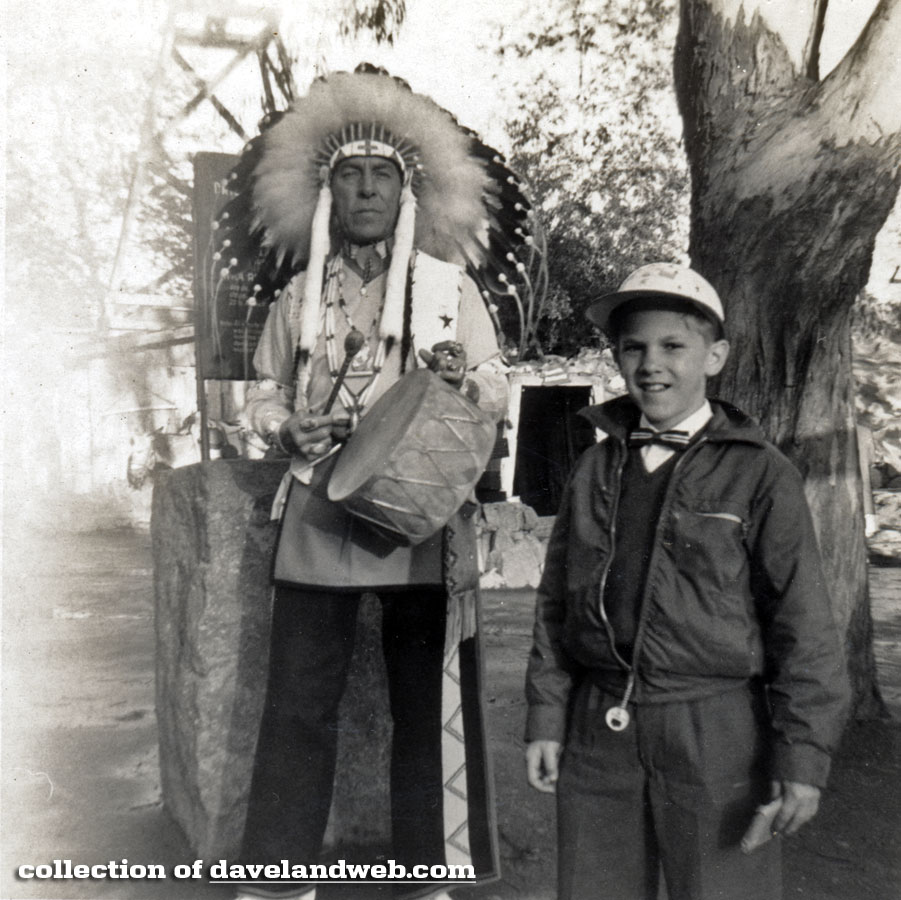
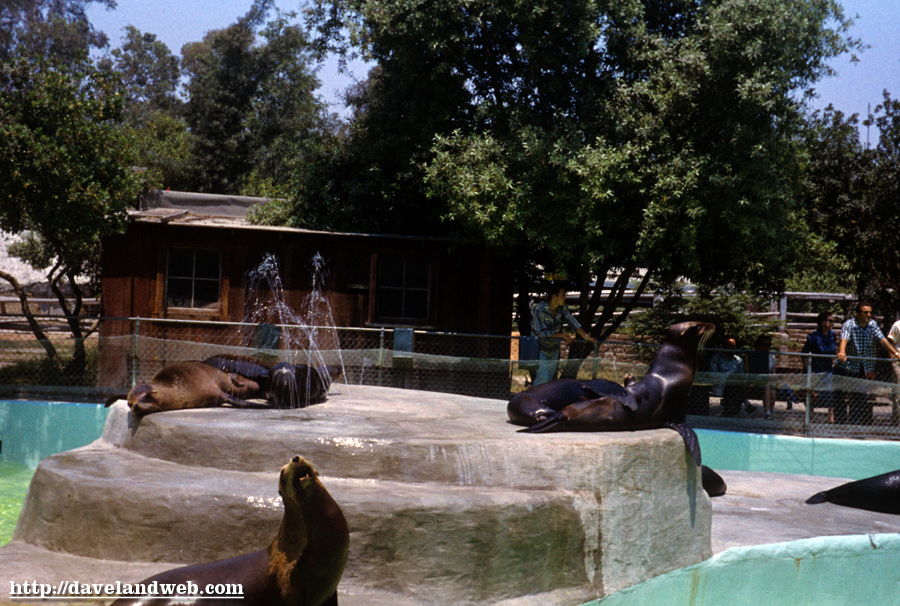
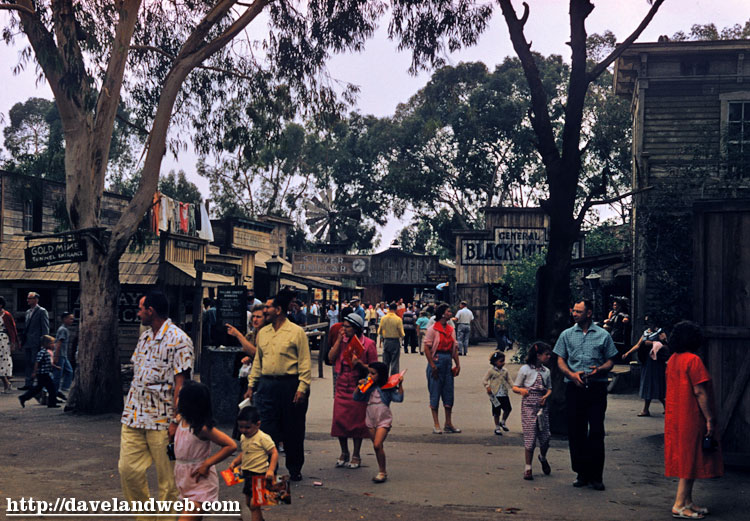
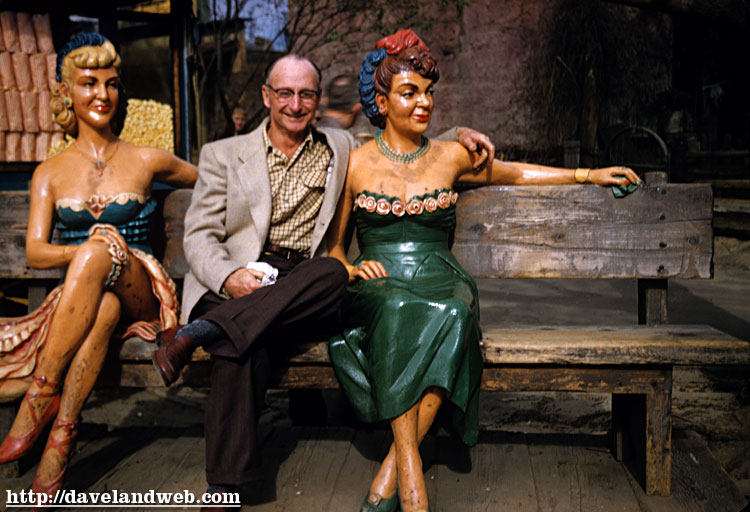
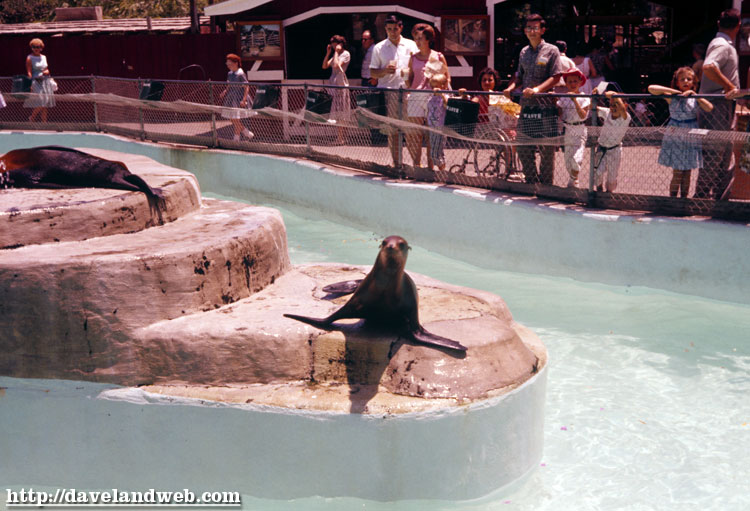
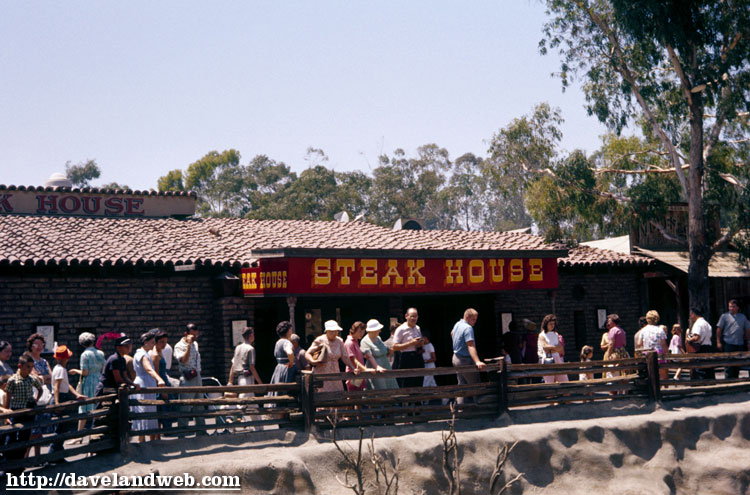
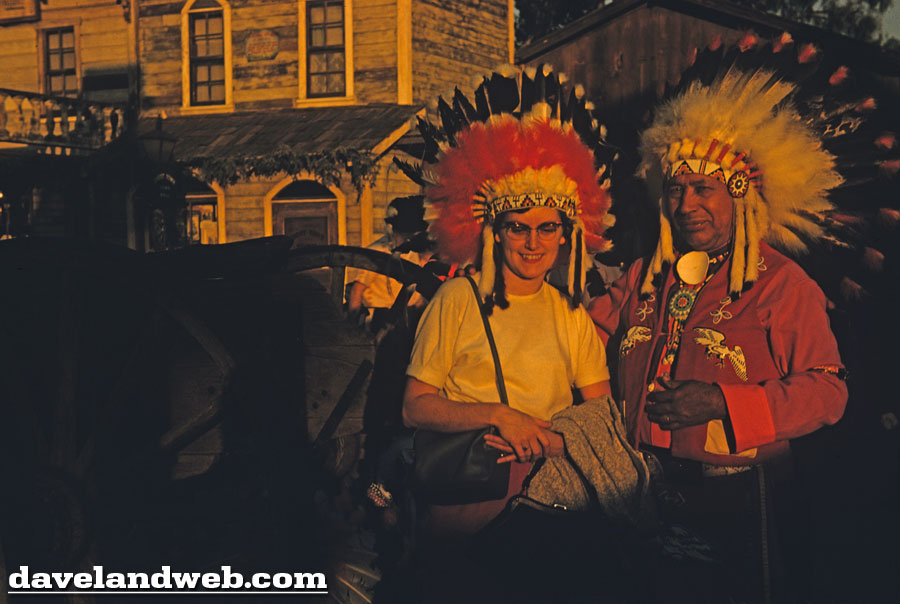
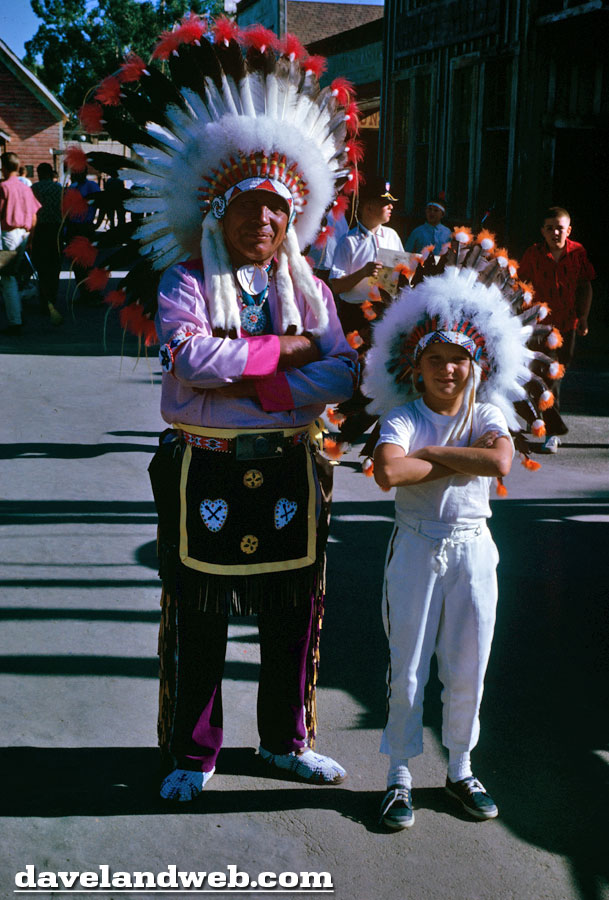
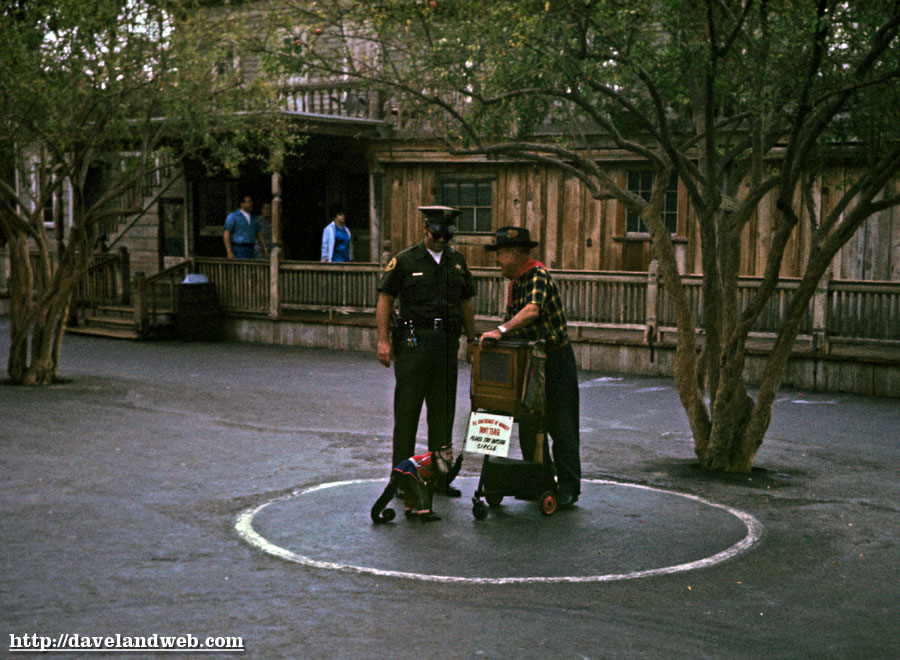
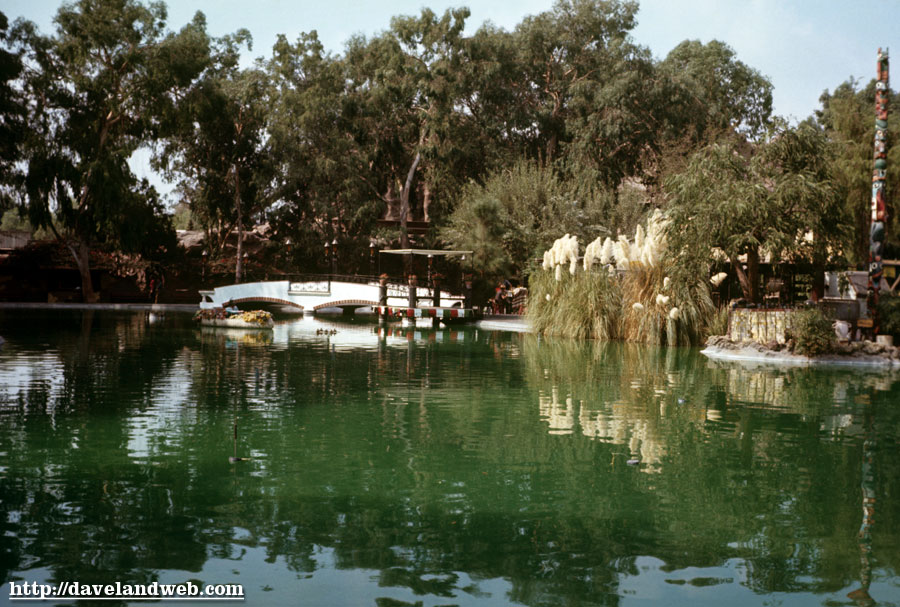
BACKSTORY: Daveland reader David W. was very generous in sharing some treasured photos from his family of early Knott’s. Here is David’s commentary:
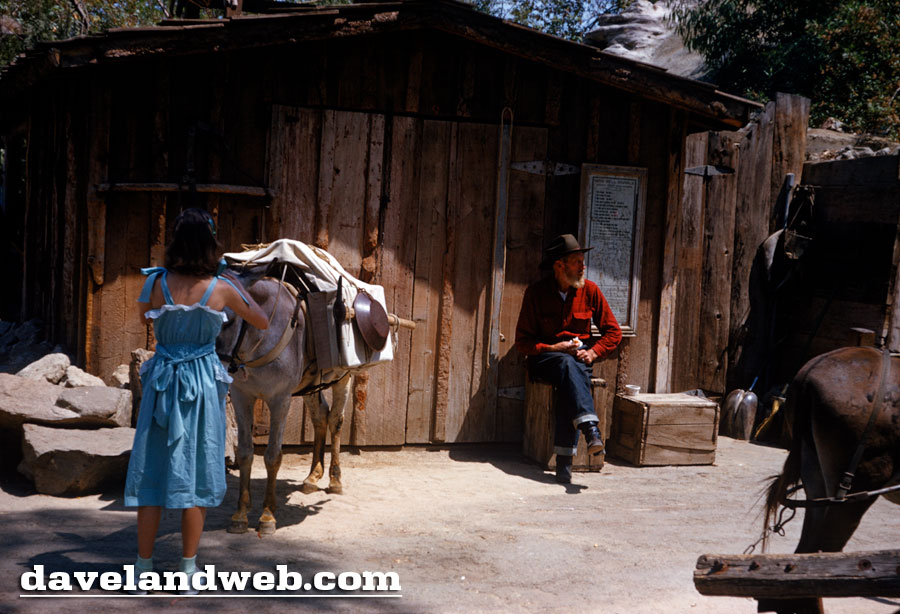
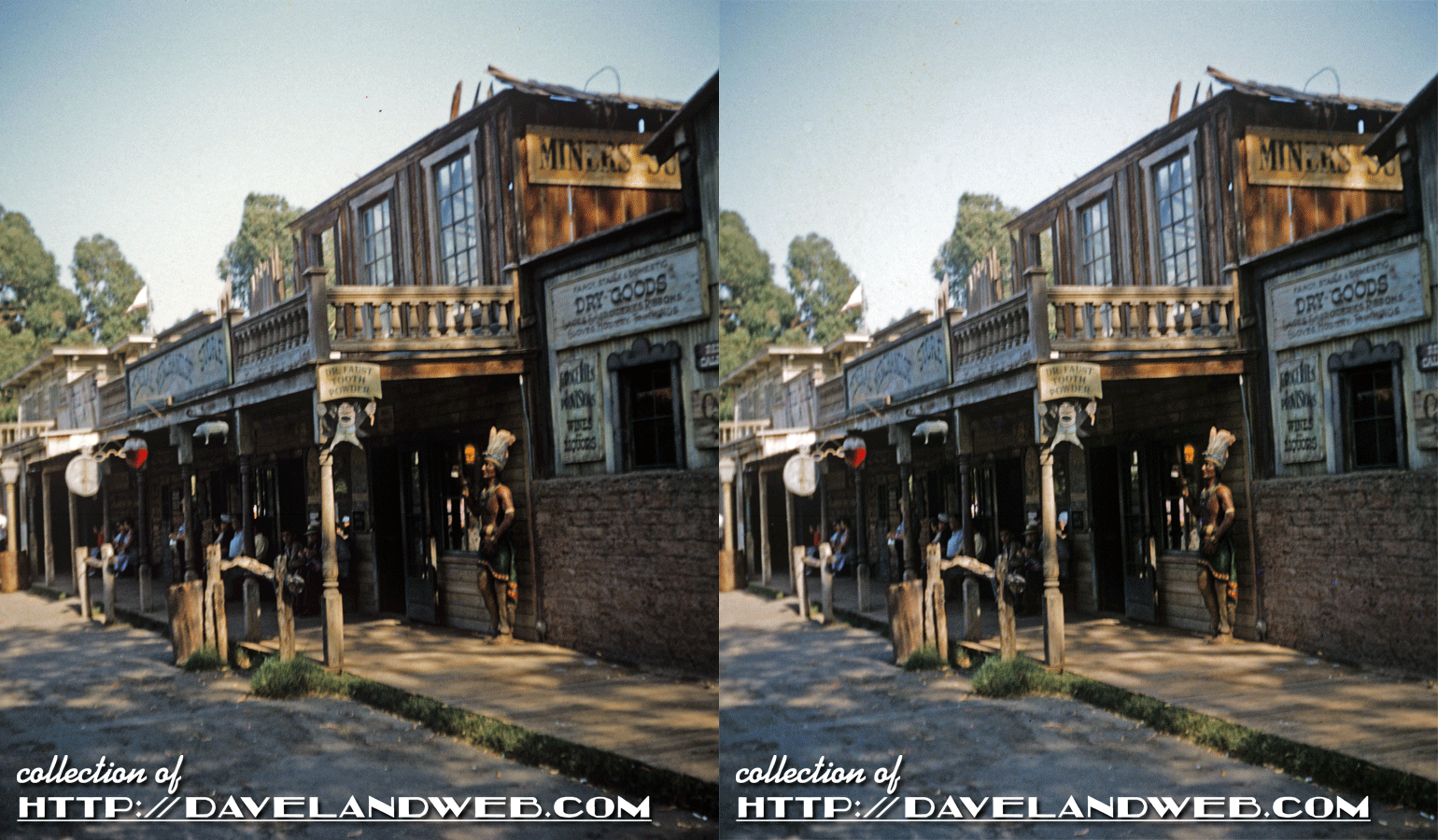
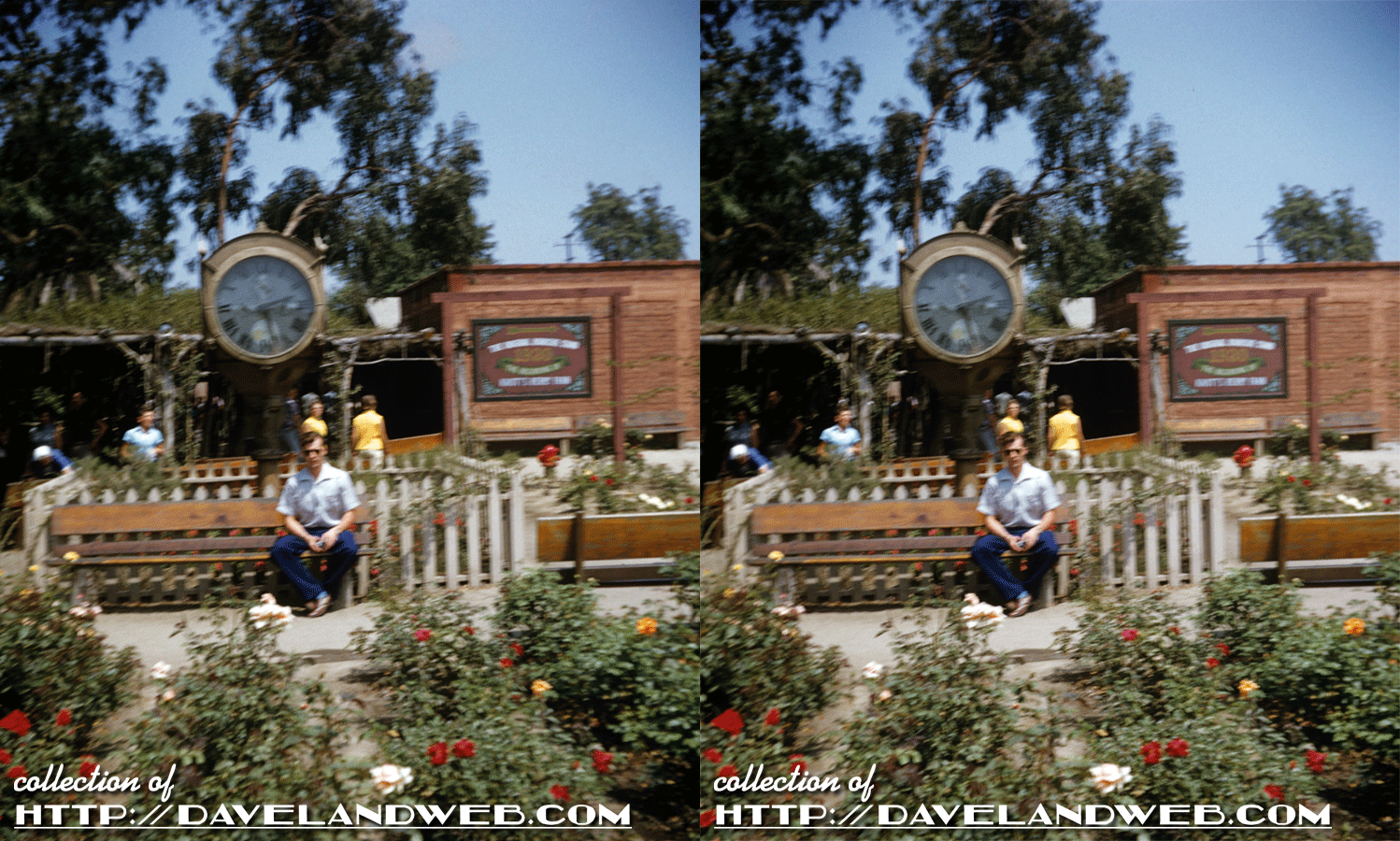
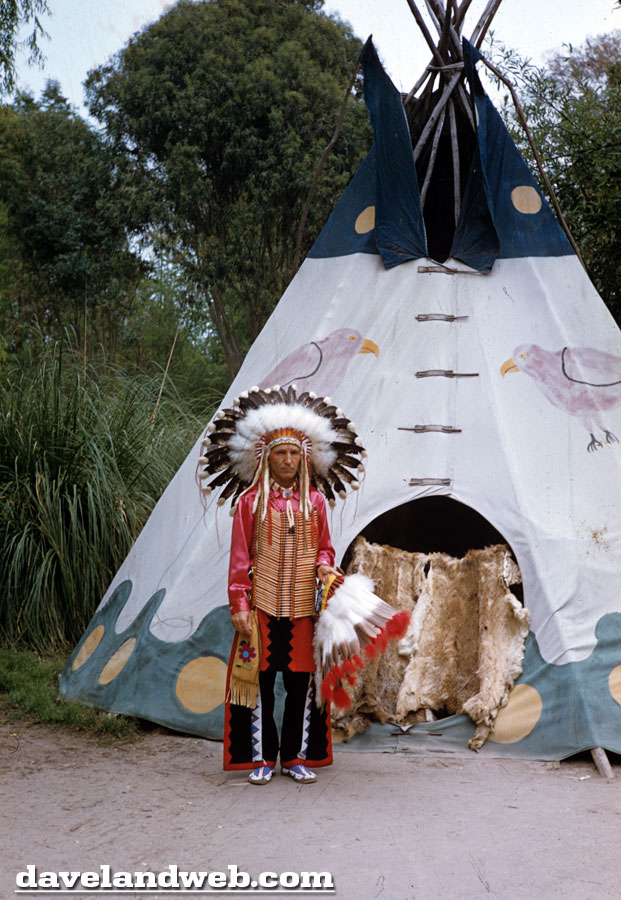
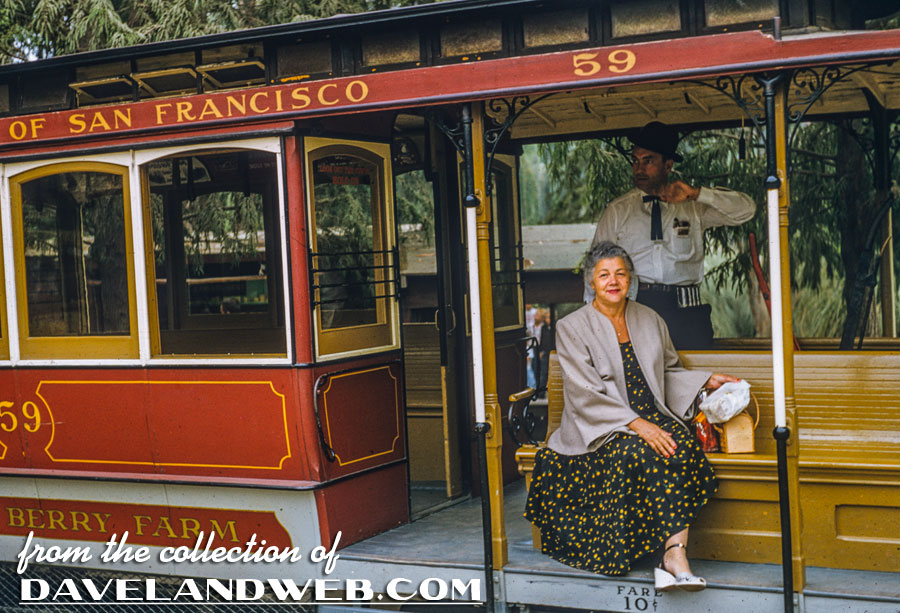
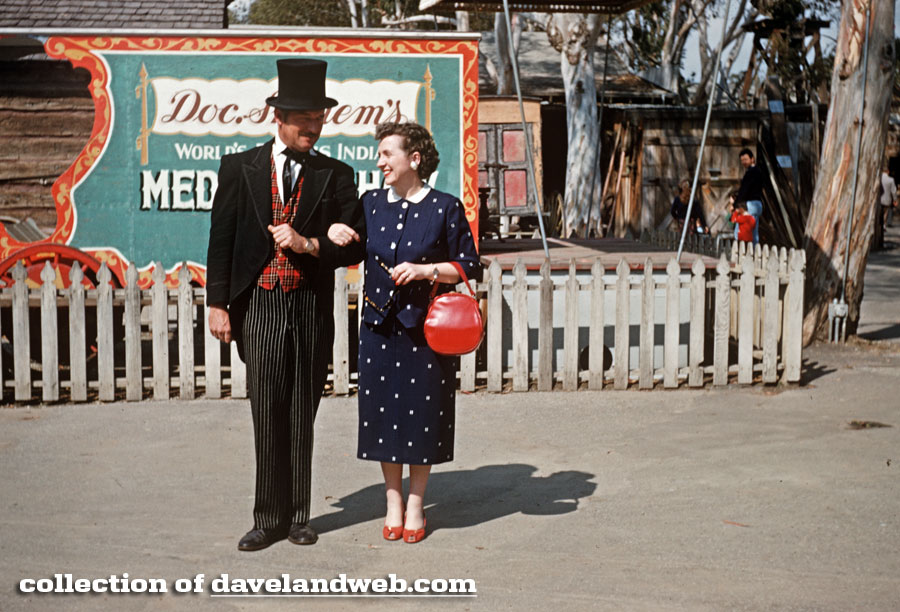
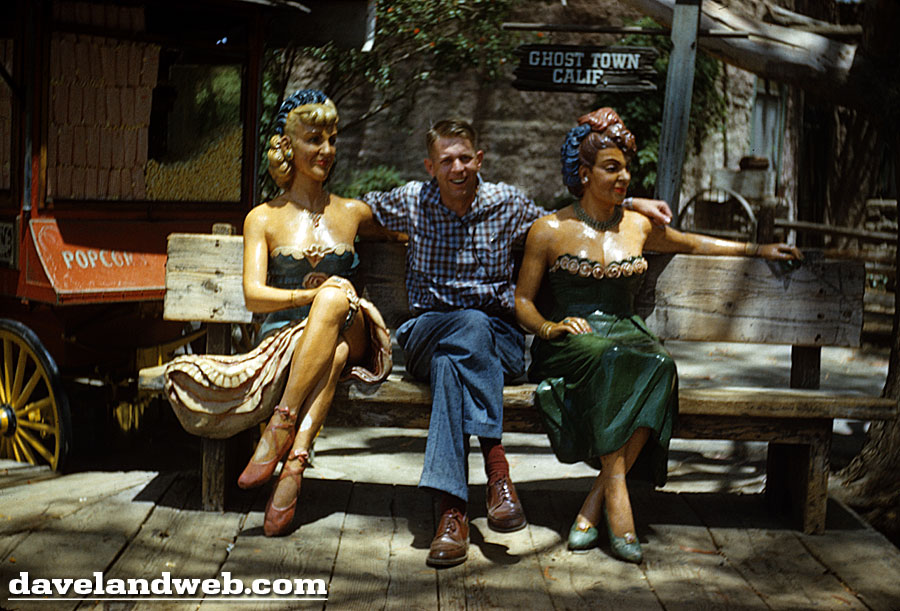
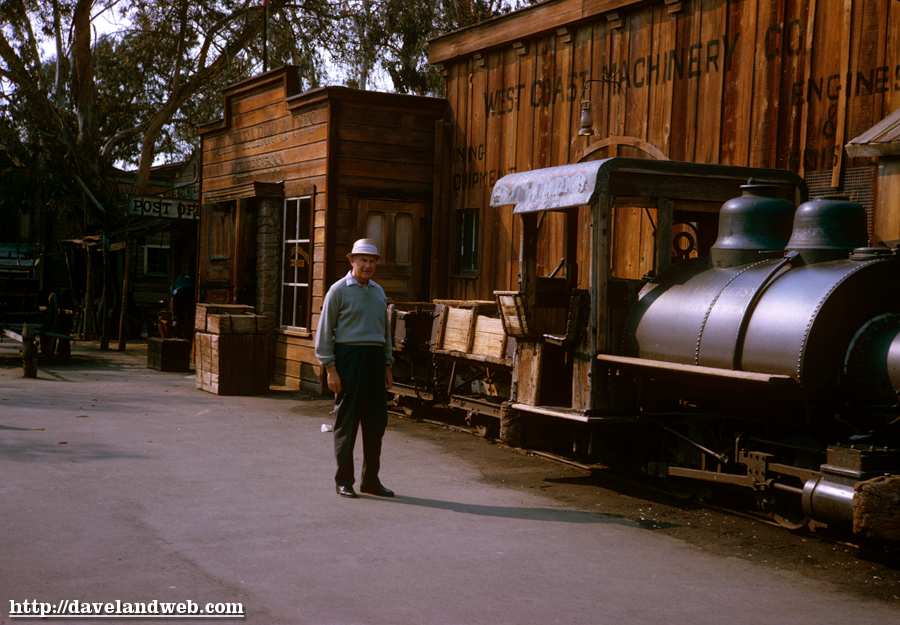
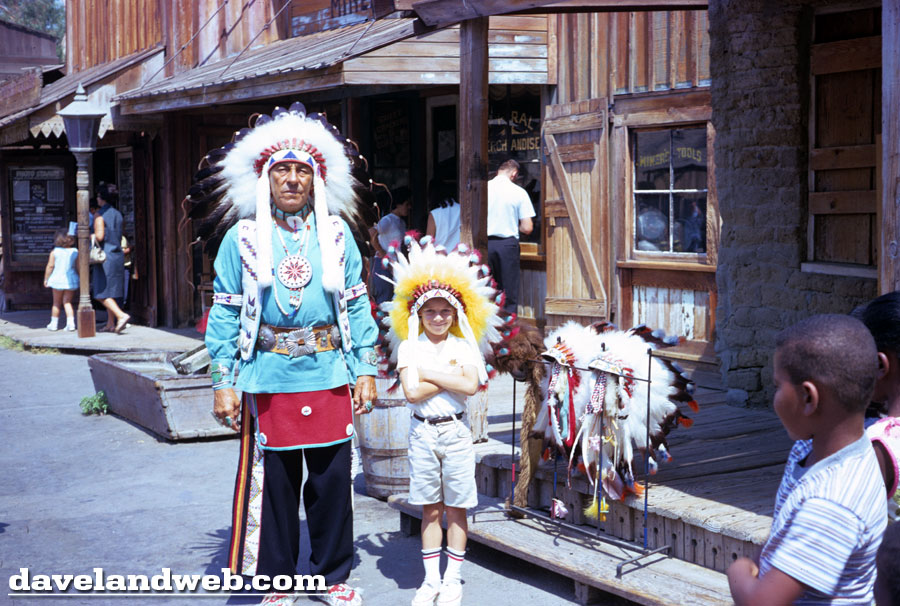
I have a lot of good memories of Knott's (& that other theme park over in Anaheim). These photos were taken by my Dad who enjoyed photography (these are from before I was around). The Kodachrome colors sure do last. My Grandparents (Dad's parents from Colorado) liked to go to Knott's, and judging by the clothes, these photos are from a few different visits. I recall my parents talking about how my Grandfather was laughing after Sad Eye Joe talked to him at the Ghost Town Jail. The first photo shown here is my Mother (she just turned 88 this month) and the slide even had the actual day it was taken written on it (April 9,1948). This is the only picture that I have seen where Whiskey Bill has a red shirt.
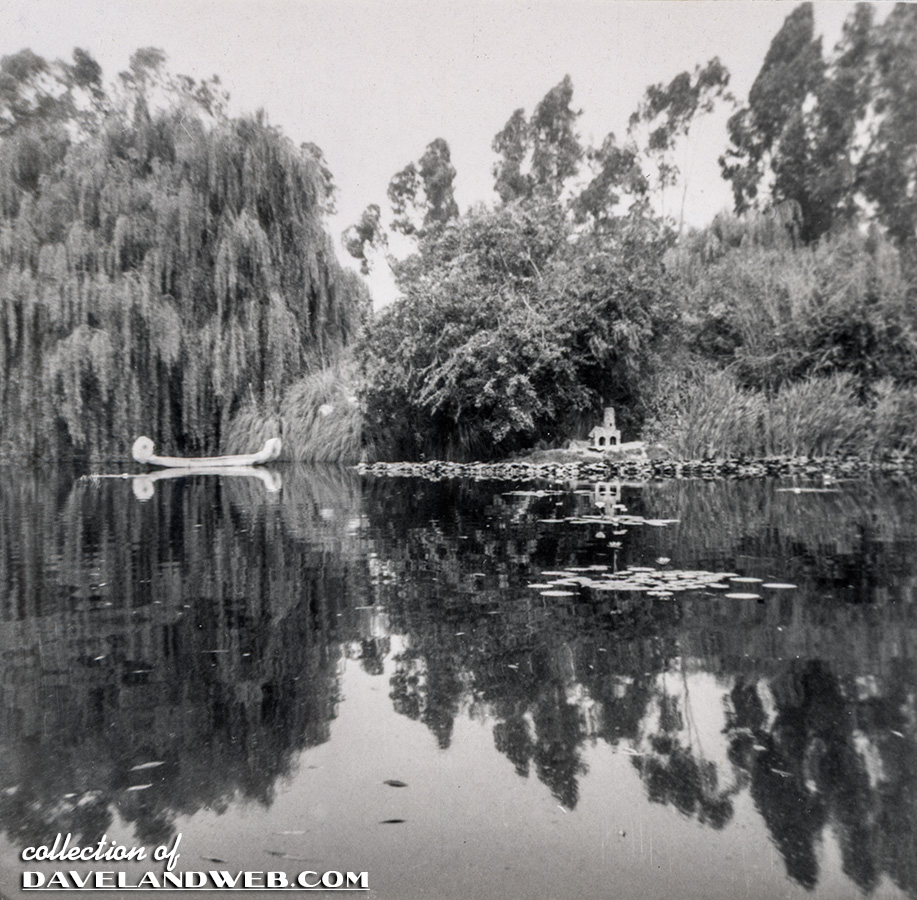
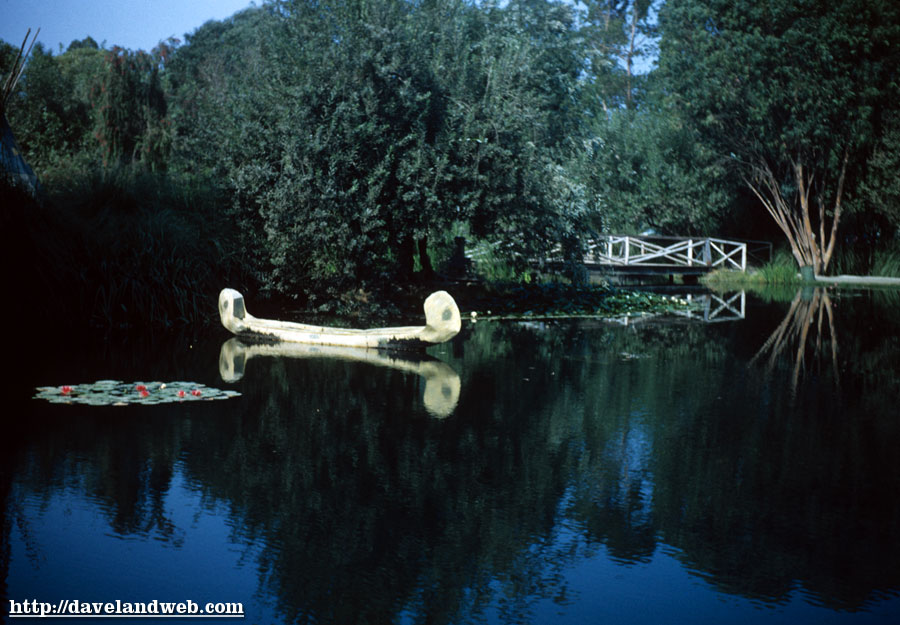
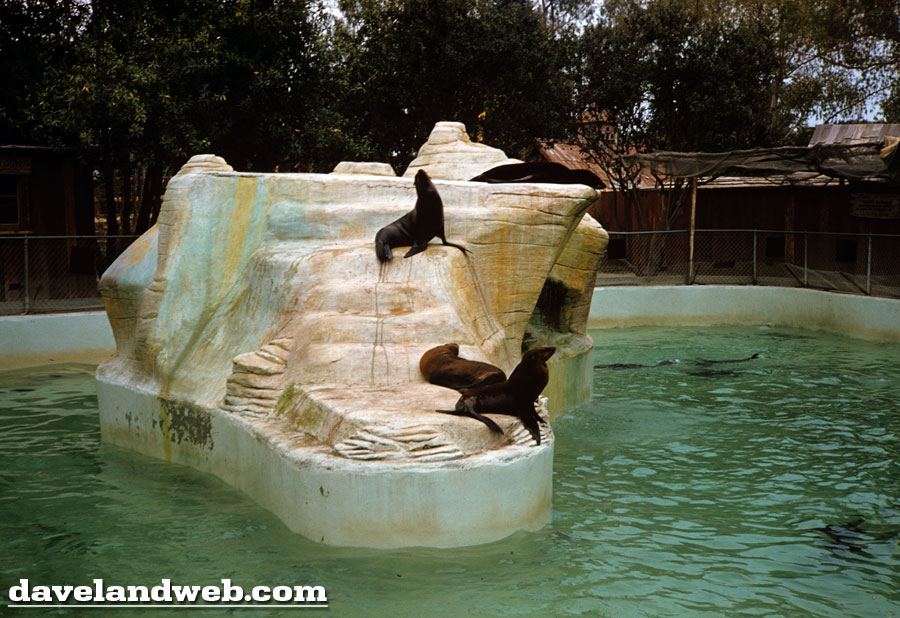
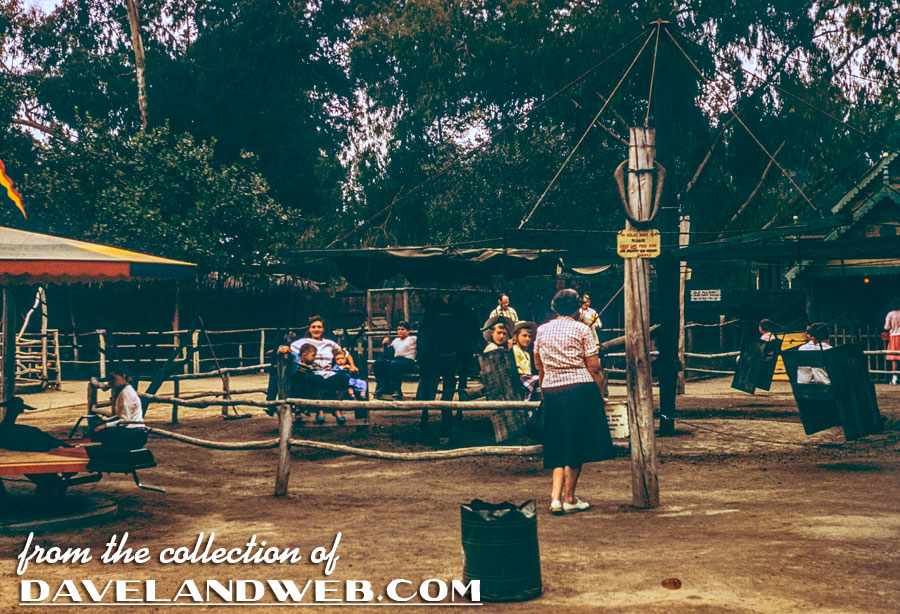
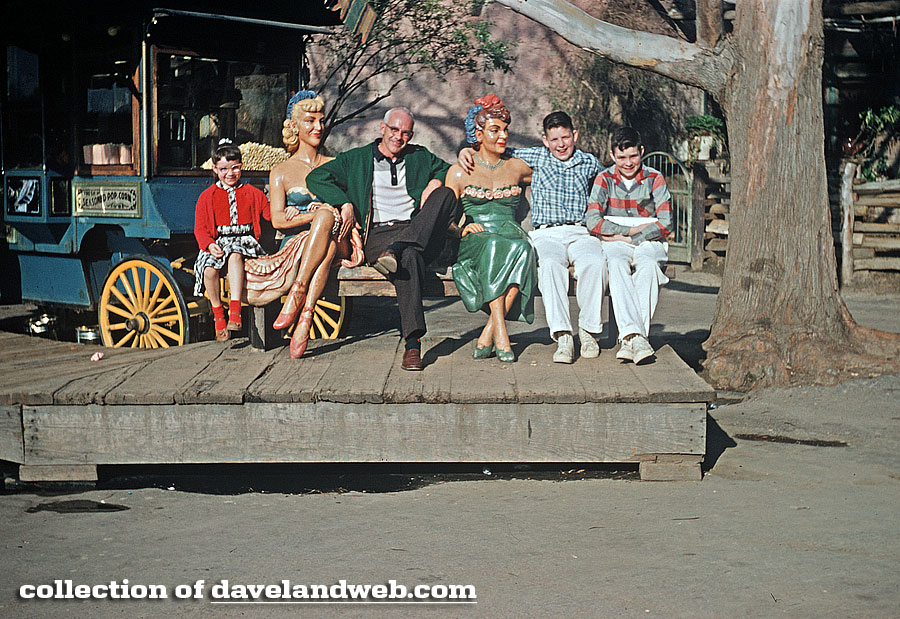
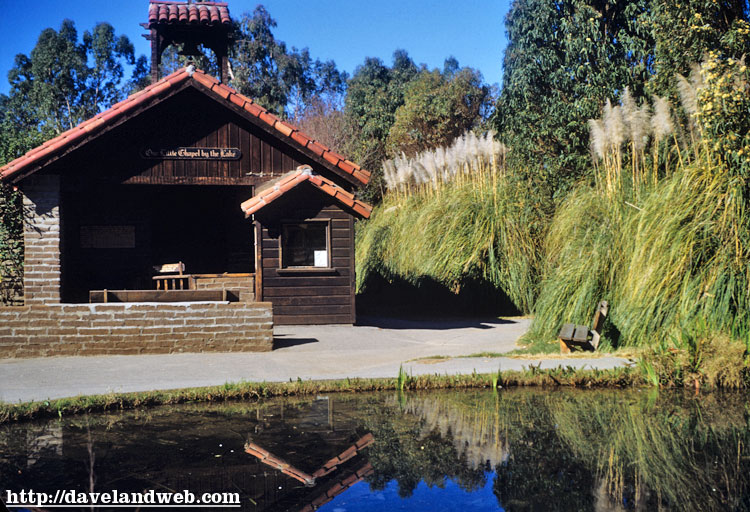
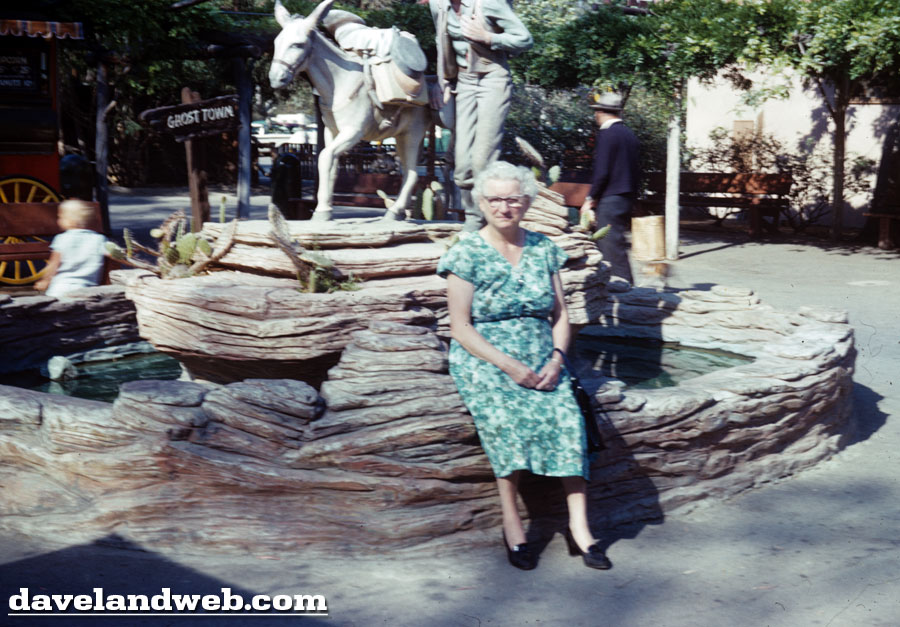
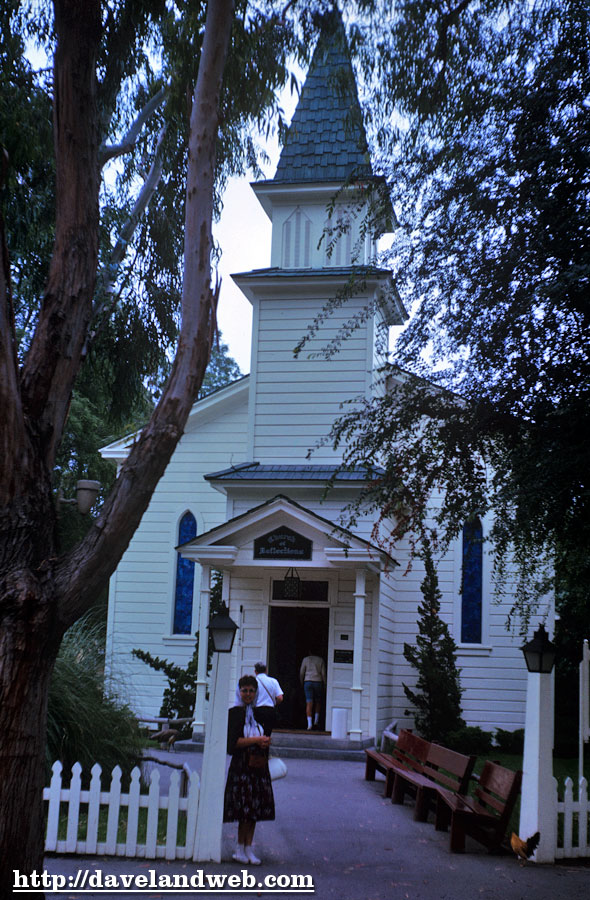
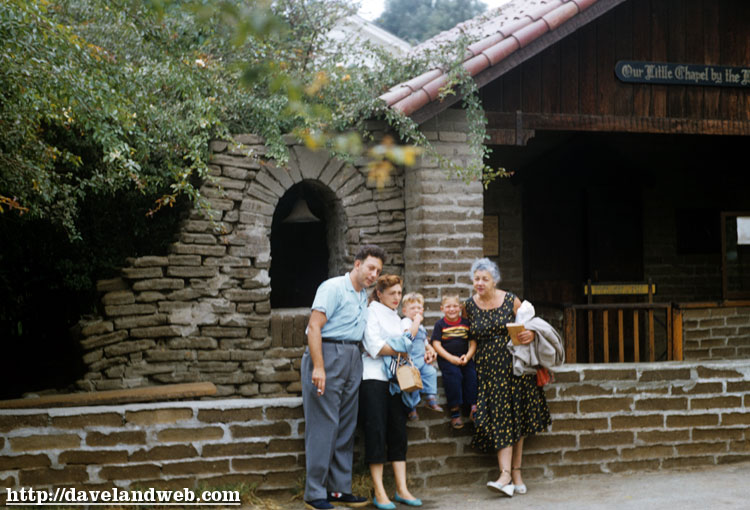
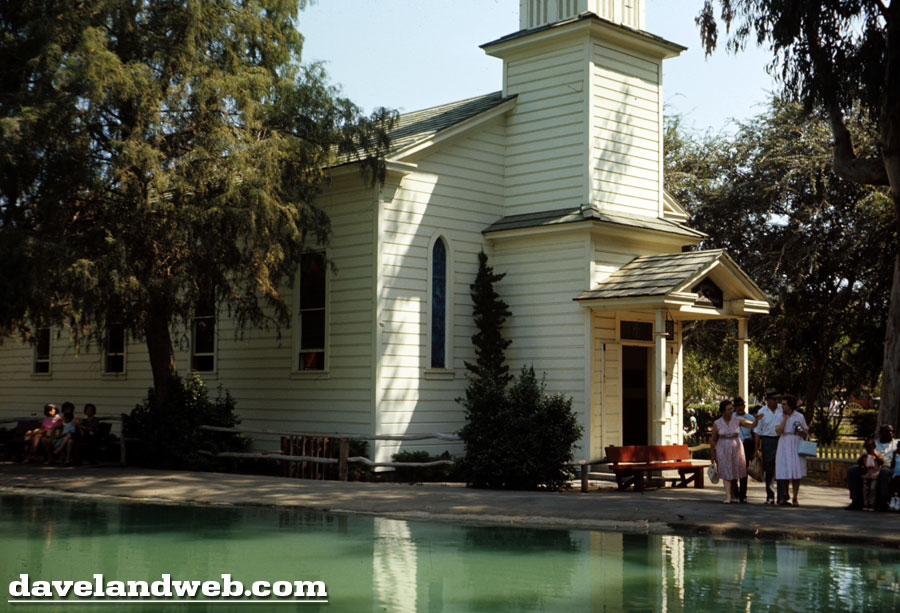
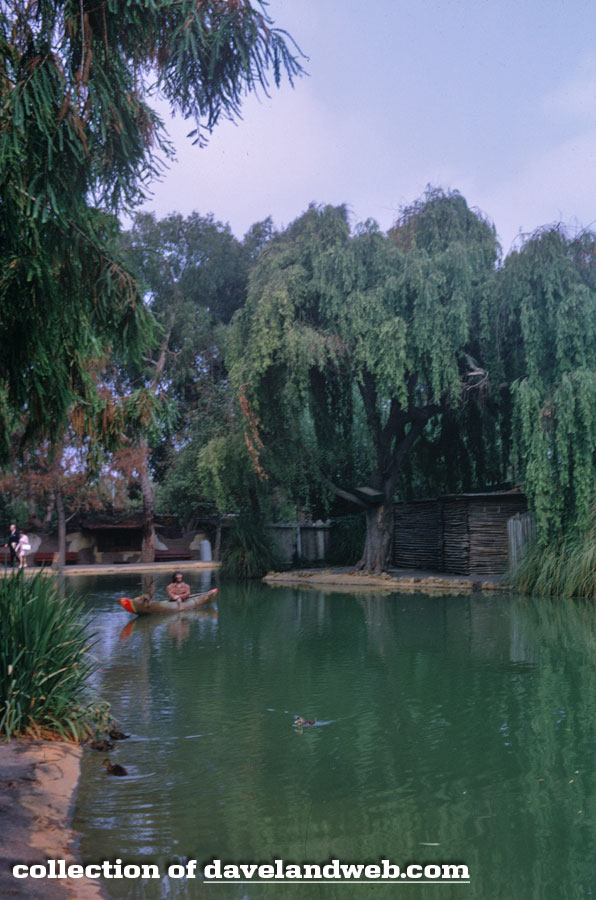
In image #2, here’s my Mother again, this time standing by The Chapel by the Lake (April 9,1948).
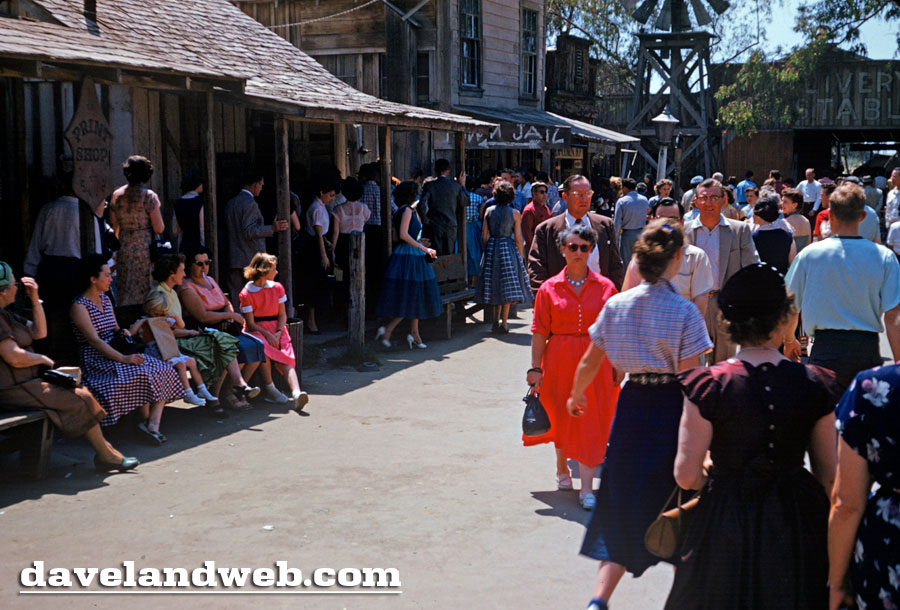
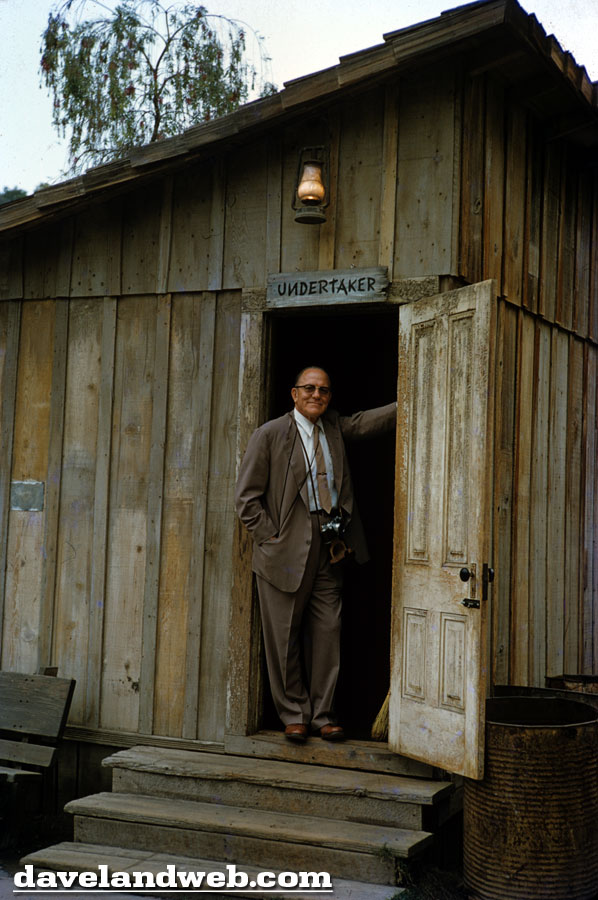
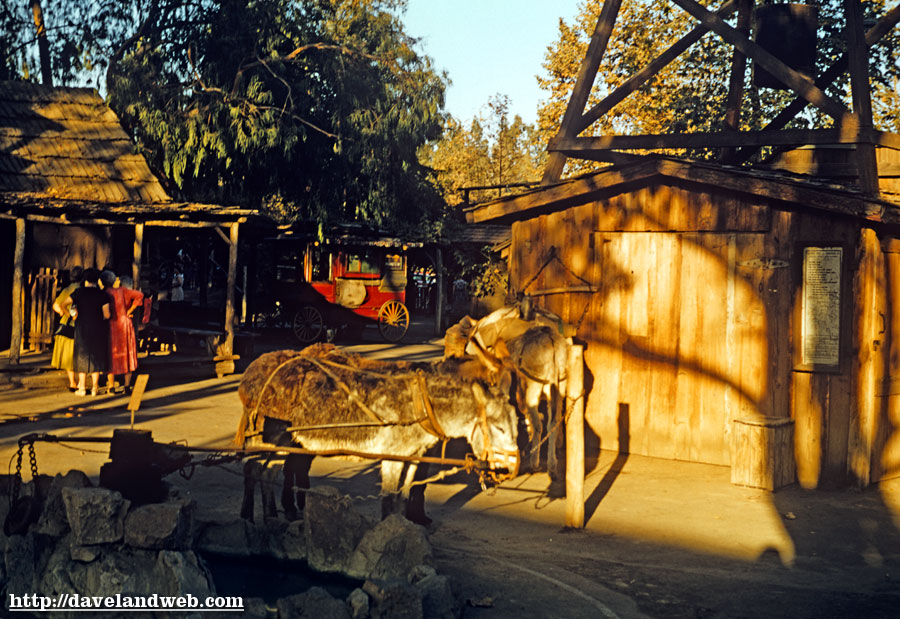
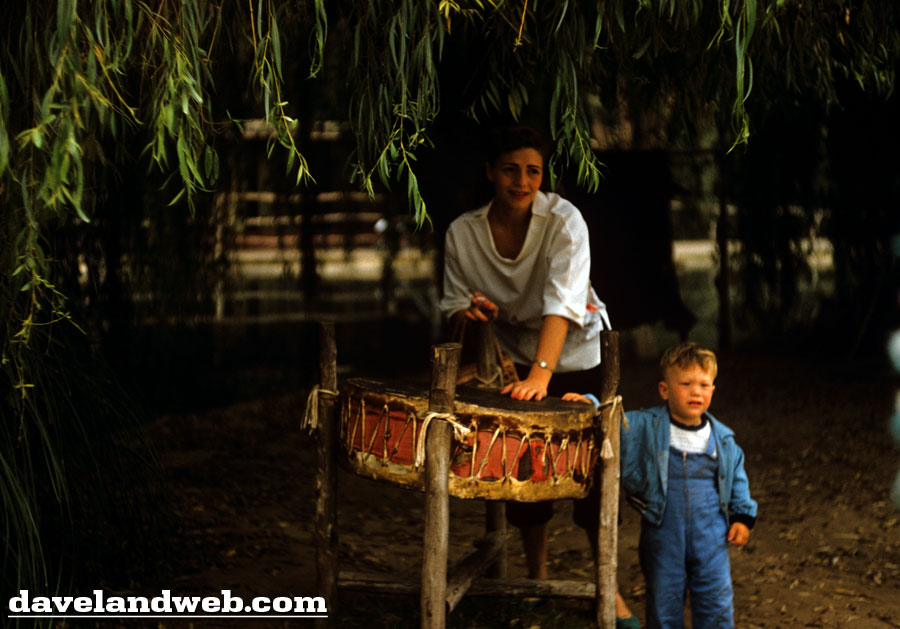
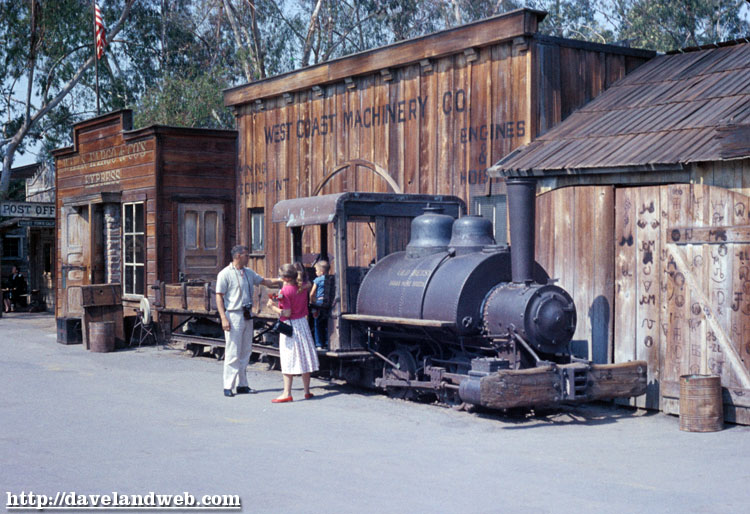
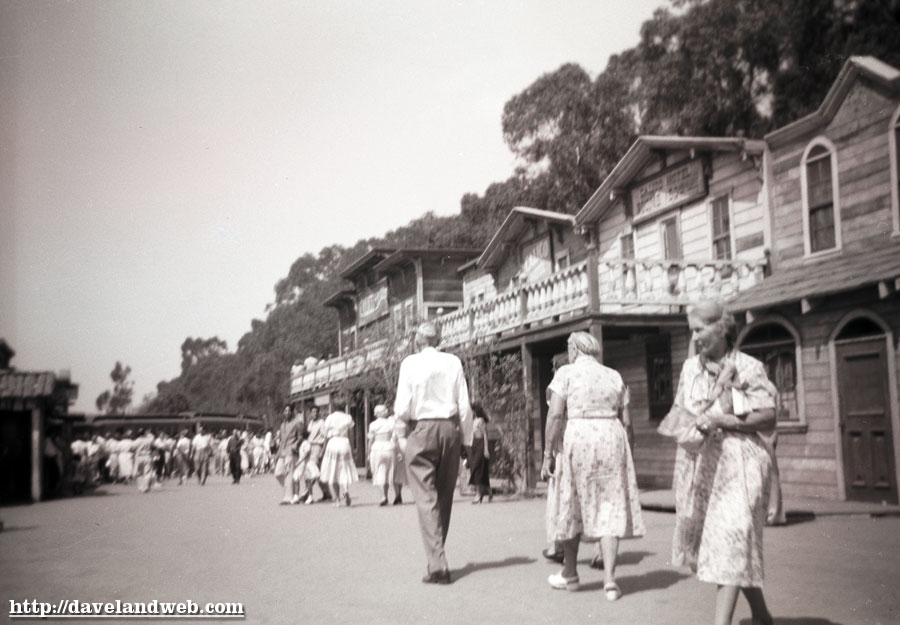
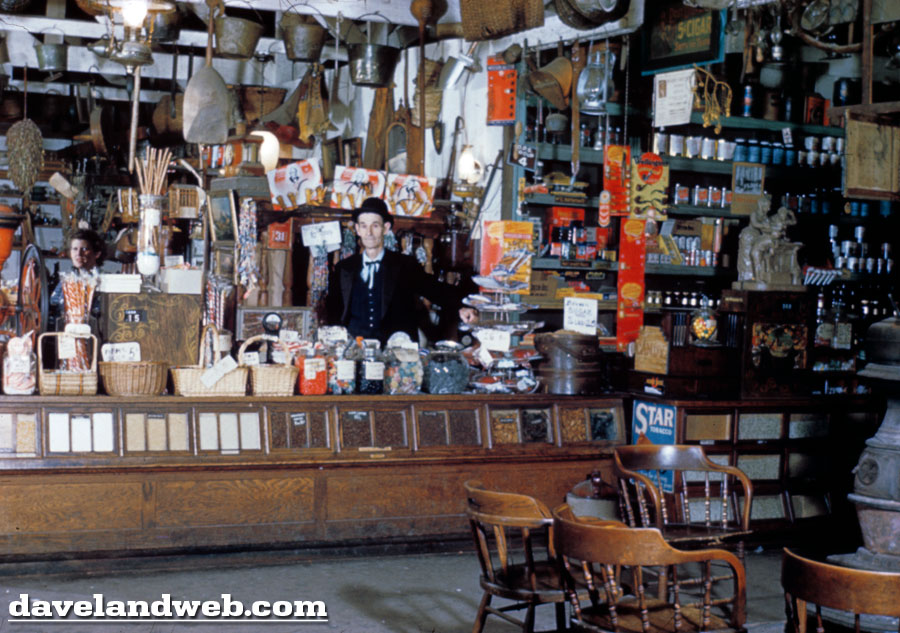
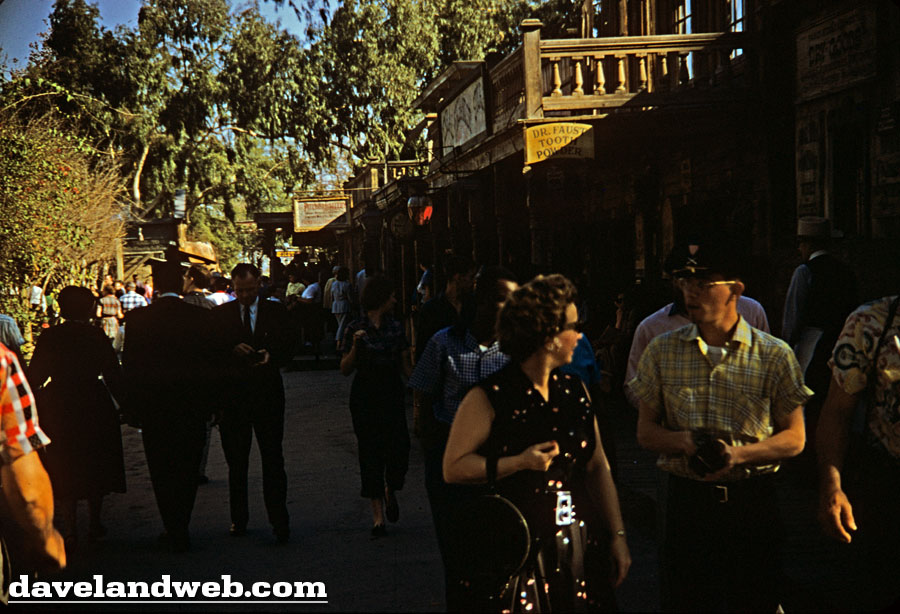
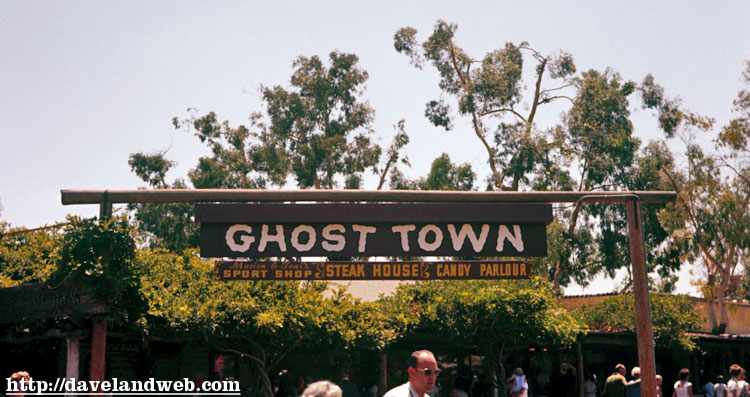
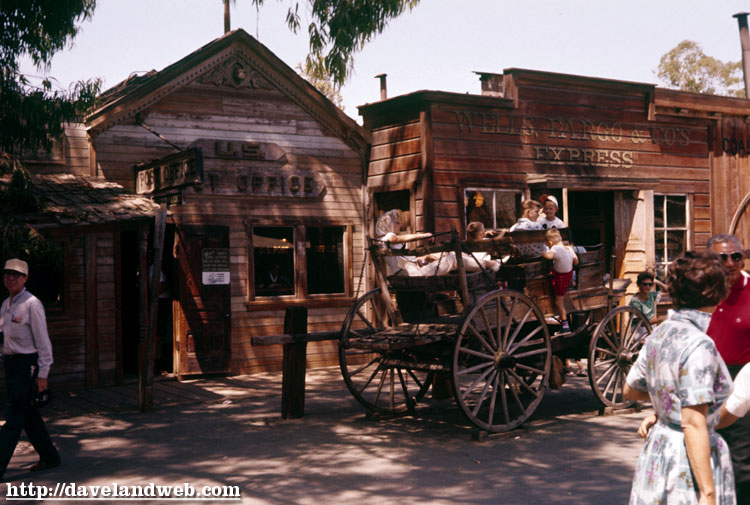
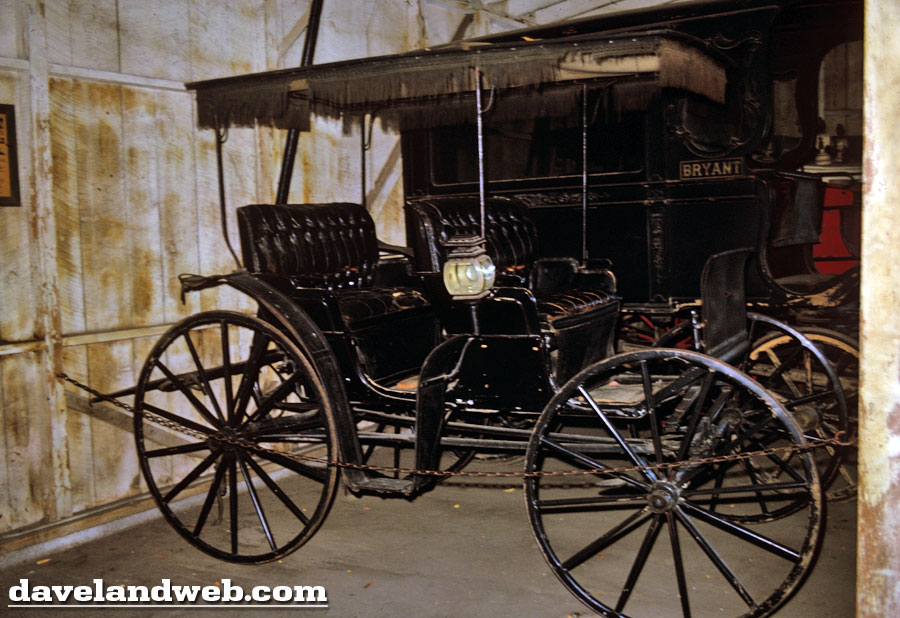
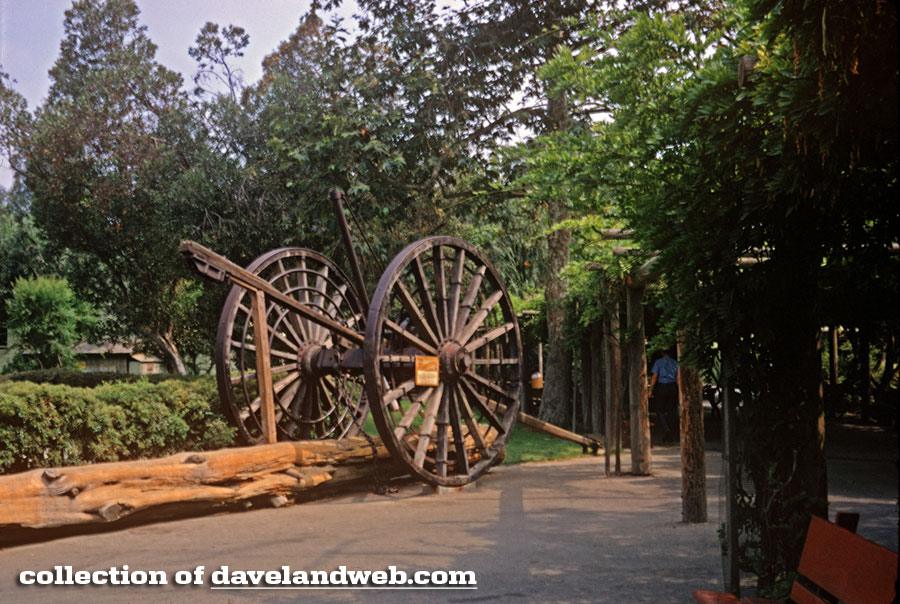
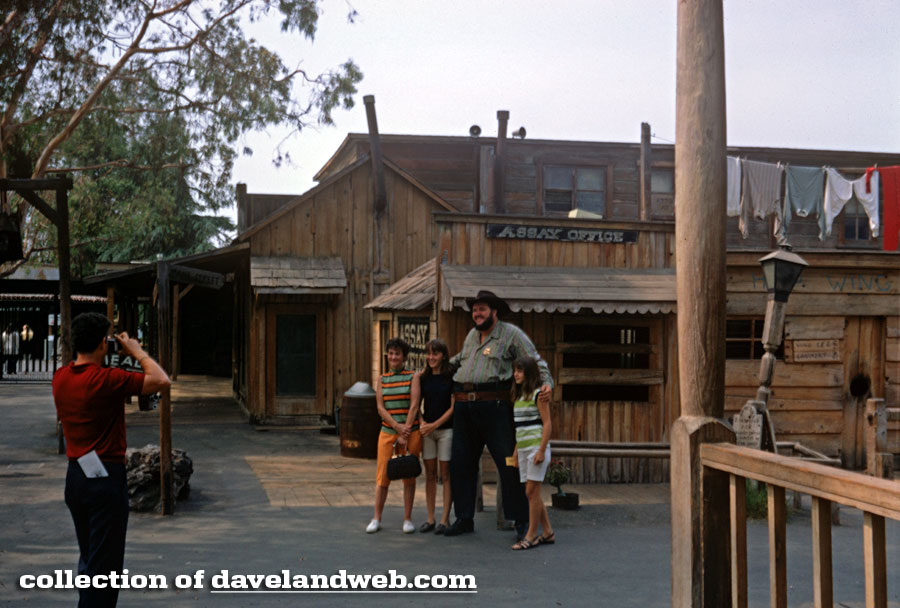
The 3rd photo is my Mother (holding her chihuahua) & my Grandparents in the wagon camp. I believe this was taken in the 1950's (unfortunately the slide was not dated). The 4th photo is my Grandparents, circa 1950's—I really like the expressions on their faces as they ham it up for the camera!
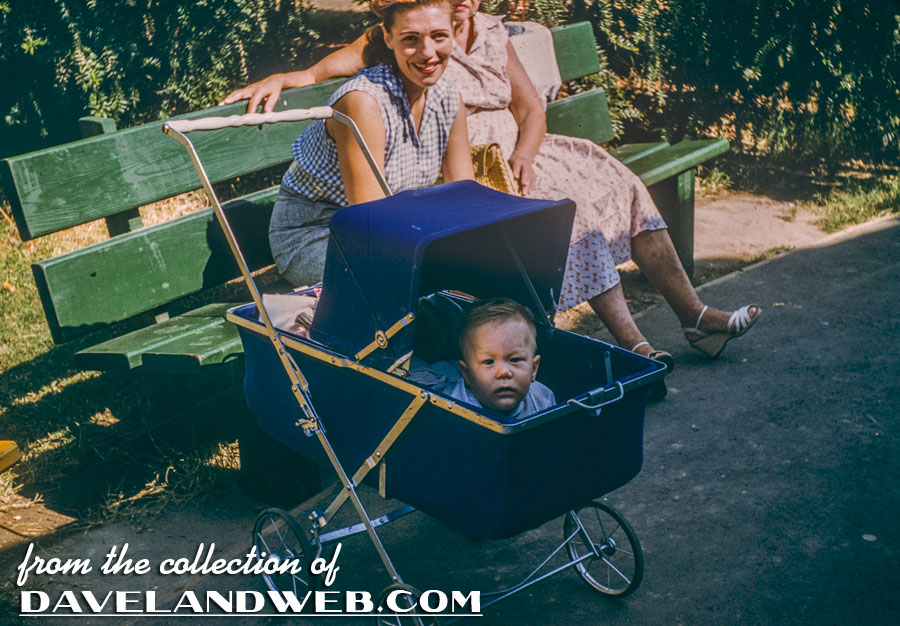
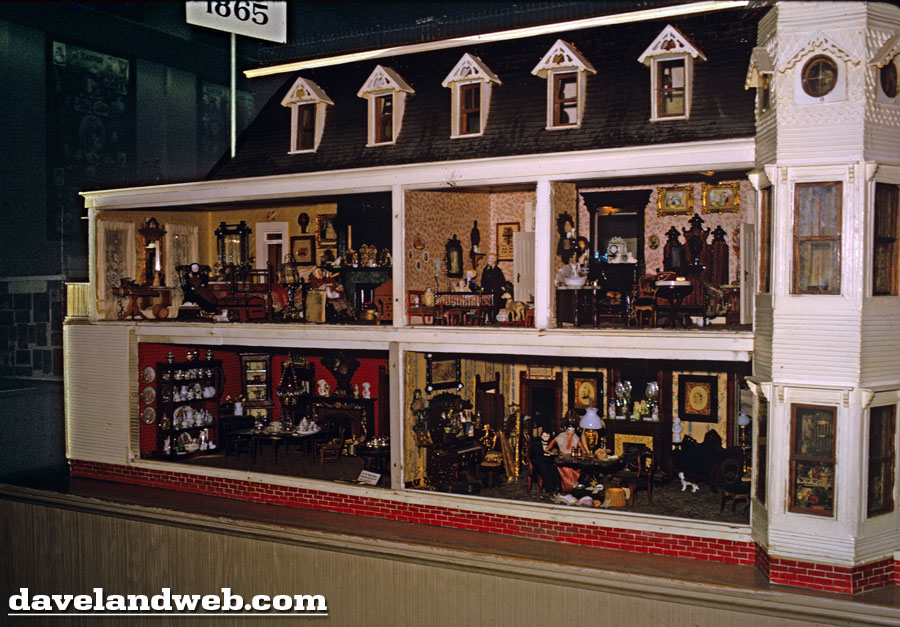
The final one is of my grandparents at the Knott’s Pitchur Gallery.
A huge thanks to David for sharing these high quality images from his family’s history.

















When you eat at Mrs. Knott’s Chicken Dinner Restaurant, the placemat has a timeline of what occurred between 1920 & 2009. Text italic denotes comments of correction not found on the menu.
1920: The Knott family arrives in the sleepy community of Buena Park and begins farming 20 acres of land on Highway 39 (now Beach Blvd.)
1927: The first permanent building is erected to house Cordelia Knott’s tea room and berry market. The farm is christened Knott’s Berry Place.
1932: Walter Knott begins propagating a new berry, a curious cross between the red raspberry, blackberry and loganberry. He names it boysenberry, in honor of his friend, Rudolph Boysen (Boysen was actually the farmer who created the hybrid berry, not Walter Knott).
1934: To make ends meet during the Great Depression, Cordelia somewhat reluctantly serves her first chicken dinners on her wedding china. Eight dinners are served to tea room guests that first Wednesday evening for the all-inclusive price of just 65 cents.
1937: Walter and Cordelia expand their tea room into a genuine restaurant complete with separate kitchen, dining rooms and parking lot. Despite serving 1,774 dinners on Thanksgiving Day, Cordelia insists she’s still definitely not in the restaurant business.
1939: Daughter Virginia sets up a souvenir table in the Chicken Dinner Restaurant, founding the country’s first theme park souvenir shop.
1940: In an attempt to entertain the thousands of restaurant customers lining up each day, Walter relocates the Gold Trails Hotel to the Farm from Prescott, Ariz. To the hotel’s lobby Walter adds the Farm’s first attraction: “The Covered Wagon Show,” a cyclorama depicting the Knott family journey West. The hotel and cyclorama form the basis for Old West Ghost Town©, Knott’s first theme area.
1947: Knott’s Berry Place is officially renamed Knott’s Berry Farm.
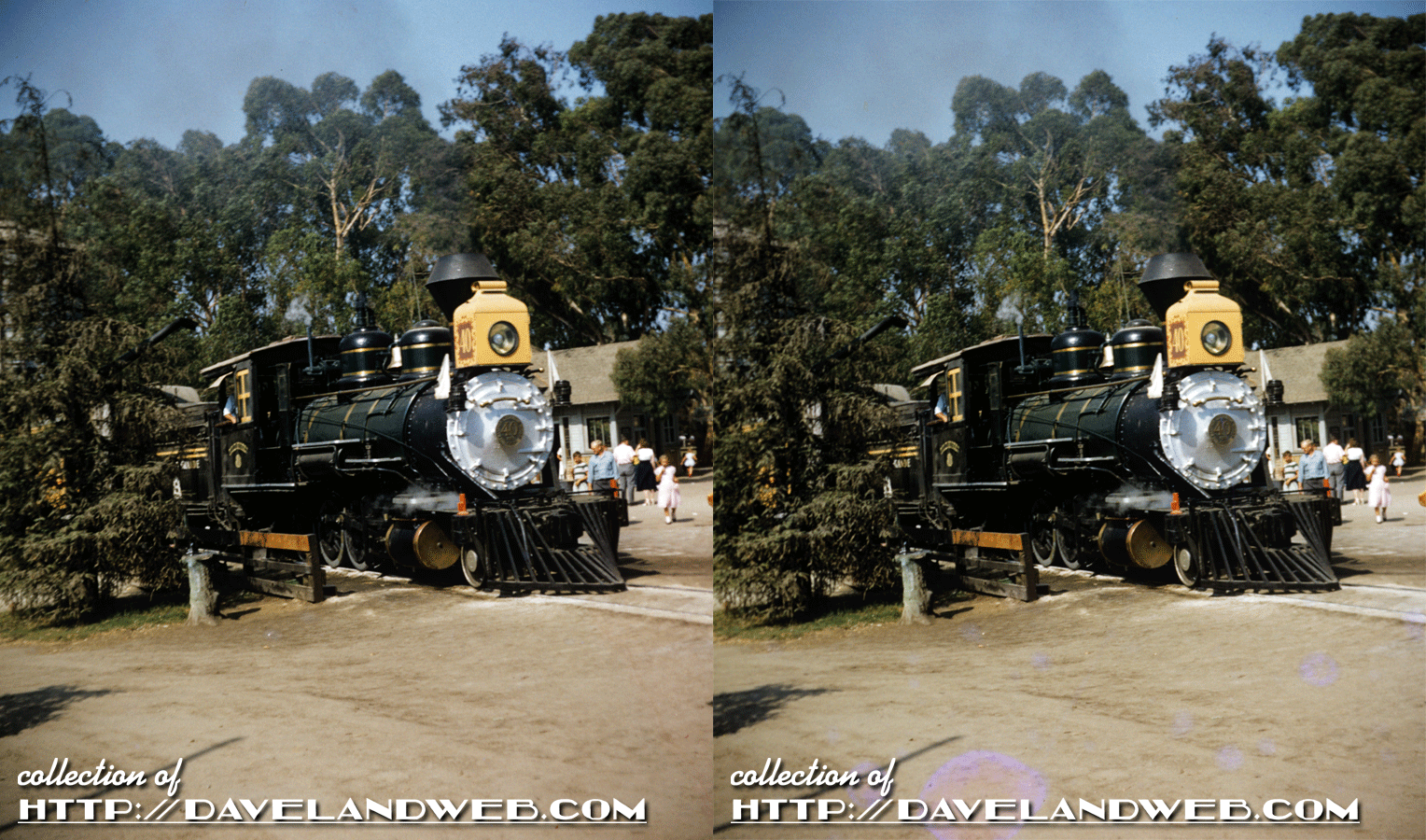
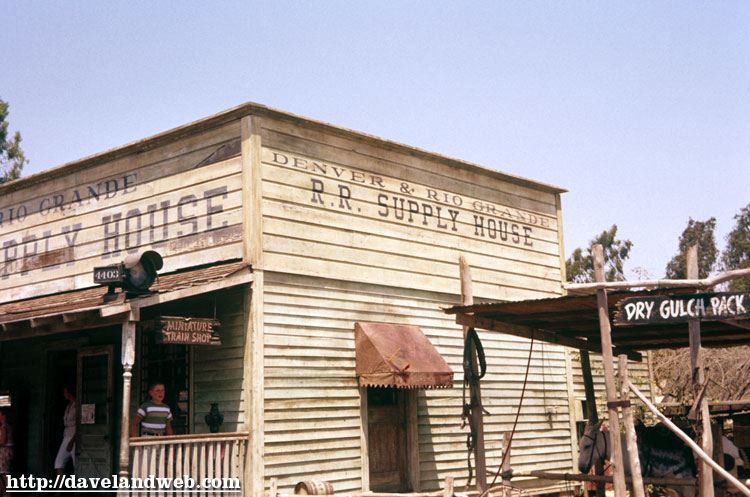
1952: Walter buys America’s last operating narrow-guage railroad, the Denver and Rio Grande, and moves it in its entirety to Knott’s Berry Farm. The steam-powered train is christened the Ghost Town & Calico Railroad, proving a perfect addition to growing Ghost Town.
1954: The Bird Cage Theatre opens in Ghost Town as the home of the country’s only daily acting melodrama troupe. A replica of the Bird Cage Theatre in Tombstone, Ariz., the Theatre goes on to serve as the training ground for Steve Martin and other actors and actresses.
1955: Walter and Cordelia attend the July 17 opening ceremonies of Disneyland, and return to find the Farm parking lot filled to capacity. Despite rumors to the contrary, Knott’s Berry Farm continues to thrive, enjoying its best year ever.







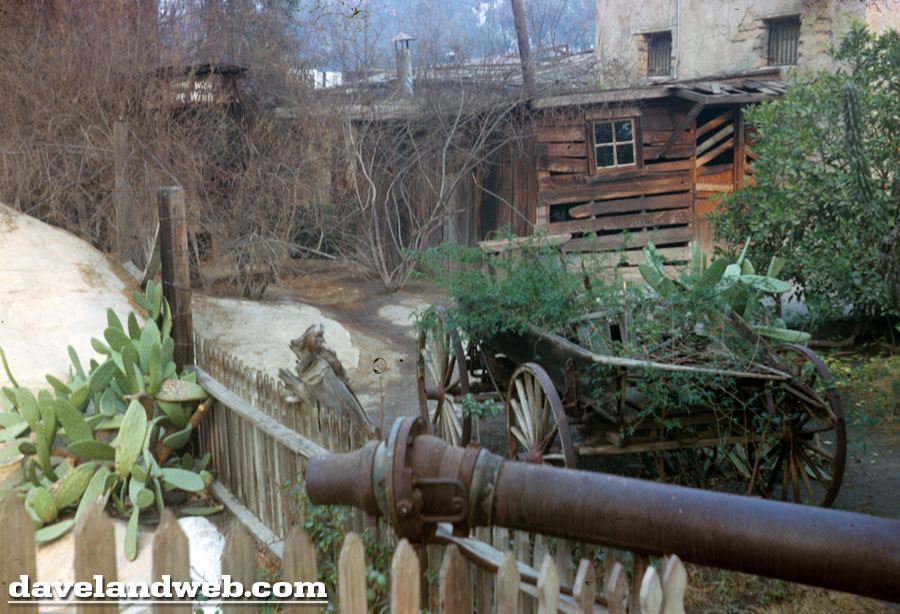

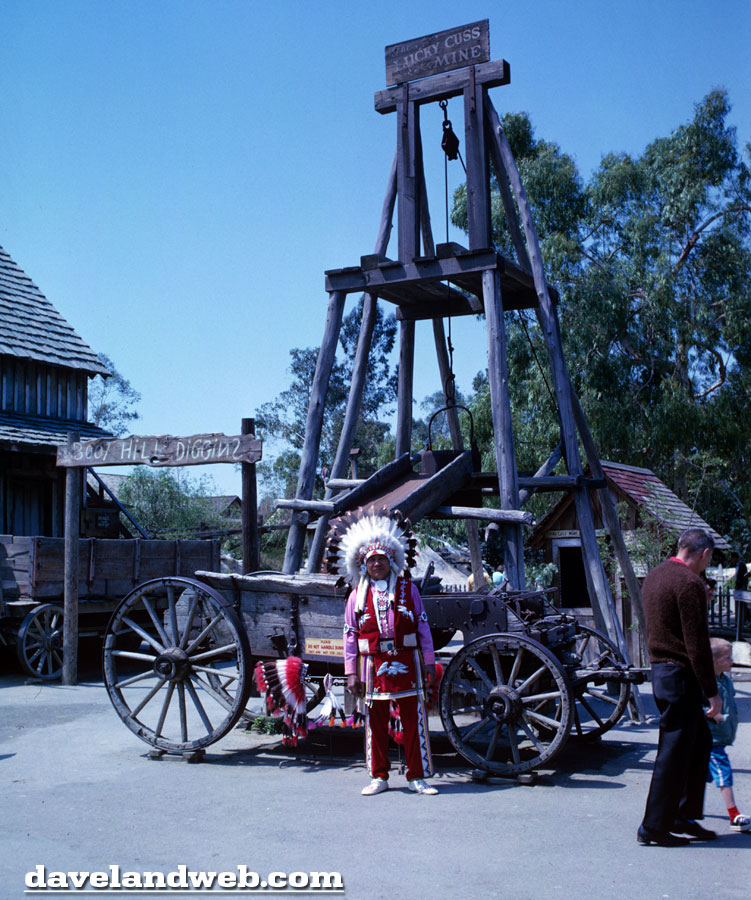
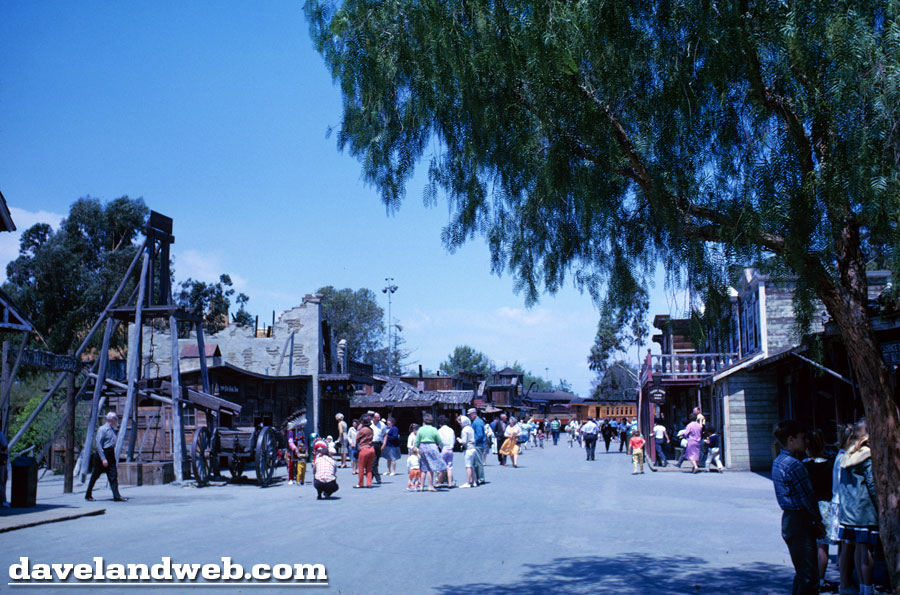
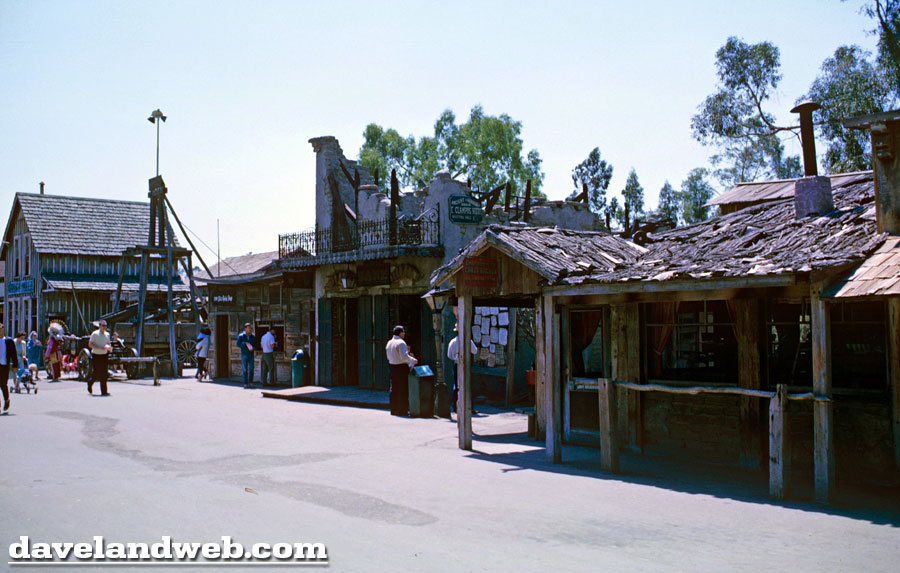
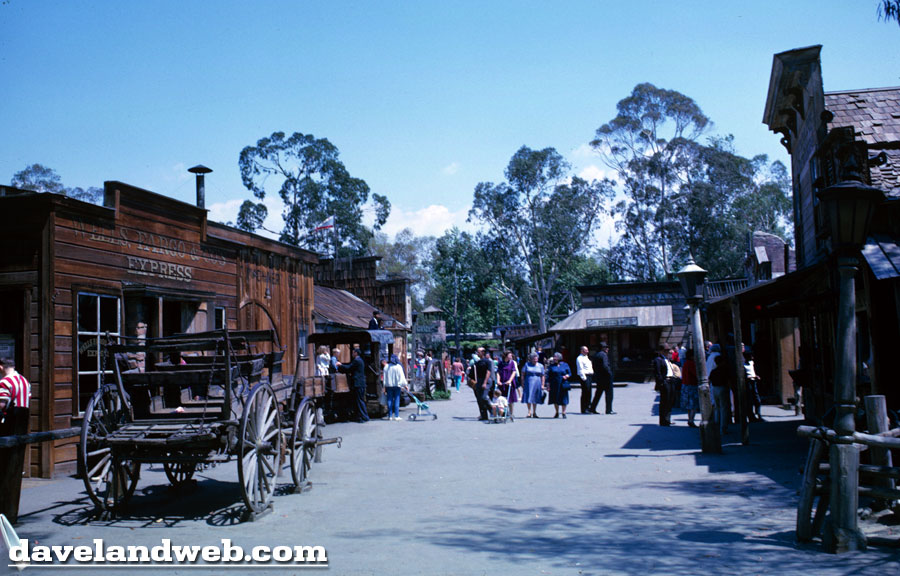




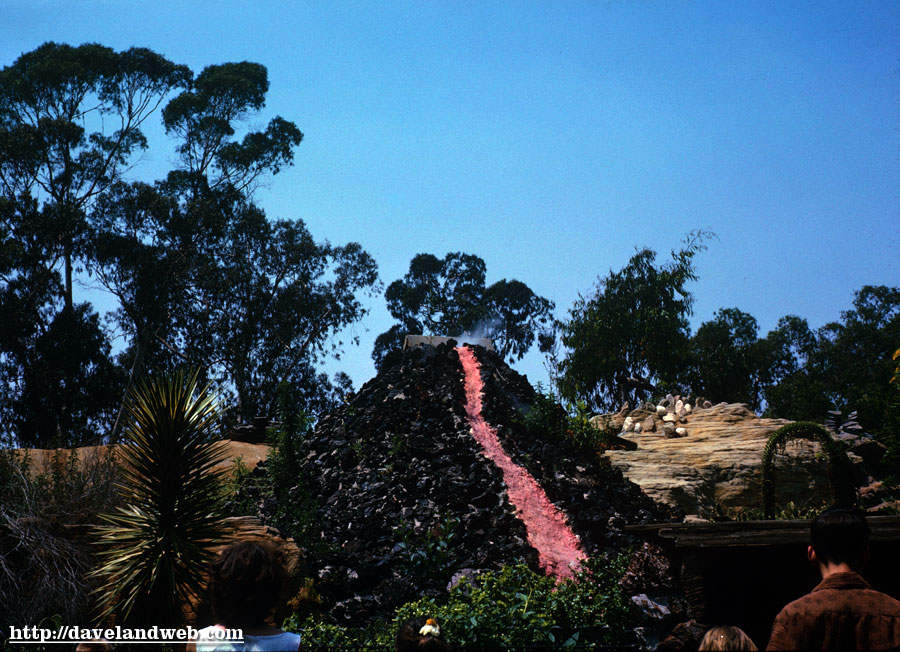

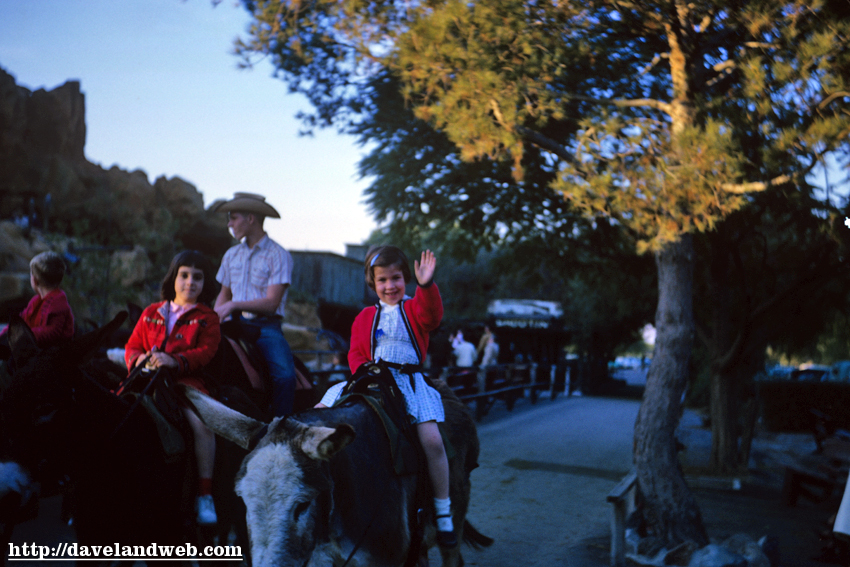
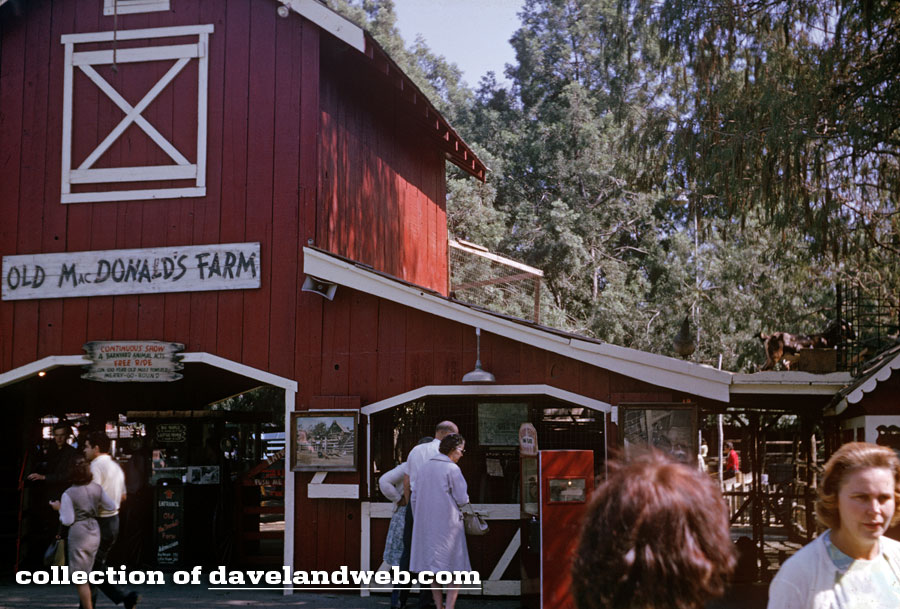



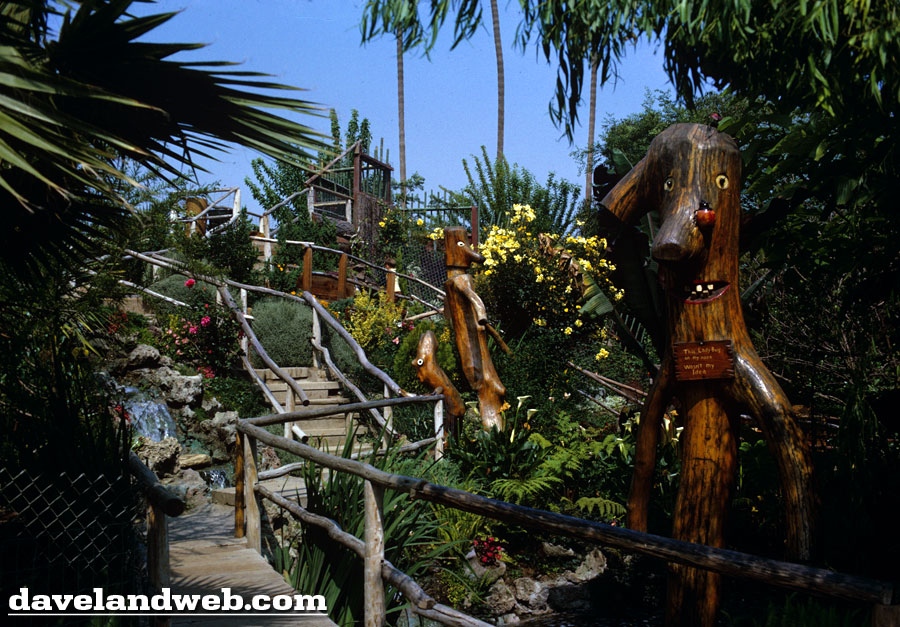
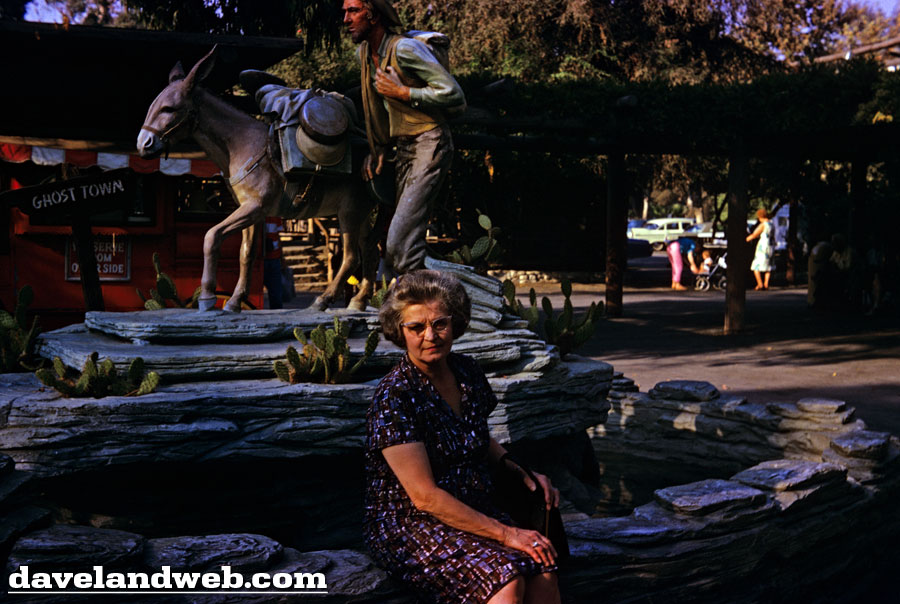
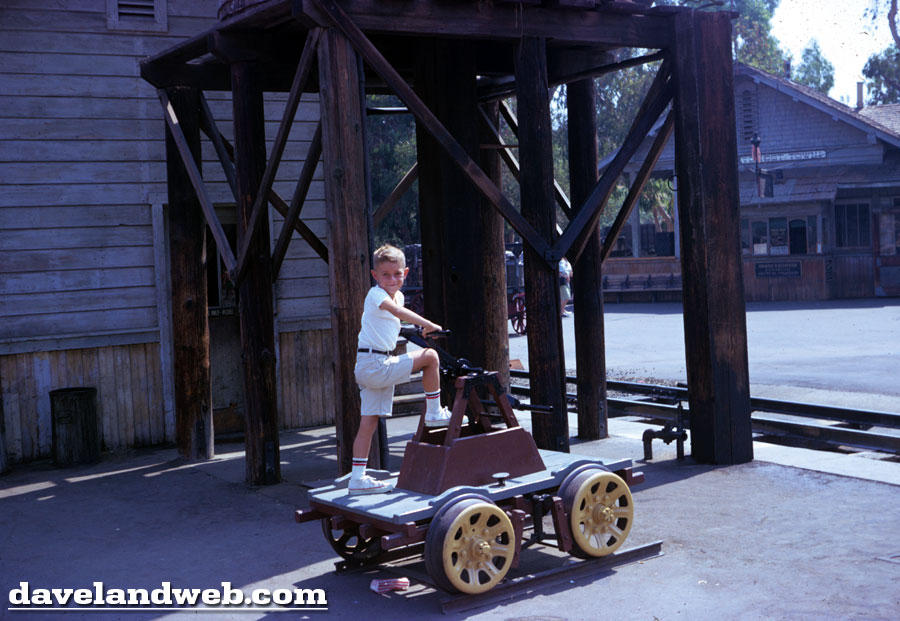
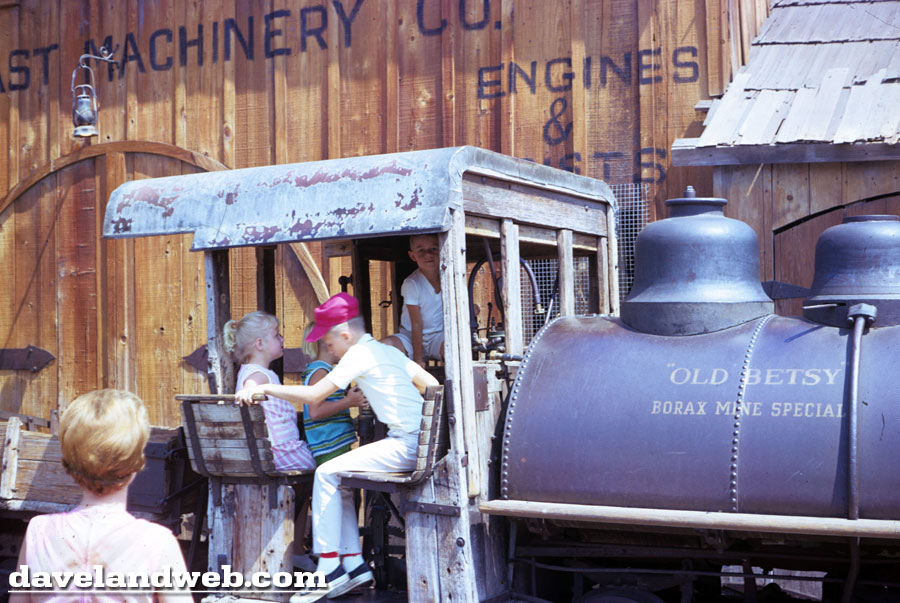


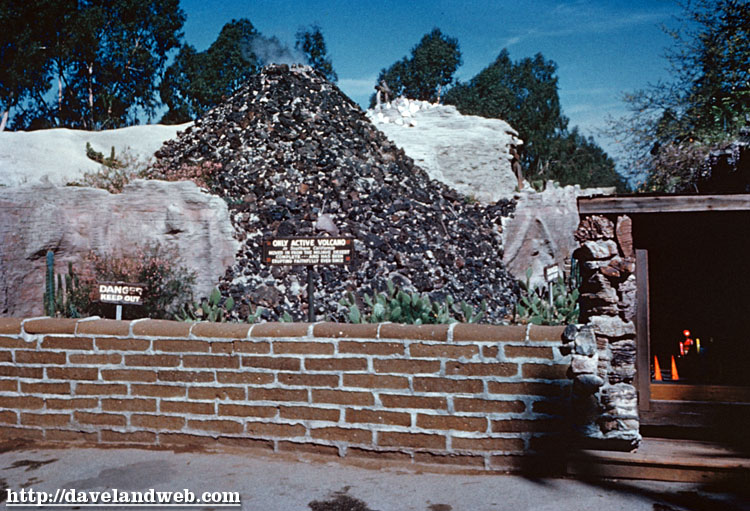
1960: The Calico Mine Ride, an ingenious trip into the depths of an Old West mine, opens to rave reviews. Its creative use of themed and special effects sets a new standard for future Knott’s attractions.
1966: Walter completes construction on a brick-by-brick replica of Independence Hall, complete with cracked, 2,075-pound Liberty Bell.
1968: The amusement park is enclosed and a general admission fee is charged for the first time.
1969: The Calico Logging Co. (later the Timber Mountain Log Ride) opens as one of the first log flume rides in the U.S. Fiesta Village® debuts.
1971: The 2,100-seat John Wayne Theatre (now the Charles M. Schulz Theatre) opens on June 19. California Governor Ronald Reagan and John Wayne himself preside over the celebrity-filled opening ceremonies, which The Knotty Post employee newsletter describes as “the biggest event ever held on the Farm.”
1973: Knott’s transforms itself into Knott’s Scary Farm® for Halloween Haunt®, the world’s first-ever amusement park Halloween event. The event remains the industry standard and the world’s largest Halloween party, breaking attendance records every year.
1974: Cordelia Knott dies on April 23 at the age of 84.
1975: The Corkscrew, the world’s first 360-degree roller coaster, opens as the centerpiece of the Roaring 20s themed area. Another highlight is Knott’s Bear-y Tales, a fantasy dark ride featuring the Bear-y Family.
1976: The 20-story Sky Jump and Sky Cabin—patterned after an attraction at New York’s Coney Island—provide a breathtaking new addition to the Roaring 20s area. The new attraction helps make July 4, 1976 the biggest attendance day in Knott’s history to that point.
1978: Knott’s opens its second coaster, Montezooma’s Revenge®, in Fiesta Village. The ride takes riders from 0 to 55 mph in five seconds.

1981: Walter Knott dies on Dec. 3—one week before his 92nd birthday.
1983: Camp Snoopy, the park’s six-acre wonderland for kids, opens July 1 as the official home of Snoopy and the Peanuts gang. It is the first area of any amusement park designed solely for kids under 12.
1985: Knott’s Berry Farm is magically transformed into Knott’s Merry Farm® as the park hosts its first Christmas Crafts Festival.
1987: Knott’s foreshadows the dinosaur craze by replacing Knott’s Bear-y Tales with Kingdom of the Dinosaurs,® a trek into prehistory complete with 21 fully annimated creatures and special effects. The expertly timed new attraction helps make 1987 the best on record.
1988: Knott’s becomes only the fourth park in the world to receive the coveted Amusement Business/Liseberg Applause Award, awarded biannually to the amusement park whose management, operations and creative accomplishments have inspired the industry with its foresight, originality and sound business development. Bigfoot Rapids,® and untamed journey down the longest manmade river in the We3st, opens in the Wild Water WIlderness area.
1990: The Corkscrew is replaced by Boomerang, a European-designed roller coaster. Ghost Town celebrates its 50th Anniversary.
1994: Knott’s debuts Mystery Lodge,® a magical journey into the Native American West and its most technically advanced project ever.
1995: Knott’s Berry Farm celebrates its 75th Anniversary with a year of festivities and special events highlighted by the summer debut of Jaguar!,®The Streaking Big Cat of Roller Coasters!
1996: Knott’s rethemes Roaring 20s into The Boardwalk, a colorful tribute to Southern California’s celebrated beach scene.
1997: Knott’s Berry Farm proudly becomes a member of the Cedar Fair, L.P. national family of amusement parks and resorts upon the “friendly” acquisition of the venerable park by the Ohio limited partnership.
1998: Knott’s marks its first year as a Cedar Fair park with five landmark new attractions inclouding Supreme Scream, one of the world’s tallest thrill rides; Woodstock’s Airmail, a kid-sized version of Supreme Scream; and the renovation of beloved Independence Hall. Knott’s caps off 1998 with its biggest attraction in 79 years - GhostRider, the longest, wildest wooden coaster in the West. The 4,533-foot-long, 118-foot-high wooden wonder immediately jumps to the top of roller coaster enthusiasts’ “best ride” lists.
2000: Knott’s enters the New Millennium (and the record books) with Perilous Plunge, the tallest, steepest and - thanks to a 45-foot splash! - wettest water ride on the planet. Also making a splash are California beach-themed Knott’s Soak City water parks in Buena Park and Chula Vista. And all eyes turn twoard SNOOPY and the PEANUTS Characters, who celebrate their 50th Anniversary with a five month, in-park party dedicated to the legacy of Charles M. Schulz. Knott’s also emerges as a vacation destination with the January 2000 debut of the Knott’s Radisson Resort Hotel (now the Knott’s Resort Hotel), featuring luxurious resort amenities and Camp Snoopy themed rooms.
2001: Knott’s makes a splash in Palm Springs with the acquisition of the newest Soak City Water Park in May. The 16-acre water adventure park features more than 20 incredible water rides and attractions!
2002: Knott’s soups up the Boardwalk with the all-new 50s themed roller coaster, Xcelerator. Decked out with flame-emblazoned ’57 Chevys, this coaster launches riders to an electrifying top speed of 80 mph in just 2.3 seconds INTO a 205-foot ascent.
2003: Knott’s and Snoopy celebrate Camp Snoopy’s 20 Years of Cheers. The parkwide celebration includes two new rides and a brand new theatre for the Peanuts Gang to perform musical revues daily.
2004: Knott’s makes waves on the Boardwalk with the addition of RipTide - a soaring, spinning thrill ride with 720 degrees of attitude. Lucy’s Tug Boat debuts as the newest ride in Camp Snoopy. June 2004, marks the 70th anniversary of Mrs. Knott’s Chicken Dinner Restaurant where the same family fried chicken recipe is still served. Standing over 60 feet tall, Screamin’ Swing is added, launching riders 70 feet into the atmosphere. Knott’s brings 2004 to a close with a bang with the addition of Silver Bullet, the park’s first suspended coaster that includes a vertical loop of 105 feet!
2006: Knott’s Boardwalk gets a swingin’ new addition, Johnny Rockets.® Known for its all-American Diner look and feel, Johnny Rockets is an immediate hit offering delicioius food, swinging servers and great jukebox music.
2007: In 2007 Knott’s debuts its first spinning coaster. Sierra Sidewinder will take you through banks, turns and dips all while rotating on its axis. Located at the entrance of Camp Snoopy, this coaster is sure to put a whole new spin on fun.
2008: Knott’s new Pony Express delivers thrills in 2008. Riders sit astride one of the team’s 16 horses, riders and their steeds are launched at a speed of 0-38 mph in less than 3 seconds. The team covers a 1,300 foot route which includes ascending a height of over 44 ft.
2009: Knott’s celebrates the 75th anniversary of Mrs. Knott’s Chicken Dinner Restaurant with a celebratory luncheon. In attendance is Marion Knott, the only living child of founders Walter and Cordelia Knott, along with other decendents and city, county and state dignitaries.